
Related: Hamas supporters in NYC have surrounded Grand Central Station and are attempting to breach the outer doors to reach police officers sheltering inside. (fixed)

Related: Hamas supporters in NYC have surrounded Grand Central Station and are attempting to breach the outer doors to reach police officers sheltering inside. (fixed)
Tonight we present a western called Two Flags West (1950) (alt. link)
Do share some interesting tips!
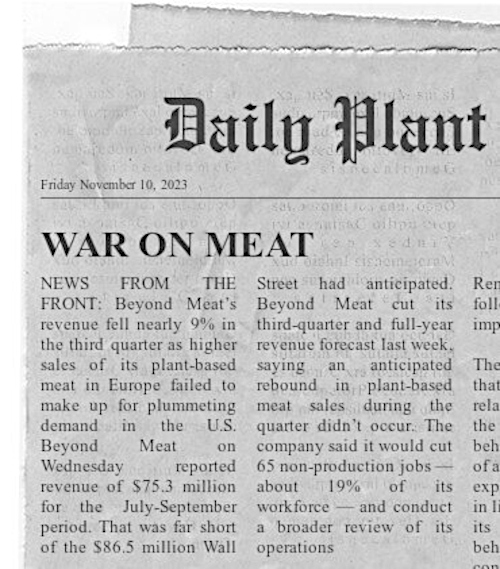
Big Pharma and Big Food a match made in heaven.
h/t Scott
If a frog is put suddenly into freezing water, it will jump out, but if the frog is put in tepid water which is then cooled slowly, it will not perceive the danger and will be frozen to death.
In 2019, then-President Donald Trump mocked the idea of powering our society on unreliable wind and solar power by joking, “Darling? Darling? Is the wind blowing today? I’d like to watch television.”
Now, wind and solar advocacy groups are advocating for this exact policy, but instead of being honest with the public about their desire to curb your electricity use when the wind isn’t blowing or the sun isn’t shining, they use innocuous-sounding words like “demand response” and “load flexibility” to hide their true intentions from ordinary people.
For example, Fresh Energy, a wind and solar special interest group located in Minnesota, says the grid of the future will need to be balanced not by building enough reliable peaking power plants to make sure the lights stay on but by charging people more to disincentivize them from using power during times of peak demand and otherwise controlling or rationing power to keep wide scale blackouts from occurring.
Don’t expect sanity to intervene in Minnesota any time soon.
Scroll down a bit to watch the video.

Update (from Kate) – I uploaded this to Youtube, you can watch there if you prefer.
Ron Butler- What Does “Higher Rates” Actually Mean? Just Not Crazy Low Anymore. Deputy Governor Rogers just said out loud what rational people in the Mortgage Business have known since the Bank of Canada started raising its Rate. No more ultra low Mortgage Rates
Conservative Natural Resources Critic Shannon Stubbs, Part 2: Is the Impacts Assessment Act Bill C-69 really dead?
Cruisin’ into robo-bankruptcy;
The bad news continues for Cruise, the autonomous vehicle company owned by GM.
Last month Cruise’s ability to operate in San Francisco was suspended after their cars were involved in two separate accidents. One of the accidents was very serious and involved a woman who was hit by a car driven by a person in an adjacent lane. The victim was sent flying into the lane of the Cruise taxi which braked but wound up running over the woman. Even worse, the taxi performed an automated procedure to move itself out of the way and wound up dragging the victim under the car.
In the wake of that event, Cruise suspended its operations throughout the US.
It gets worse.
G.M. has spent an average of $588 million a quarter on Cruise over the past year, a 42 percent increase from a year ago. Each Chevrolet Bolt that Cruise operates costs $150,000 to $200,000, according to a person familiar with its operations.
Half of Cruise’s 400 cars were in San Francisco when the driverless operations were stopped. Those vehicles were supported by a vast operations staff, with 1.5 workers per vehicle. The workers intervened to assist the company’s vehicles every 2.5 to five miles, according to two people familiar with is operations. In other words, they frequently had to do something to remotely control a car after receiving a cellular signal that it was having problems.
Dementia Joe’s America: Killed Jewish protester. Victor Davis Hanson on the risks of deteriorating democracy. The men vs women problem. Crazed leftist voters. Listen to Hillary Clinton. The baby killers rule America. What goes around comes around.
China Virus News: Covid in the age of Woke. Australian excess deaths.
Global Warming Scam News: The consensus on climate change. A survey.
Religion Of Peace News: Turkeys for Christmas. The Hamas media (JW). A Canadian ISIS bride (JW).
Blackie’s Canada: A student brawl. The Indians want more money (CBC). Today Blackie burns jet fuel to Northern Ontario, but won’t say where exactly. I wonder why? It’s great being one of Justin’s Senators.
Woke Britain: Cerne Abbas ban. Neil Oliver: Remember
Your morning meme. Bonus meme.
Including the less obvious hazards of smoking cannabis; the hunt for optimal toasting; the North-South divide as expressed in 1970; a man and his periods; and ominous scenes from the machine uprising.

Like the hostage posters anti-Semites are pulling down in major cities in the US and Europe, WaPo staffers don’t want to be reminded of what they actually support.
Tonight we present Tripoli Action (1950)
Your best tips of recent days are appreciated.
P.S. This video, entitled Mockingbird Media, was published a year ago but is well worth a watch.
Real life putting Hollywood to shame.

You can tell that a narrative is failing badly when the authorities have to engage in gaslighting to generate some interest. But it’s too late for that anyway.
According to government officials, every province and territory now has supply of at least one updated mRNA vaccine, but public awareness efforts have plummeted in recent years, with many Canadians no longer seeing the urgency to get booster shots.
“It seems to me that we are sort of experiencing COVID amnesia,” Dr. Nazeem Muhajarine, professor of community health and epidemiology at the University of Saskatchewan, told The Canadian Press.
Due to cowardice, the heads of the Canadian Powerlifting Union, are afraid to criticize men participating as female powerlifters. It’s much easier to destroy the careers of actual female athletes.
h/t James MacMaster
I’m sure Justin’s media will quickly drop this story, or ramp up the Islamophobia stories. Two Jewish facilities fired upon in Montreal.
Related (from Kate): This rage monkey is on the payroll at @Concordia. These universities are brewing a toxin, taking us on the path to suicide bomb territory.
Fire departments across the United States face a unique challenge with the growing prevalence of electric vehicles (EVs). EV fires, unlike traditional gas-powered vehicle fires, are more difficult to extinguish, last longer, and have a higher tendency to reignite. These distinct characteristics necessitate a deep understanding and the development of specific strategies to ensure public safety.
The complexity of EV fires lies in the use of lithium-ion batteries, known for their high energy density. Poorly designed or damaged, these batteries can undergo “thermal runaway,” leading to the release of flammable chemicals that can cause unexpected reignition. EV fires also emit toxic fumes, posing risks to both firefighters and bystanders, and necessitating careful handling.
In response to the challenges posed by EV fires, some fire departments are reconsidering their approaches. For example, firefighters in Franklin, Tennessee, used an enormous 45,000 gallons of water to extinguish an EV fire, compared to the standard 500 to 1,000 gallons for a gasoline-powered vehicle fire. This has led to a potential strategy of letting future EV fires burn out naturally.
“Woke, among other things, is an elaborate system for escaping any accountability for one’s actions. It’s a functional personality disorder.” – James Lindsay @ConceptualJames
More context, from Ed Driscoll.