
Assault With Battery
Edmonton, St Albert, Winnipeg, Toronto, Saskatoon, Regina – there is no catastrophically stupid, taxpayer-abusing transit failure that a Canadian city council will not strive to emulate.
Regina would go on to announce its own plan to electrify the fleet despite these problems. On a public FAQ page, it dismissed fears of an Edmonton-like incident. Edmonton purchased its buses from Proterra; Regina was going with the company Novabus, which “has a long history of success in Canadian cities.”
And so, the Regina transit began using electric buses in 2025 as part of a bigger greenhouse gas reduction strategy, starting with seven. Another 13 are planned for delivery by mid-2026. So, when Singh reports that four of these buses needed to be pulled from the middle of their routes to charge, he’s talking about more than half of the electric fleet. […]
And over in Saskatoon, city council has been trying to grow the electric fleet. It’s unclear why: city staff have warned that electric buses can’t last a full day of service on one charge, and that it takes 1.2 electric buses to replace a single diesel bus.
I guess that’s what happens three out of four voters sit on their ass and let the unions choose their city council.
Related: Toronto’s newest transit line debuted on Dec. 7 to brutally bad reviews…
Found On Road Discontinued
In the eternal struggle between Magical Thinking and Physics, Physics remains undefeated.
BREAKING: In a massive hit, Ford, $F, is writing down $19.5 billion in EV investments.
Ford also says it will stop producing the electric version of the F-150.
More detail at Daily Mail.
We Don’t Need No Flaming Sparky Cars
Live by the mandate, die by the mandate.
[In 2021, Ford] announced a joint venture with SK to build a pair of battery factories, one in Kentucky, the other in Tennessee. BlueOvalSK represented an $11.4 billion investment that would create 11,000 jobs, we were told, and an annual output of 60 GWh from both plants.
Four years later, things look very different. EV subsidies are dead, as is any inclination by the current government to hold automakers accountable for selling too many gas guzzlers. EV-heavy product plans have been thrown out, and designs for new combustion-powered cars are being dusted off and spiffed up. Fewer EVs means a lower need for batteries, and today we saw that in evidence when it emerged that Ford and SK On are ending their battery factory joint venture.
We Don’t Need No Flaming Sparky Cars
Truth about EV vs Gas ⛽️ Engines
I expect MAJOR suppression on this post.. pic.twitter.com/NR3AAX7Avp
— JayGen er (@JayGenXer) December 7, 2025
Ve Don’t Need No Zchtinkink Giant Fans
Germany Scales Back Offshore Wind Auctions After Latest Flop
Germany moved to reduce the capacity it will auction in its offshore wind tender in 2026, following the flop in the latest auction without a single bid made.[…]
The August offshore wind auction without government subsidies failed to attract a single bid, alarming the local offshore wind sector, which is calling for a fundamental redesign of Germany’s renewable energy auctions.
The Federal Network Agency’s auction for 10.1 GW offshore wind farms in the German part of the North Sea ended with no investor submitting a bid for any of the two proposed sites…
We Don’t Need No Flaming Sparky Cars
China’s EV Market Is Imploding
In China, you can buy a heavily discounted “used” electric car that has never, in fact, been used. Chinese automakers, desperate to meet their sales targets in a bitterly competitive market, sell cars to dealerships, which register them as “sold,” even though no actual customer has bought them. Dealers, stuck with officially sold cars, then offload them as “used,” often at low prices. The practice has become so prevalent that the Chinese Communist Party is trying to stop it. Its main newspaper, The People’s Daily, complained earlier this year that this sales-inflating tactic “disrupts normal market order,” and criticized companies for their “data worship.”
This sign of serious problems in China’s electric-vehicle industry may come as a surprise to many Americans. The Chinese electric car has become a symbol of the country’s seemingly unstoppable rise on the world stage. Many observers point to their growing popularity as evidence that China is winning the race to dominate new technologies. But in China, these electric cars represent something entirely different: the profound threats that Beijing’s meddling in markets poses to both China and the world.
Bloated by excessive investment, distorted by government intervention, and plagued by heavy losses, China’s EV industry appears destined for a crash. EV companies are locked in a cutthroat struggle for survival. Wei Jianjun, the chairman of the Chinese automaker Great Wall Motor, warned in May that China’s car industry could tumble into a financial crisis; it “just hasn’t erupted yet.”
We Don’t Need No Flaming Sparky Cars
It’s hard to comprehend why consumers would reject a truck with an 80 mile towing range, unless you get your news from Ars Technica, where you won’t find it mentioned at all.
When Ford electrified its bestselling pickup truck, it pulled out all the stops. The F-150 Lightning may look virtually identical to other versions of the pickup, but it’s smoother, faster, and obviously far, far more efficient than the ones that run on gas, diesel, or hybrid power. But the future of the country’s bestselling electric truck may be in doubt.
That’s according to a report in The Wall Street Journal, which claims that Ford’s management is “in active discussions about scrapping” the Lightning. Production had already been suspended a few weeks ago due to an aluminum shortage following a destructive fire at a supplier’s factory in New York, which Ford estimates may result in as much as $2 billion in losses to the company.[…]
Ford was the first of the domestic automakers to bring a full-size pickup EV to market. But like General Motors, it has found that pickup truck customers have not flocked to electric propulsion in anything like the numbers predicted pre-pandemic. As we learned last week, GM has also scaled back its EV production, and last month Stellantis announced that it has ceased development of an all-electric version of its Ram 1500.
Drill Baby, Drill
Industry analyst Anas Alhajji;
More than 200,000 people are attending ADIPEC this year. The expo is the largest energy expo on earth. It would take a person two days to go through it. The large presence of Russian and Chinese companies is noticeable.
The most important takeaways are these:
∙ There is no energy transition, only energy addition
∙ Energy reinforcement, not replacement.
∙ Demand for oil will continue to grow
∙ OPEC: Investment of $18.2 billion is needed to meet oil demand by 2050.
∙ Innovation is more important than regulation
∙ AI is changing the energy industry
More from AOIPEC: U.S. Secretary Doug Burgum Defends Fossil Fuels, Challenges “Energy Transition” Narrative
Ghosts On The Grid
With the Feast of All Hallows rapidly approaching I thought it would be apt to explain how the grid is haunted by a concept that doesn’t really exist. A pre-occupation with a made-up concept risks the security of our power grids. In this blog I will explain how “vars” aren’t real, and treating them as if they are is creating existential risks on our power grids.
Not being able to properly explain reactive power is common in the energy industry – ask a dozen people to explain it and you’ll get twelve different answers. Most will reach for the beer-glass analogy where real power as the liquid and reactive power is the froth, or mutter something about “energy sloshing back and forth” on the grid. More sophisticated responses will mention capacitors “injecting vars” and inductors absorbing them. These phrases are repeated so often that they’ve become folklore. Unfortunately none of them describes what actually happens in power grids.
“Vars” in particular is an accounting fictions that obscure the underlying physics. And because we’ve replaced understanding of the physics with shorthand, we now incorrectly believe that anything producing current including batteries, solar inverters, or a clever algorithm, can perform the same stabilising role as the electromagnetic machines that built our power system.This misunderstanding could one day cost us the grid.
We Don’t Need No Stinking Giant Mirrors
“The planet is warming,” they warned me. “So let’s make the sun shine at night, they said.”
Sparky Barbie
Good luck with that.
Let me get this straight.
Libs subsidized the development of this GM elecric van. The vehicle tanked commercially and now the Libs want to hold GM accountable for that???
AND they're creating some kind of response group to develop a new EV van???
— Kat Kanada (@KatKanada_TM) October 21, 2025
@GasPriceWizard, back on April 12th: I took this video of the excess and unsold Brightdrop EV vans a month ago to predict its demise thanks to Liberal NetZero hubris and folly
We Don’t Need No Flaming Sparky Cars
…ALL of the following highlighted EV subsidized projects are now either bankrupt, cancelled or delayed
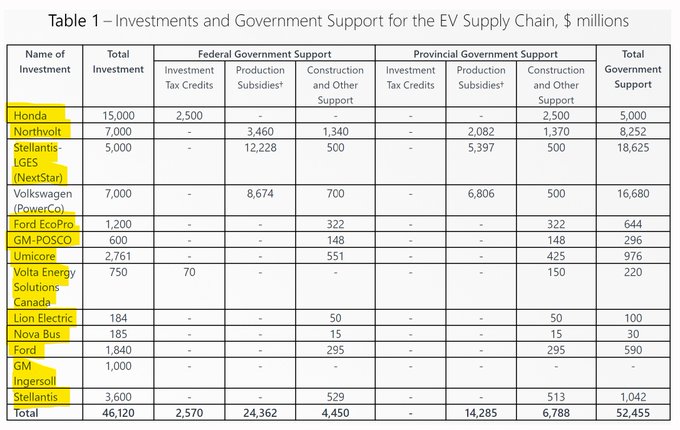
Technology so popular they’ll pay you to buy it.
Related: No one is coming to save us.
We Don’t Need No Flaming Sparky Cars
Make us buy them harder, daddy: Cabinet is far short of its target to build electric auto charging stations despite more than a billion in subsidies, says a federal audit. The report warned even if successful there was “no evidence” that financing a national network at taxpayers’ expense would lower emissions: ‘Government involvement is necessary to address market failure.’
Deep Pockets
When I chose the title, I was referring to the deep pockets of taxpayers. There’s no way this boondoggle is ever going to turn a profit.
Carbon capture startup Deep Sky says it will build a commercial carbon removal facility in southwestern Manitoba.
Scroll down to examine Deep Sky’s track record when it comes to sequestering not just carbon, but tax dollars.
The Alberta carbon capture project was built at a cost of $58 million by the company, Deep Sky, which has received “investments” from the Alberta government ($5 million), two banks ($2.5 million), a grant from the Bill Gates Foundation ($40 million), with Royal Bank and Microsoft committed to buying 10,000 “removal credits.” On its website, Deep Sky, which also received funding from Investissements Quebec, pitches for more. “We’re looking for industry leaders who want to join our fight against the carbon crisis.”
Y2Kyoto: State Of Anorexia Envirosa
In today’s episode of Should’a Asked Kate;
Spain’s grid operator warned that a resurgence in sharp voltage swings threatens to disrupt the country’s power supply less than six months after it suffered the most severe outage in Europe in decades.
Red Electrica requested urgent changes to its operating procedures to better manage voltage in its system, according to a document published by the regulator. The company said the challenges are being caused by abrupt changes in scheduled production, particularly from renewable power plants.
It’s a sign that while investigators have called the events of that blackout unprecedented, the conditions that led to it may be a persistent problem for the stability of Spain’s power network. Spain has been a leader in deployment of renewables and its grid stresses will be closely watched by grid operators across Europe who seek to rapidly decarbonize their grids without jeopardizing reliability.
We Don’t Need No Flaming (checks notes) Sparky School Busses

We Don’t Need No Flaming Sparky Cars
Demand was “…not as robust as expected”.
GM CAMI Brightdrop EV van assembly plant takes another hit
"Unifor Local 88, which represents workers at the plant, says it has been informed by GM the plant will reopen mid November with just 400 people. That's down from 1,050 and significantly less than the 600 union officials… https://t.co/1mI232xZll pic.twitter.com/KGiZOXjGS2
— cbcwatcher (@cbcwatcher) September 9, 2025
We Don’t Need No Stinking Giant Fans
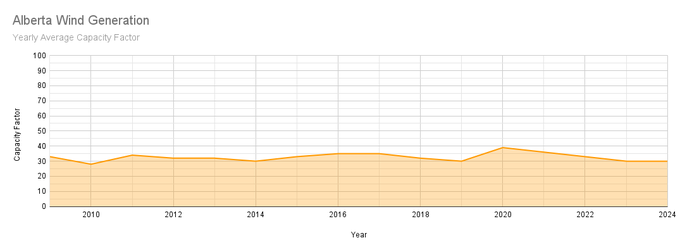
@ReliableAB — Here’s a chart showing the yearly average wind capacity factors over the past 15 years.
We Don’t Need No Flaming Sparky Cars
Think of the billions that might have been saved if they let me run the world.
Quebec’s Northvolt project is officially dead — and the government says it is cutting its losses.
Christine Fréchette, Quebec’s economy minister, announced Tuesday that the province will invest no further money in Northvolt Batteries North America.
“The company’s failure to present a satisfactory plan with regard to Quebec’s interests has led us to assert our rights in order to recover as much of our investment as possible,” Fréchette’s said in a statement. “This venture proved unsuccessful, and we are obviously disappointed.”
The announcement spells the end to Northvolt’s highly touted, but controversial, plan to build a $7-billion plant in Saint-Basile-le-Grand and McMasterville in the Montérégie region. The Quebec government had supported the proposal and changed its own rules, allowing the project to bypass an environmental review.
Quebec had invested $510 million in the project, saying it would create 3,000 jobs in the area and make Quebec a battery producing powerhouse.
The investments included a $240-million guaranteed loan and a $270-million investment in Northvolt Batteries North America’s parent company.
Quebec officially lost that $270-million investment, Fréchette said in a news release. Northvolt declared bankruptcy in Sweden in March.