
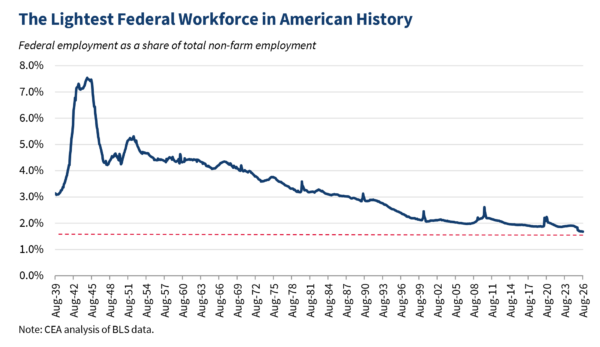
What Would We Do Without NATO Partners?
This is how a real genocide looks like. The entire history of Turkey is genocides, massacres, and expulsions on a scale that dwarves any other country in the region. In the 20th century alone they have killed millions and expelled just as many. Amazing how no one cares. pic.twitter.com/l7uQhT6xIF
— Uri Kurlianchik (@VerminusM) August 17, 2026
The Uniparty State
I’ve noticed that political party lines are becoming increasingly blurred these days, and not just in Canada. Are we getting to the point where we don’t have many real choices any more, or is that just the way it’s always been?
Under socialism, government owns the means of production, which the U.S. government increasingly wants to do. In June, through $750 million in investments, it took minority equity stakes in two semiconductor companies. In July, through up to $874 million in additional funding, it took minority equity stakes in six more and increased its ownership of a seventh. The Cato Institute counts 30 companies in the federal government’s expanded corporate portfolio. “Republicans warning that communists are taking over the Democratic Party might first ask why their own administration is so eager to have the government acquire pieces of private companies,” Cato analyst Tad DeHaven suggested.
Gradually, Then Suddenly
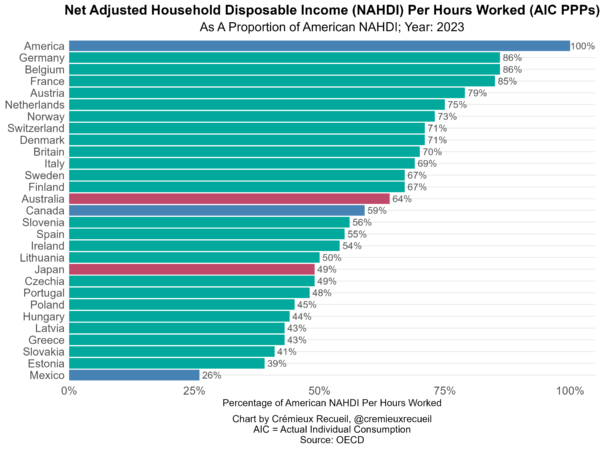
We Don’t Need No Stinking Giant Fans
It’s the physics, stupid.
Can renewables fully replace denser forms of energy?
Geologist Scott Tinker breaks down why energy density matters and how renewables fit into a diversified global energy portfolio, but why they won’t replace energy-dense fuels. pic.twitter.com/jgxz4TyIrQ
— TRIGGERnometry (@triggerpod) August 4, 2026
They Don’t Make Them Like They Used To
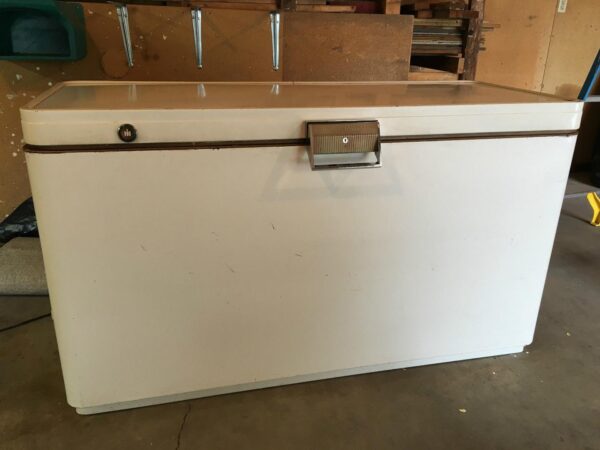 The International Harvester deep freeze in my brother’s basement is still in operation, 22 years after I first mentioned it here.
In an adjacent room, is an International Harvester refrigerator keeping beer and soft drinks cold. It looks like the one pictured below.
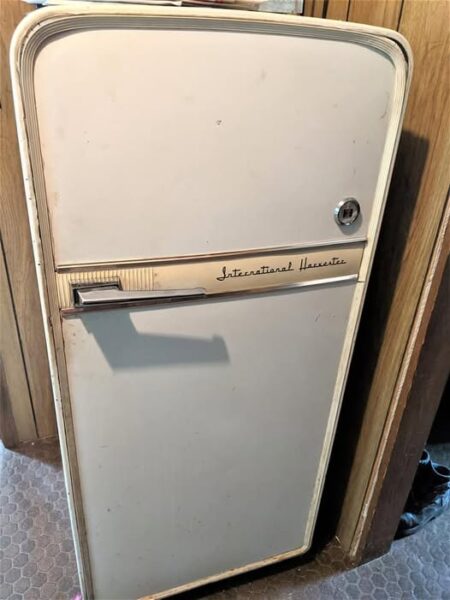
International Harvester, a farm equipment manufacturer (more here), produced refrigerators and deep freezes between 1948 to 1955.
I’ll let you do the math.
To be fair, I wouldn’t expect Emma to know this, given they just might be older than her grandfather.
Big Vet
The same process is underway in Canada. If you own a pet, find a locally owned, independent veterinary clinic before you need it.
I, For One, Welcome Our New Self-Driving Overlords
Published This Month In The Journal Of The Blindingly Obvious
Tattoos Affect Your Immune System in Ways Scientists Are Just Beginning to Understand
Plus;
“Many pigments currently in use were originally developed for industrial applications such as car paint, plastics, and printer toner, rather than for injection into human skin.”
Researchers have detected trace quantities of heavy metals in tattoo inks, including nickel, cobalt, chromium, and, on rare occasions, lead. Accumulated at high levels, heavy metals can be toxic, causing serious health problems such as internal organ damage, neurotoxicity, and increased cancer risk.
In some cases, these heavy metals triggered allergic reactions and immune sensitivity in the person receiving the tattoo.
Cuba Libre?
Buried in the story about Cuba instituting some free market reforms is an interesting tidbit about loosening restrictions on imports. The common narrative implies that Cuba’s inability to function economically is a result of trade sanctions imposed by the US. But the reality is that many of Cuba’s sanctions are actually self-imposed: it’s less the case that Cubans can’t buy foreign brake pads for their cars because the US won’t allow it, but more the case that communist officialdom has always stood in their way.
The plan includes more space for private businesses, imports and exports without state intermediation, free hiring of personnel, authorization for private banks and investment by Cubans abroad. It even permits fast-food chains to establish themselves on the island.
We Don’t Need No Stinking Giant Mirrors
Doomberg: The media can’t seem to explain the collapse in China’s domestic solar installations.
We often quip that the best proof that something was predictable is having predicted it. While not totally accurate—dumb luck and broken clocks are still things—nailing a complex call in the face of cocksure counter-commentary is anything but unsatisfying. It also confirms that our mental model is still operative in the way that matters most: it remains useful for further predictions.
In August of 2025, we produced a bonus presentation for paying subscribers titled Cocktail Party Trivia: Winning the Renewables Debate With Friends and Family (available here). In it, we elaborated extensively on our current mental model in which a working understanding of electric grids became a tool for predicting when the forced introduction of intermittent renewables would cause things to break. Some 31 minutes in, we warned that China’s solar miracle was reaching the limits of feasibility, and that the breakneck pace of new construction would soon have to slow.
At the time, China was on pace to smash global records for new solar installations, and legacy media outlets were falling over themselves to heap praise on Beijing’s bold climate leadership. On social media, the Silicon Valley crowd was lamenting how the US was desperately falling behind its main competitor in the artificial intelligence race, hooked on “yesterday’s fuels” like natural gas. US President Donald Trump came under withering criticism and was pounded for his efforts to save the domestic coal industry. That China still relies on coal for the vast majority of its electricity was rarely mentioned.
Imagine our lack of surprise, then, when we opened our weekend edition of the Financial Times to find Adam Tooze’s latest lament, “Wasting China’s solar panel surplus is madness”…
Cocktail Party Trivia (35 minutes): Winning the Renewables Debate With Friends & Family
O, Sweet Saint Of San Andreas
Hi, it's me, I'm the reason https://t.co/Uku223rsyI
— The San Andreas Fault (@sanandreafault) May 27, 2026
The Sound Of Settled Science
Organic Is The Latin Word For “Grown In Pig Shit”
Is Organic Food a scam?
The “W” Word
Law and Reorder: “Results suggest whites are disproportionately portrayed as criminals five to eight times more often on police dramas compared to actual crime statistics for the city of New York, and exposure to police dramas leads to elevated perceptions of white criminality among non-whites.”
What All Led Up to WW2 ?
Here’s an interesting video for you all to definitely critique.
Nothing Say’s 51st State Like…
Honey, I Finished The Internet
You Thought It Was Bad? It’s Worse Than That
Grab a beverage. Read the whole thing.
Celina 101- The Betrayal of Britain’s Daughters
Many girls are terrified and with reason … a girl had her tongue nailed to the table when she threatened to tell.
Francisco- My Spidey sense is telling me that this is not just a problem in the UK.
Sane Ideas
At least a few boomers are quietly suggesting that Old Age Security spending be reined in by some means. Stephen Harper tried something similar by raising the age of eligibility to 67, but Trudeau Junior reversed that. Hopefully this gains traction this time around.
OAS is currently Canada’s costliest federal program, eating up roughly one in every six dollars of federal spending. This amounted to a total of $85.5 billion in 2025-26 and is expected to exceed $100 billion annually by the end of the decade. Paul Kershaw, head of Generation Squeeze, said in a media briefing on Tuesday that policymakers can ill afford to ignore ballooning OAS costs at a time of “heightened geopolitical instability and economic uncertainty.”