
They cost over a half million apiece: In a move that absolutely nobody could have seen coming, New York City is scrapping its brilliant idea for electric garbage trucks after finding out the truck simply “aren’t powerful enough to plow snow”.
Not A Creature Was Stirring
Not even an EV charging station.
@domnatishow Tesla S will not charge in the cold. Stranded on Christmas Eve! #tesla #ev #cold #winter #winterweather #storm #christmas #christmaseve #coldweather #weather #blizzard #wow #car #cars #elonmusk #help #stranded #how #electric #electriccar #teslas #teslamodel3 #charge #mad #fail #merrychristmas #twitter #truck #trucks #storm
We Don’t Need No Flaming Sparky Cars
Related: Alberta fights back against Trudeau’s “absurd” EV mandate
We Don’t Need No Stinking Giant Fans
Endless meddling
Canada’s newest central planner claims to have a real “passion” for, well, central planning. But this time, we are assured, the planning will work.
I have a concern: since I subscribe to Acorn TV precisely to watch British shows, is the CRTC going to force them to carry Canadian content? Doesn’t that undermine the whole reason that I watch Acorn in the first place?
Eatrides said in a brief conversation with the National Post Monday that she will look to make a tangible difference for Canadians, indicating a focus that includes lowering prices.
She said people should expect “somebody who’s really focused on and concerned about Canadians. So really, that that’s where my head is at.”
“I really want Canadians to be able to say, OK, what has the CRTC done for me?”
In reality, she probably doesn’t want people to ask that last question.
Y2Kyoto: Poems Are Wrecked By Fools Like Me
But only Gaia can fell a tree: Melbourne councils are chopping down trees and removing vegetation from footpaths to make way for Australia Post’s new environmentally friendly fleet of electric delivery vehicles…
How Many Lightbulbs Does It Take To Change A City Planner?
h/t Joe
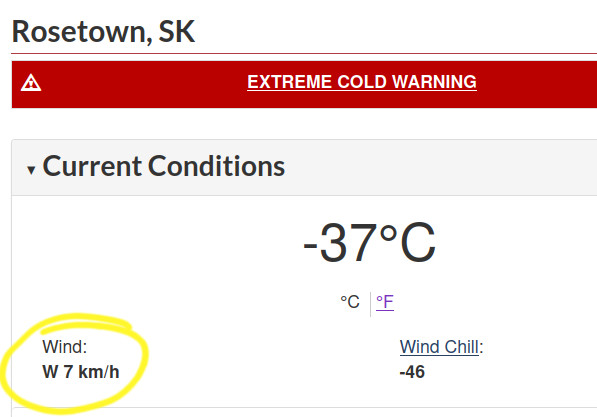
Y2Kyoto: Schadenfrozen
Living the green dream. (Google Translated)
The magistrate is calling on the people of Frankfurt to prepare for a possible power outage. “Every household should prepare for the energy crisis in order to be able to bridge ten days,” said environment officer Rosemarie Heilig (The Greens) in the city council.
The city has produced a leaflet with advice and rules of conduct . Citizens should get a battery-operated radio so that they can get information even in the event of a power failure. Matches, candles, flashlights and cash are also important. A supply of medicine and food should last for a few days.
As Heilig explained, the magistrate has set up a working group to deal with the energy crisis. In order to save energy, citizens should bleed their radiators and set them to level 3 at most. The establishment of heating rooms is being prepared. Central emergency call points are also to be set up where citizens can report emergencies if the telephone network fails.
“We don’t want to unsettle anyone or stir up fears. We don’t want a run on the supermarkets,” said Heilig. However, it is important to be prepared. The FDP city councilor Peter Thoma advises the citizens: “Buy candles and schnapps and hope that it doesn’t get that bad.”
Y2Kyoto: Schadenfrozen
Green Germany Hemorrhaging €1.5 Billion per DAY to Keep the Lights On
Water, Water Everywhere…
"The world's largest solar PV farm uses 200,000 litres of water each day to keep the panels clean. Yet some people think that we are soon going to source all our electricity from solar farms in deserts."#cop26 #cop26 #climate #ClimateEmergency #ClimateCrisis pic.twitter.com/TIhdmFW12k
— Henry K. B. (@HenryK_B_) February 19, 2022
Thread: The Noor solar power plant in Morocco, largest is Africa, uses 2.5-3 million m³ of water/yr.
Batteries for all!
I have to suggest a new headline: Ottawa seeks first place in race to national bankruptcy.
For the first time, Ottawa is set to subsidize the production costs of large electric vehicle battery producers.
A senior Canadian source — who was not authorized to comment publicly on the topic — confirmed that the goal in Ottawa is to “do like the United States” for “some big projects.”
Sources said the federal government already has delivered a clear message to a handful of multinational firms — that Canada will enhance its existing financing programs with “production support” measures.
“The death of a renewable energy construction company by renewable energy has a certain narrative symmetry.”
Federal Energy Minister Chris Bowen is seeking urgent briefings from his department as the government seeks to limit the fallout from the collapse of engineering contractor Clough, amid a threat to almost $10 billion of projects critical to Australia’s energy transition.
…
Industry observers warned that Clough’s administration, which occurred after a $350 million sale deal with Italy’s Webuild fell through, would delay and could drive up costs of the Perth-based contractor’s projects.
These include some of Australia’s biggest projects, such as the $5.9 billion Snowy 2.0 storage venture and the $3.3 billion Project EnergyConnect electricity interconnector between South Australia and NSW, as well as one of the few gas power plants being built in the National Electricity Market.
Borrowing Binge
If anyone is wondering why GDP was climbing during the pandemic when businesses were shutting down and entire sectors such as the travel industry ground to a halt, here’s your answer. There was a lot of vote buying to be done, and now we can’t even determine whose vote was bought.
Hogan’s team found that $4.6 billion of overpayments were made to ineligible recipients of benefits for individuals. Another $27.4 billion of payments to individuals and employers should be investigated further, the report said, calling it “the minimum amount that should be investigated.”
The post-payment verification process has just started — CRA said it has recouped $2.3 billion — even though the legislation means the agency has just three years after payment was made to verify eligibility…
But the auditor is skeptical about the chances of recovering the bulk of the money owed.
Imagining the Future
If the green movement is going to continue to push the idea that we can survive without fossil fuels, they have some significant math problems to overcome first. Unless, of course, they eventually dispense with the need for backup power sources entirely.
My Report presents two different calculations of the energy storage requirement for Germany in a world of a wind/solar grid and no fossil fuels allowed (both of which calculations have been previously covered on this blog). One of the calculations, by a guy named Roger Andrews, came to a requirement of approximately 25,000 GWh; and the other, by two authors named Ruhnau and Qvist, came to a higher figure of 56,000 GWh.
…the amount of energy storage that Germany is planning for 2031 is between 0.016% and 0.036% of what it actually would need.
Y2Kyoto: Net, Zeroed.
It turns out that you can have battery-powered cars, or you can have renewable energy, but you can’t have both.
The Federal Council of Switzerland has therefore published draft legislation, which outlines four tiers of escalating measures to conserve electricity and avert potential blackouts. The first prescribes a lot of temperature restrictions for things like refrigerators and washing machines. The second includes more unusual rules, such as the demand that heating in clubs and discotheques “be set to the lowest level or switched off completely,” and that “streaming services … limit resolution of their content to standard definition.” The third foresees cutting business hours, banning the use of Blue Ray players and gaming computers, and also limiting the use of electric cars, which should be driven only when absolutely necessary. A fourth and final tier mandates closure of ski facilities, casinos, cinemas, theatre and the opera.
Y2Kyoto: Schadenfrozen
VW warns soaring EU energy costs render battery plants unviable;
Investment in German and EU industrial projects such as battery-cell factories will be unfeasible if the region’s policy makers fail to control ballooning energy prices in the long-term, the head of Volkswagen Group’s namesake brand, Thomas Schäfer, said.
“Unless we manage to reduce energy prices in Germany and Europe quickly and reliably, investments in energy-intensive production or new battery cell factories in Germany and the EU will be practically unviable,” VW Schaefer wrote Monday on LinkedIn.
“The value creation in this area will take place elsewhere.”
VW plans to have six battery factories in full operation across Europe by 2030 under its battery company PowerCo, which broke ground on its lead plant in Germany in July of this year and signed a 3 billion euro ($3.1 billion) joint venture with Umicore in September for cathode material production.
An outline for industrial-policy cooperation hatched by the French and German economy ministers last week “falls short in crucial areas and does not address the envisaged priorities,” Schaefer said.
You’re Gonna Need A Bigger Landfill
The industry’s current circular capacity is woefully unprepared for the deluge of waste that is likely to come.
Economic incentives are rapidly aligning to encourage customers to trade their existing panels for newer, cheaper, more efficient models. In an industry where circularity solutions such as recycling remain woefully inadequate, the sheer volume of discarded panels will soon pose a risk of existentially damaging proportions.
To be sure, this is not the story one gets from official industry and government sources. The International Renewable Energy Agency (IRENA)’s official projections assert that “large amounts of annual waste are anticipated by the early 2030s” and could total 78 million tonnes by the year 2050. That’s a staggering amount, undoubtedly. But with so many years to prepare, it describes a billion-dollar opportunity for recapture of valuable materials rather than a dire threat. The threat is hidden by the fact that IRENA’s predictions are premised upon customers keeping their panels in place for the entirety of their 30-year life cycle. They do not account for the possibility of widespread early replacement.
Related: China’s coal production is set to climb for the sixth year in a row, reaching a new record [4.4 billion tons]. If you’re doing anything to reduce your emissions, you’ve just been offset… forever.
We Don’t Need No Stinking Giant Fans
These should be great times to be in the wind energy business, especially in Europe. Governments here have long promoted offshore wind projects, and those efforts have accelerated since Russia started cutting natural gas shipments in its war against Ukraine.
“We need clean, we need cheaper and we need homegrown power,” Ursula von der Leyen, the European Union president, said in August.
But Europe’s wind turbine makers, the crown jewels of the region’s green energy industry and a source of manufacturing expertise, are reporting losses and laying off workers. Their problems stem partly from lingering supply chain issues and competition from Chinese manufacturers, and the issues could ultimately hinder Europe’s, and even the world’s, ambitions to quickly develop emission-free energy sources.
This month, Siemens Gamesa Renewable Energy, a Madrid-based company that is the premier maker of offshore wind turbines, reported an annual loss of 940 million euros ($965 million). The company has announced a cost-cutting program that is likely to lead to 2,900 job losses, or nearly 11 percent of its work force.
Vestas Wind Systems, the world’s largest maker of turbines, recently reported a loss of 147 million euros (about $151 million) for the third quarter.
General Electric, a large maker of wind turbines in the United States and Europe, has also struggled in its clean energy businesses. The company said last month that its renewable energy unit was likely to record $2 billion in losses this year.
Several problems are battering the industry, including rising costs for materials and shipping, as well as logistics snags, some of them a legacy of the pandemic. As a result, prices agreed on earlier for turbines, which cost millions of dollars apiece and can add up to hundreds of billions for large offshore wind farms, can result in huge losses for the manufacturers when they are delivered.
“Every time we sell a turbine, we lose 8 percent,” Henrik Andersen, the chief executive of Vestas, said in an interview.
Clearly, this demands more subsidies.
Things You’ll Never See On The CBC
Humans mined 700 million tons of copper over the last 5,000 years.
The same 700 million tons will need to be mined over the next 22 years to meet energy transition targets using wind, solar, & electric vehicles.
And mining runs on diesel.
We Don’t Need No Stinking Giant Fans

B.F. Randall – The next time somebody says that wind / solar need backup, show them this chart and ask which power is backing up which power. Then ask what purpose the red serves? Then ask which is more expensive.