
Here’s Why Leftist Politicians Don’t Like Hard Questions
November 28, 2019: Reader Tips
Shae-Lynn Bourne/Victor Kraatz Exhibition Hydroblading (1995).
Thread’s open for tips.
Honey, I Finished The Internet
Art Of The Deal
Turning up the heat: Trump signs bill of support for Hong Kong protestors.
Trump To Designate Mexican Drug Cartels As Terrorist Groups
The US will legally designate Mexican drug cartels as terrorist groups, President Donald Trump says.
The move would enable a wider scope of US action. Mr Trump also said he had told Mexico the US was ready to “go in and clear out” the cartels.
In response Mexico’s foreign minister said his country would not allow any “violation of national sovereignty”.
Maybe Mexico should build a wall.
More from Brandon Darby.
Visit The Washington Monument While You Still Can
BREAKING: Senator Elizabeth Warren has introduced a bill that would revoke Medals of Honor from U.S. soldiers involved in the Wounded Knee Massacre of 1890
— Benny (@bennyjohnson) November 27, 2019
Related: Warren CRATERS in New Quinnipiac Poll, Drops 14 Points
I Want A New Country
Feckless: Paying up comes easy when it’s somebody else’s money
The Senate of Canada will not appeal a court ruling that found the upper house violated a francophone man’s language rights by utilizing English-only push-buttons on Parliament Hill drinking fountains.
The Federal Court last week ordered the Senate to pay former public servant Michel Thibodeau $1,500 in damages and to cover his $700 in court costs.
Mr. Thibodeau complained in 2016 that water fountains in the hallways of Parliament Hill’s East Block – which houses some Senate offices and committee rooms and is open for public tours during the summer – required thirsty folk to push a metal button embossed with the word “push.”
Some even included that instruction in braille, but none included the French word “poussez.”
Y2Kyoto: The Next World War Will Be Fought With Food
And it begins — as is the tradition — with a German Chancellor.
This is not a holiday ceremony, but thousands of German farmers driving tractors to Berlin in protest of new policies. https://t.co/7OJs7vSLtF
— Frank Mitloehner (@GHGGuru) November 27, 2019
We Need A Famine
Give thanks for the creativity of pharmaceutical companies, for without their continuing efforts, the risk-intolerant might have long ago run out of side effects to sue over*: Evidence Pours More Cold Water on The False Narrative That Prescriptions Caused the Opioid Crisis
Great Moments In Cause Marketing

“Nice to meet you. My name is Cindy Lovett.”
“I googled astroturfing.” This is exquisitely painful to watch.
Furniture Boy
Poor little Prince of Darkness. They invaded his privacy.

November 27, 2019: Reader Tips
Nelson, the unorthodox sheepdog.
Thread’s up.
New Carbon Capture Tech?
Scientists from the Massachusetts Institute of Technology have published a paper that details the mechanism of a battery device that can suck out the carbon dioxide from the air, store it, and then release it for sequestration or storage and subsequent sale: the oil and gas industry uses CO2 to improve well output.
The principle of the device is ingeniously simple: as the battery charges, it sucks in carbon dioxide. During discharge, the CO2 is released into the ground. The battery itself is made up of arrays of electrodes with gaps between the arrays so the gas can enter the device. Each electrode is coated with a carbon nanotube layer that enables an electrochemical reaction when carbon dioxide comes into contact with the surface of the electrodes. The guarantee for this contact is the fact the electrodes have a natural affinity for CO2, which means they attract the gas molecules when they enter the device.
A Futuristic Blend Of Ugly And Useless
The Daily Subsidy Fraud Boy: Tesla Cybertruck Tows 286,000 Pounds Less Than Promised, But That’s Ok
“Why did the city of Calgary give $340,000 to an anti-oilsands lobby group…?”
If I didn’t know better, I’d swear Nenshi’s an agent of the Saudis.
Would the city of Windsor, Ont., home of Canada’s auto industry, give a third of a million dollars to anti-car lobbyist? Would Hamilton hire an anti-steel lobby?
The Canadian Taxpayers Federation revealed this shocking payment. But instead of expressing embarrassment, Mayor Naheed Nenshi admitted he knew all about it, and supported it.
Nenshi didn’t dispute that Pembina has nine lobbyists registered in Ottawa to attack the oil patch. But he claimed Pembina was also a “scientific think-tank” and it was for this expertise that the city paid them so richly. When asked by Sun Media if the city would ever pay the pro-free market Fraser Institute for advice, Nenshi was dismissive. “As soon as they hire scientists who actually know something,” he sniffed.
Actually, I don’t know better.
In The Mail
A new novel by my favourite #NewRules columnist Kurt Schlichter.
Available in paperback and ebook. Check it out. |
|

This Is Not Your Grandma’s Humane Society
What could possibly go wrong?
A growing number of livestock veterinarians are raising concerns that dogs rescued from Chinese meat markets could bring African swine fever virus to the United States.
Rescue groups regularly save dogs from slaughter in China and transport them to this country to be adopted as pets. But because such dogs are considered food animals in China, they often are kept in close quarters with other livestock. [..]
“These dogs are rescued from meat markets,” said Lisa Becton, director of swine health information and research at the National Pork Board. “And, unfortunately, at these markets there are a lot of other species, like pigs, chickens and cows. There is a risk that the animal, the crate or the bedding could become contaminated.”
The “retail rescue” fraud is importing tens of thousands of dogs into North America each year for both resale and donation drives — along with a growing number of foreign disease variants and parasites.
Y2Kyoto: Hurricane Pinocchio
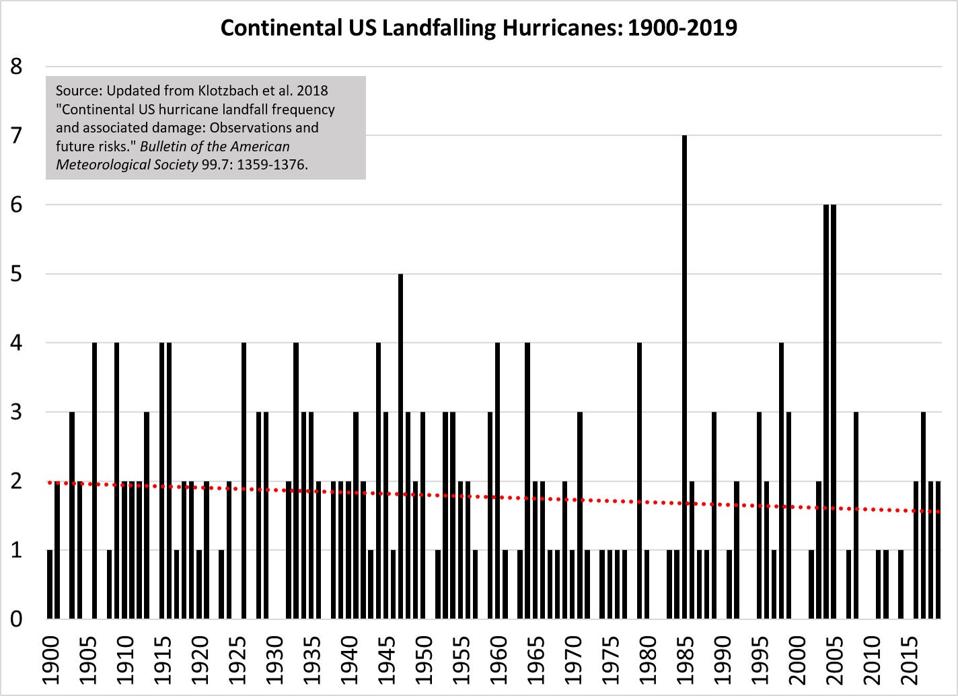
Related: Why Apocalyptic Claims About Climate Change Are Wrong