
@alx Message received
— Elon Musk (@elonmusk) October 21, 2026
Blog Notice
Due to a PHP vulnerability that’s putting sites at risk worldwide, the site may go off line today. I’ll use @katewerk on X.com to provide updates if we pull it down.
And How Was Your Day?
“Damn bud, you gotta fly higher”
Most awkward police body cam footage ever. USMC F-18 pilot crashes and finds a Yakima County Sheriff Deputy. https://t.co/iWMopzw8AR
— Thenewarea51 (@thenewarea51) October 8, 2026
Disagree with the Left and You’re Labeled a Racist
Suella Braverman, a former Conservative Minister in Britain, stated that she views herself as British, but not English. This made the Left go apoplectic, especially this guy. The gents at Podcast of the Lotus Eaters dive deep into this subject.
Richard Madeley asks Suella Braverman on @gmb how it feels to be called a “coconut” for speaking out on immigration.
What’s striking is what she said next.
Growing up in this country, she says she never really experienced racism. She was treated well, and given opportunities… pic.twitter.com/Aw5zGWAZDU
— J Stewart (@triffic_stuff_) October 2, 2026
There They Go With That Diversity Again
France. Stronger by the day.
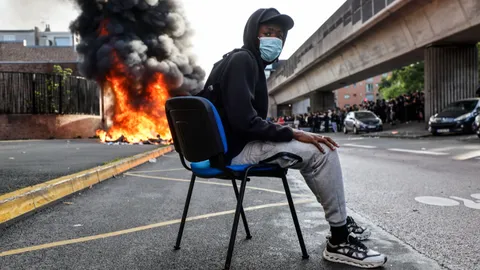
How Much Further Can Canada Deteriorate?
Canada is set up like a toxic family dynamic, where only the image and name matter on the outside, it punish those that point out problems, it gaslights its citizens into acting like fake happy cyborgs while continuing to crush the soul of Canadian. pic.twitter.com/9Ei4atqrmq
— TruthSeeker01011 (@TruthSeek01011) October 2, 2026
Suicidal Empathy
Let’s hope this truthful police officer doesn’t lose his job.
Listen to what this cop had to say about what is going on in my hometown of Welland, Ontario.
I was very surprised to hear a father speaking today not a brainwashed robot. pic.twitter.com/LbH0PugDQK
— Rob Primo (@RobPrimo1) September 27, 2026
New Governor, Same As The Old Governor
For a while there, I thought petite Canadian Prime Minister Mark Carney was just flexing his minor muscles for local consumption and the elections in Quebec where his party is currently polling poorly. But with this latest move, I do have to wonder if this globalist agenda wasn’t his aim all along – glomming onto any excuse to move the Syrupeans’ relatively minuscule economy out from under the protective, and what’s been nurturing umbrella of the United States into the arms of the European Borg Collective.
You don’t say: CBC/Radio-Canada becomes a full Member of the European Broadcasting Union
Dispatches from the Maple Gulag Truck Stop
Every U.S. administration since Clinton has levied tariffs on Canadian goods, and every Canadian prime minister has fought to have them removed, with varying degrees of success.
When the last deal was announced, Donald Trump said Keystone XL Pipeline would be built as a result. THe Keystone XL announcement was a surprise as Mark Carney is vehemently oppsed to oil and gas development, he even wrote a book about it.
Ultimately, Carney pulled out of the deal citing tariffs on F450 trucks. FYI, Ford has manufactured ZERO Ford F450 or larger trucks in Canada in the last 5 years, but they were retooling to do so.
The killing of the Keystone XL Pipeline and the rejection of requests to sell LNG have cost the Canadians close to $1,000,000,000,000 in just a few years, we can’t possible sell enough F450 trucks to make up for what we have already lost.
At this point, every Canadian needs to be ask: what is Mark Carney’s agenda?
Ronald Reagan (1981–1989)
Signed the Canada–United States Free Trade Agreement (CUSFTA) in 1988, establishing systematic tariff reductions across most goods.
George H.W. Bush (1989–1993)
Initiated trilateral negotiations to expand CUSFTA into the North American Free Trade Agreement (NAFTA) and signed the deal in 1992.
Bill Clinton (1993–2001)
Signed NAFTA into law (taking effect in 1994), drastically reducing trade barriers.
Imposed tariffs and countervailing duties on Canadian softwood lumber during ongoing trade disputes.
George W. Bush (2001–2009)
Imposed countervailing and anti-dumping duties reaching up to 27% on Canadian softwood lumber.
Negotiated the 2006 Softwood Lumber Agreement to temporarily suspend lumber tariffs.
Barack Obama (2009–2017)
Rejected the cross-border permit for the Keystone XL pipeline in 2015.
Signed the Trans-Pacific Partnership (TPP) trade deal in 2016 alongside Canada (which the U.S. later withdrew from before ratification).
Donald Trump (2017–2021 & 2025–present)
First Term: Renegotiated NAFTA into the United States-Mexico-Canada Agreement (USMCA), approved the Keystone XL presidential permit, and placed Section 232 tariffs on Canadian steel (25%) and aluminum (10%) in 2018 (later lifted).
Second Term: Invoked national emergency acts and trade law provisions to impose broad tariffs on Canadian imports, including select automotive, alcohol, and dairy products. Rescinded the Keystone XL cancellation order and granted new cross-border pipeline permits.
Joe Biden (2021–2025)
Revoked the presidential permit for the Keystone XL pipeline on his first day in office, officially causing TC Energy to cancel the cross-border energy project.
Doubled tariffs on Canadian softwood lumber from 8.99% to 17.9% in 2021 (later adjusted down to 8.58% in 2022).
Maintained Inflation Reduction Act (IRA) electric vehicle tax credits that initially threatened Canadian automotive manufacturing, though Canadian supply chains were ultimately integrated into the final legislation.
Safe and Effective®
Program alert: The Allison Inquiry, live streaming From Ottawa
Nepal Disaster Update
Geology Professor: an update of the Nepal debris flow tragedy with thoughts on water source and evidence of another landslide.
Disaster In Nepal
The scale is massive, and the videos coming out are horrifying.
A major flash-flood disaster has hit Nepal’s Rasuwa district, near the border with Tibet/China, after an event early Wednesday morning caused catastrophic flooding along the Trishuli and Bhotekoshi river systems.
According to preliminary information presented by Nepal’s Foreign Minister, an earthquake struck the area at around 08:37 local time, apparently triggering an avalanche that then caused a sudden release of water and severe flash flooding.
Scary visuals of flash floods in Nepal. pic.twitter.com/2wKHrX6tFn
— Piyush Rai (@Benarasiyaa) August 26, 2026
American Icon

January 19, 1946 – August 25, 2026
A Stopped Clock Is Accurate Twice a Day
Mark Cuban has said some pretty dumb things, but he’s 100% correct here:
Ro, I like you. You know that. But you need to read the state of the state.
The number of Deca Unicorns in Cali is growing by the day as investors chase amazing startups.
A unique feature of these 10b startups is that even if they raise a billion, little, if any of that… https://t.co/l1LRaiki16
— Mark Cuban (@mcuban) August 15, 2026
Summerland Tonight (Bumped)
Saturday afternoon update.
✅ Local and on the ground intel from Summerland:
Deer Ridge homes on the south backside end of Cartwright were saved, including Summergate Winery, which is surprising as it looked from video and photos that it would have been decimated. Some homes at the base of Cartwright…
— Joshua Keith Young 🇨🇦 (@JoshuaKeithYou1) August 8, 2026
The fires are still raging. As usual, the most recent reports will be available via X, (but watch for fakes from engagement grifters).
Water bombing the fire itself is like trying to put out a bonfire with a teaspoon. It doesn’t work. Those airplanes and helicopters instead drop the water or retardant just ahead of the fire line, hoping to make the fuel too wet to burn. Retardant will give off carbon dioxide when it gets hot, to displace the oxygen that feeds the fire.
Yes, there are big lakes right there, but water is terrifically heavy and the airplanes are limited in their weight-lifting capabilities. The fire is huge and very hot and small amounts of water on it do little, but we have no other extinguishing technologies. The smarter thing is to manage the forests, using controlled burns in the winter to remove the dead stuff on the forest floor that makes the fire hotter so that the trees catch.
I was a mechanic on those big bombers for a short time. I remember a fire in northwest Alberta that was so hot that even the retardant had no effect on it. The fire ate it and kept going. One has to be involved with this business to see the limitations. Those big bombers carried 3000 US gallons of water or retardant, a small fraction of the water in a typical backyard swimming pool. Now fly over a subdivision and see those small pools, and then fly over the forest and see how it stretches out forever, and imagine a small slice of that swimming pool trying to douse a fire. Not so easy or quick.
-
Original post content below.
@Okanaganscan Multiple people being rescued by helicopter in summerland. Many accounts of having 5 minutes and then being shoved into the helicopter
This is an awful situation unfolding in Summerland, BC. I have read now that they are rescuing people by helicopter.
pic.twitter.com/kxVG3PVwdV— Jaclyn Whittal (@jwhittalClimate) August 8, 2026
The Honourable Member For Air India
Jagmeet Singh is now being considered to run a federal Crown corporation, Destination Canada, with a taxpayer funded, $350K/yr CEO salary.
The New York Post
Still the champions. 

Not Watching For The Asteroid

EchoStar Corporation’s satellite television subsidiary Dish DBS is set to file for Chapter 11 bankruptcy protection as early as Tuesday, marking a significant step in the company’s long-running effort to restructure its heavy debt load amid declining traditional pay-TV subscribers and ongoing regulatory challenges…
Police Shot In Melville
Developing: Several reports of police officers shot in Melville Saskatchewan this evening. Large police presence seen in the area. Stars air ambulance was called to Melville Hospital but had to call off the flight due to adverse weather conditions. pic.twitter.com/TdCdOCQaqx
— Just Bins (@JustBins) June 22, 2026
“His Head is Squarely On His Shoulders”
Authenticity and gratitude is a good thing!
JJ WATT GIVES THE INSIDE STORY OF CONNECTING WITH LEGEND OF THE WORLD CUP, @FreddyLA7 🏆🇩🇪 pic.twitter.com/SBIxKRtYB7
— Men in Blazers (@MenInBlazers) June 19, 2026