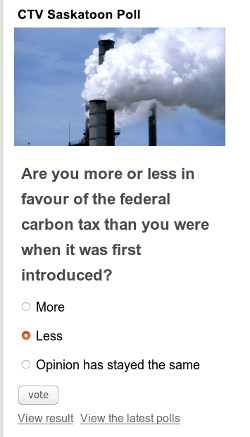
Click on the image to go to the poll. The “less” vote is already leading by a wide margin, but in this there’s no such thing as too much going wrong. (h/t Other Stan)
Update — it appears the poll closed a few hours early. Funny, that.

Click on the image to go to the poll. The “less” vote is already leading by a wide margin, but in this there’s no such thing as too much going wrong. (h/t Other Stan)
Update — it appears the poll closed a few hours early. Funny, that.
The plant-based diet rhetoric is sounding increasingly dictatorial.
Given that the anthropogenic climate change and resource footprint accusations against livestock agriculture do not hold water, what’s really behind the plant-based diet agenda?
Well, the empirical evidence suggests it is the advancement of plant-based diets for all.
Indeed, the plant-based and alternative protein movement is about more than industry disruption. It’s an ideology, one hell-bent on replacing traditional food with a utopian “food” solution – it’s political as much as it is commercial.
May snowstorm breaks 117-year-old record in Minnesota
@Kenneth72712993 – A new tropical Atlantic subsurface temperature reconstruction indicates it was 7°C warmer than today during the Younger Dryas/Bølling-Allerød (~15,000-11,500 years ago), when CO2 concentrations hovered around 210-220 ppm.
Paper is here.
Plus, she’s nuts.
Part one lost. It will go on to the SCC.

h/t WB
Gains credibility with every passing day.
AN Oxford University professor has claimed aliens are already breeding with humans to create a new hybrid species that will save the planet. Dr Young-hae Chi, an instructor in Korean at Oxford’s Oriental Institute, part of the prestigious university, thinks this new species will save Earth from annihilation from climate change.
It seems the best explanation for that lean and hungry look.
But first, this message from the poll sponsors;
A large group of Canadian climate scientists, environment advocates, business owners and corporate executives want climate change to be the No. 1 issue for voters this fall, including problems and solutions beyond the federal carbon tax.
A hundred of them signed an open letter to Canadians this week, urging them to understand the impacts of climate change and the solutions each party offers before casting their ballots in October.
Those behind the letter fear important discussions about climate change are being lost in the sea of political rhetoric for or against a national carbon price.
“It’s a national emergency,” said Gavin Pitchford, the CEO of recruiting firm Delta Management and executive director of Clean50.

h/t BC
In a huge victory for climate skeptics everywhere, Judge Salvatore Vasta finds all findings made by James Cook University, including his sacking, were all unlawful.
WUWT readers helped make this possible.
Everywhere is warming faster than everywhere (1)
thread pic.twitter.com/rppjBWK3MV
— DawnTJ90 (@DawnTJ90) April 9, 2019
Most cities and towns in the west were founded and thrived on the essential industries of logging, mining, ranching, and energy production. Somewhere along the way, the environmental industry decided those must be stopped. In a clever semantic twist, they were dubbed “extractive industries.” It sounds noble to produce food, energy, and resources needed for a prosperous society. But “extraction” sounds like pure evil – like pulling a tooth from Mother Nature. A majority of Americans who live in urban cities, not involved in those businesses, have become convinced, supporting a range of policies constricting grazing, mining, oil and gas production, and logging.
Western communities that object have been called myopic, lectured that their lifestyles are “unsustainable,” and assured that tourism would fill the gap. In fact, the “green” jobs created by preserving and protecting the “last great places” would be better. Tourists come in droves to see pristine woods, not logged forests, we were told. And the price of stopping active forest management has been over 100 million acres of national forests burned in the last 20 years.
Yet when the crowds of tourists come, bringing all that money with them, creating clogged hotels, restaurants, and roads, the same environmental industry reacts by demanding that we close these great places to tourists. If nothing else, the contradiction reveals the true agenda of people who just don’t like people. There are just too many, they think.
John Pomeroy warns (Saskatoon Star Phoenix) on June 15th, 2006;
Following is the opinion of the writer, a geography professor at the University of Saskatchewan and director of the centre for hydrology. He holds a Canada Research Chair in Water Resources and Climate Change.
Streams, sloughs and wetlands may not be sustainable under climate change, and the slightly milder winters anticipated under global warming may dry out the Prairies. […]
On June 5, the United Nations Environment Programme announced a study that shows the world’s desert and arid regions are at risk of becoming even more parched. Research at the University of Saskatchewan supports this, showing the Canadian Prairies could be drying out due to more moderate winters.
Well, it’s 2019 and what do ya know?
A leading Canadian water security expert says a recent Environment and Climate Change Canada report highlights the need to change how Saskatchewan designs and builds communities and infrastructure. […]
Pomeroy said his research and that of his colleagues shows some of the effects the process has already had on Saskatchewan.
He noted the province now sees 50-per-cent more multi-day rainstorms in the summer months than it did in the 1950s and pointed to the 2014 floods that caused billions of dollars of damage.
He said what stands out in particular about those floods was that they happened in June and July and were caused entirely by some 200 millimetres of rainfall, whereas most flooding has historically come with the spring melt.
“We simply never had flooding of that nature ever reported before since the western settlement of the region, nor is it noted in the traditional knowledge of the Indigenous peoples in the area,” Pomeroy said.
That’s right. He’s the same quack whose dire drought prediction I’ve been mocking for the last ten years.
When people come together, even the smallest action counts:
BC Hydro says there was a 0.2 per cent increase in energy consumption during Earth Hour last year.
So BC Hydro spokesperson Tanya Fish said there was no point in tracking electricity use during Earth Hour this year.
“The change in energy consumption during Earth Hour over recent years had been so minimal, so we found it difficult to attribute it to the event,” she said after Saturday’s Earth Hour came and went.
Don’t ever let them tell you that one little arc welder can’t make a difference.
Venezuela proves it can be done.
Millions of Venezuelans were left without running water Monday amid a series of massive blackouts, forcing President Nicolas Maduro to announce electricity rationing and school closures as the government struggles to cope with a deepening economic crisis.
Maduro announced 30 days of power rationing on Sunday, after his government said it was shortening the work day and keeping schools closed due to blackouts.
The measures are a stark admission by the government — which blamed repeated power outages in March on sabotage — that there is not enough electricity to go around, and that the power crisis is here to stay.
Angry Venezuelans meanwhile took to the streets of Caracas to protest the power cuts and water shortages.
“We have small children and we aren’t able to give them a drop of water to drink,” said Caracas resident Maria Rodriguez.
With no electricity, pumping stations can’t work, so water service is limited.
Street lights and traffic lights go dark, pumps at fuel stations stand idle, and cell phone and internet service is non-existent.
If they can do it, we can do it.
1. CO2 is not “pollution.”
2. Increasing gas prices by four cents will have zero effect on climate.
3. You can’t “make life more affordable” by taking money and giving back a portion of it.
4. You’re a liar and a fraud. https://t.co/a3hHOSgP6D
— Maxime Bernier (@MaximeBernier) April 1, 2019
This is where I live:https://t.co/TwFaT25Hh3 https://t.co/gLRsCoQArq
— Patrick Moore (@EcoSenseNow) March 27, 2019

