Category: Alternative Subsidy

We Don’t Need No Stinking Giant Mirrors

Australia.

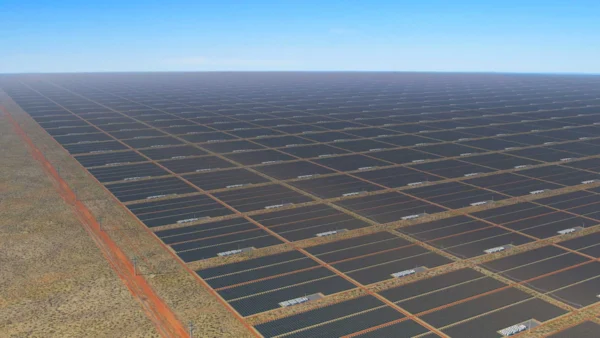
Sun Cable, the company behind a massive solar farm and power export project planned for the Northern Territory, has gone into voluntary administration.

Key points:
– The company’s ambition was to build the world’s largest solar project
– Its plan was to build a giant 20-gigawatt solar farm in the NT
– Sun Cable also wanted to build a 4,200-kilometre-long subsea cable to Singapore

The company, whose major investors include billionaires Mike Cannon-Brookes and Andrew “Twiggy” Forrest, provided a vague statement about why it collapsed:

“The appointment followed the absence of alignment with the objectives of all shareholders,” it said.

“Whilst funding proposals were provided, consensus on the future direction and funding structure of the company could not be achieved.”

The ABC understands that Sun Cable’s major investors, Mr Forrest and Mr Cannon-Brookes, had disagreements about the funding and direction of the company.

These included the significant amounts of cash that Sun Cable was spending, and its failure to achieve certain milestones — as required by its venture capital funding agreement.

The planet weeps.

We Don’t Need No Flaming Sparky Cars

As I watch my family strike out on foot across the fields into driving rain and gathering darkness, my wife holding each child’s hand, our new year plans in ruins, while I do what I can to make our dead car safe before abandoning it a mile short of home, full of luggage on a country lane, it occurs to me not for the first time that if we are going to save the planet we will have to find another way. Because electric cars are not the answer.

Yes, it’s the Jaguar again. My doomed bloody £65,000 iPace that has done nothing but fail at everything it was supposed to do for more than two years now, completely dead this time, its lifeless corpse blocking the single-track road.\

I can’t even roll it to a safer spot because it can’t be put in neutral.

And this isn’t a car, it’s a laptop on wheels.

We Don’t Need No Frozen Sparky Bricks

A Liberal voter gets chill-pilled.

Maureen Huxter and her husband travelled from Ottawa to near Bowmanville, Ont. on Dec. 20. Huxter says it was the first time she had taken her new car on a long distance trip.

“What would typically be a 3-and-a-half hour, 4-hour trip, say with one stop, turned into five or six,” she says. 

Huxter says her first stop at the Napanee ONroute had a slow EV charger, which she was warned about, so after 30 minutes she decided to drive to the next station in Trenton, almost an hour away. 

There, she says all charge attempts failed. When she called customer service, Huxter says an agent explained that it had been that way for days. 

How do I know how she votes? We all know how she votes.

Not A Creature Was Stirring

Not even an EV charging station.

@domnatishow

Tesla S will not charge in the cold. Stranded on Christmas Eve! #tesla #ev #cold #winter #winterweather #storm #christmas #christmaseve #coldweather #weather #blizzard #wow #car #cars #elonmusk #help #stranded #how #electric #electriccar #teslas #teslamodel3 #charge #mad #fail #merrychristmas #twitter #truck #trucks #storm

♬ original sound – Domenick Nati

Endless meddling

Canada’s newest central planner claims to have a real “passion” for, well, central planning. But this time, we are assured, the planning will work.

I have a concern: since I subscribe to Acorn TV precisely to watch British shows, is the CRTC going to force them to carry Canadian content? Doesn’t that undermine the whole reason that I watch Acorn in the first place?

Eatrides said in a brief conversation with the National Post Monday that she will look to make a tangible difference for Canadians, indicating a focus that includes lowering prices.

She said people should expect “somebody who’s really focused on and concerned about Canadians. So really, that that’s where my head is at.”

“I really want Canadians to be able to say, OK, what has the CRTC done for me?”

In reality, she probably doesn’t want people to ask that last question.

Y2Kyoto: Schadenfrozen

Living the green dream. (Google Translated)

The magistrate is calling on the people of Frankfurt to prepare for a possible power outage. “Every household should prepare for the energy crisis in order to be able to bridge ten days,” said environment officer Rosemarie Heilig (The Greens) in the city council.

The city has produced a leaflet with advice and rules of conduct . Citizens should get a battery-operated radio so that they can get information even in the event of a power failure. Matches, candles, flashlights and cash are also important. A supply of medicine and food should last for a few days.

As Heilig explained, the magistrate has set up a working group to deal with the energy crisis. In order to save energy, citizens should bleed their radiators and set them to level 3 at most. The establishment of heating rooms is being prepared. Central emergency call points are also to be set up where citizens can report emergencies if the telephone network fails.

“We don’t want to unsettle anyone or stir up fears. We don’t want a run on the supermarkets,” said Heilig. However, it is important to be prepared. The FDP city councilor Peter Thoma advises the citizens: “Buy candles and schnapps and hope that it doesn’t get that bad.”

Water, Water Everywhere…

Thread: The Noor solar power plant in Morocco, largest is Africa, uses 2.5-3 million m³ of water/yr.

Batteries for all!

I have to suggest a new headline: Ottawa seeks first place in race to national bankruptcy.

For the first time, Ottawa is set to subsidize the production costs of large electric vehicle battery producers.

A senior Canadian source — who was not authorized to comment publicly on the topic — confirmed that the goal in Ottawa is to “do like the United States” for “some big projects.”

Sources said the federal government already has delivered a clear message to a handful of multinational firms — that Canada will enhance its existing financing programs with “production support” measures.

“The death of a renewable energy construction company by renewable energy has a certain narrative symmetry.”

Via WUWT;

Federal Energy Minister Chris Bowen is seeking urgent briefings from his department as the government seeks to limit the fallout from the collapse of engineering contractor Clough, amid a threat to almost $10 billion of projects critical to Australia’s energy transition.

Industry observers warned that Clough’s administration, which occurred after a $350 million sale deal with Italy’s Webuild fell through, would delay and could drive up costs of the Perth-based contractor’s projects.

These include some of Australia’s biggest projects, such as the $5.9 billion Snowy 2.0 storage venture and the $3.3 billion Project EnergyConnect electricity interconnector between South Australia and NSW, as well as one of the few gas power plants being built in the National Electricity Market.

Borrowing Binge

If anyone is wondering why GDP was climbing during the pandemic when businesses were shutting down and entire sectors such as the travel industry ground to a halt, here’s your answer. There was a lot of vote buying to be done, and now we can’t even determine whose vote was bought.

Hogan’s team found that $4.6 billion of overpayments were made to ineligible recipients of benefits for individuals. Another $27.4 billion of payments to individuals and employers should be investigated further, the report said, calling it “the minimum amount that should be investigated.”

The post-payment verification process has just started — CRA said it has recouped $2.3 billion — even though the legislation means the agency has just three years after payment was made to verify eligibility…

But the auditor is skeptical about the chances of recovering the bulk of the money owed.

Imagining the Future

If the green movement is going to continue to push the idea that we can survive without fossil fuels, they have some significant math problems to overcome first. Unless, of course, they eventually dispense with the need for backup power sources entirely.

My Report presents two different calculations of the energy storage requirement for Germany in a world of a wind/solar grid and no fossil fuels allowed (both of which calculations have been previously covered on this blog). One of the calculations, by a guy named Roger Andrews, came to a requirement of approximately 25,000 GWh; and the other, by two authors named Ruhnau and Qvist, came to a higher figure of 56,000 GWh.

…the amount of energy storage that Germany is planning for 2031 is between 0.016% and 0.036% of what it actually would need.

Navigation