Did you know that Canada had a dead sea? Are you even more surprised that it’s in Saskatchewan?
Hopefully the tips you share will not fall on deaf ears!

Did you know that Canada had a dead sea? Are you even more surprised that it’s in Saskatchewan?
Hopefully the tips you share will not fall on deaf ears!
🚨 NOW: HUNDREDS of flight controllers just surged into the flight control room to watch the Artemis II crew safely exit the capsule after splashdown
History is being made!
Furthest in space EVER 🔥 pic.twitter.com/6gE773PINP
— Eric Daugherty (@EricLDaugh) April 11, 2026
Please share any great links you have!
When I first saw the headline, I thought maybe my provincial government was finally seeing the bigger picture. But again I was disappointed. We’re still at the “definition” stage of micromanagement.
Manitoba Premier Wab Kinew says his government is working on the definition of a grocery store as it considers where to apply a tax cut on food.
Research papers that list Chinese institutions account for more than half of the retractions across 10 academic publishers, according to a new large-scale analysis.
The study, which has not been peer reviewed yet, was published on arXiv last month and examined 46,000 retractions issued by scholarly journals between 1997 and 2026 that were indexed by the Retraction Watch Database.
According to the study, there were 29,867 Chinese affiliations listed on these retractions – more than 91% of which don’t list international collaborators. Researchers in China produced 16.5% of all research output during that time period, the study found, despite the country’s institutions being listed on more than 52% of retracted papers in the sample.
Following China, institutions based in India, the US and Saudi Arabia feature on 7.25%, 5.72% and 2.83% of retractions, respectively.
I spent 11 hours working on this story, which I broke into four parts. These are the first two, the next two will come out early next week.
The NDP again want to see coal-fired power go away, “as practical.” The want to convert coal plants to natural gas, even though Saskatchewan has lots of coal but not much in the way of natural gas anymore. We drilled ten gas wells over the last decade, and Alberta did that many by noon today.
There is of course the obligatory massive buildout of wind and solar, and storage. And just coincidentally, three hours after the press conference, wind output in Alberta fell to next to nothing, again.
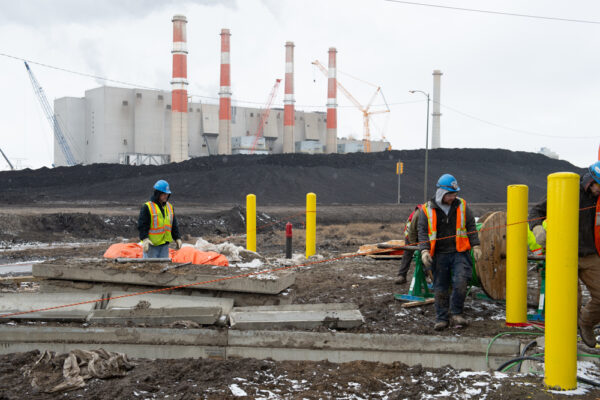
Digging deep on the NDP’s “Grid & Growth” plan for Saskatchewan’ electrical grid, Part 1
NDP want to increase net-metering rate
Also:
Jim Warren: A History of Oil Production and Price Crises 1973-1991
Well, slush money for Montreal at least. It’s anyone’s guess why a port currently at 72% capacity really needs to expand, but we can dream, can’t we?
Nathalie Pilon, the chair of the Port of Montreal’s board of directors, said the expansion is needed, despite a recent decline in overall cargo traffic she attributed in part to U.S. tariffs. She said the port is at around 72 per cent capacity now, and that problems arise when 85 per cent is attained.
You’d think that having a four lane highway across the country might be a priority too, but roads to the Arctic seem to be the all the rage now. Mexico’s got a better road network than Canada at this juncture.
The prime minister said construction on another project, the Mackenzie Valley Highway in the Northwest Territories, would begin this summer
Marilyn Gladu does not appear to be a very impressive person. No one is buying the crap narrative that she is selling:
No one with more than 15 brain cells buys this crap.
All these floor crossers are some of the most pathetic people I’ve ever seen. pic.twitter.com/Ci8cIaT00R
— Gurv (@GurvSC) April 10, 2026
Much will be happening later today when Artemis 2 splashes down in the Pacific Ocean near San Diego. Here’s a detailed preview.
The Democratic Party’s America: Victor Davis Hanson – Beginning of the end and war crimes.
Conman Carney’s Canada: We don’t need elections. A Sask. educator.
Stories You Won’t Find At Carney’s CBC: Roger Watson – The wrong target. A woke bandwagon. Paul Joseph Watson – The normies must be noticing. Moderate Muslim in NYC.
Including scenes of toilet plunging; regurgitating bats; when ankle-breaking is in order; and the world’s most expensive substance.
Here is the Knight Rider theme for 8 Cellos.
Do share your most interesting news tips.
Harrison Faulkner is closely covering the convention in Montreal.
Related: This Star Wars quote perfectly fits the folks at this meeting.
It’s pretty much a slam dunk that Carney will have a majority after the April 13th by-elections, considering that two of the seats are in very safe Liberal territory. If so, how long will it be until he reverses course on his Conservative Lite approach to governance? Consumer carbon taxes, anyone? How about “Investments” in EVs and high speed rail?
If the Liberals win two of the three byelections, they will hold 173 seats, or 174 seats if they win all three byelections, which would let them pass legislation without needing to rely on the Speaker or on any other parties to support them.
Law and Reorder: “Results suggest whites are disproportionately portrayed as criminals five to eight times more often on police dramas compared to actual crime statistics for the city of New York, and exposure to police dramas leads to elevated perceptions of white criminality among non-whites.”
China Carney’s Canada: Dubious approaches. The historical record. They don’t even hide their corruption. And more corruption.
The Democratic Party’s America: Anti-Trump bias. Bowing to Sharpton. The fall of Islam.
Stories You Won’t Find At Carney’s CBC: The noble Aryans. Hate crimes. Paul Joseph Watson – So bad.
Your morning cartoon.
I have long been suspect of Disney Adults. In some ways, they seem like normal people. But I always look at them askance because there’s something not quite right.
Got any personal tales of encounters with Disney Adults? Please do share ’em. Your general news tips are always appreciated too.