Tag: energy policy

Sure, let’s give instruction manuals to eco-terrorists. It’ll work out well

They actually made a movie called “How to Blow Up a Pipeline.” It opened April 7.

As a side note, when it comes to giving unhinged people bright ideas, the terror attacks of Sept. 11, 2001, appear to have been closely modelled on the plot of the Tom Clancy Novel Debt of Honor, a 1994 book. The conclusion of the book saw a bereaved airline pilot fly an empty but fully-fueled Boeing 747 airliner into the United States Capitol Building during a joint session of Congress, killing the president and nearly every member of Congress as well as the Supreme Court. Seven years later, 19 Al Qaeda terrorists attempted a very similar attack, with the last plane, United Flight 93, widely believed to have been targeted at the U.S. Capitol. It was brought down by its own passengers, who fought the terrorists for control of the plane.


And now you know why Moe pushed the Saskatchewan First Act

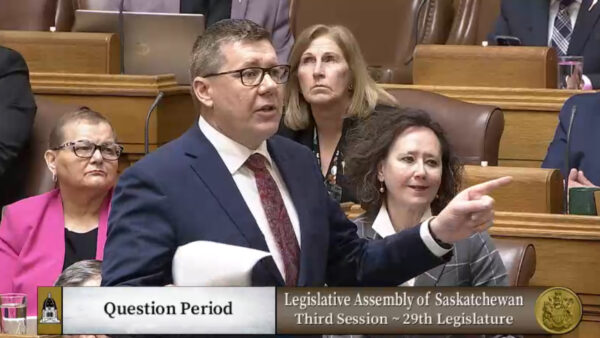
Federal justice minister David Lametti “looking at” taking away natural resources from provinces. Scott Moe says national unity at stake. This is precisely what the Saskatchewan First Act, proclaimed April 6, is about.

Notably, the request for the feds to take away control of natural resources from the provinces of Manitoba, Alberta an Saskatchewan came from the grand chief of the Prince Albert Grand Council. The federal minister will “look at” it.

Breaking up with coal is hard to do

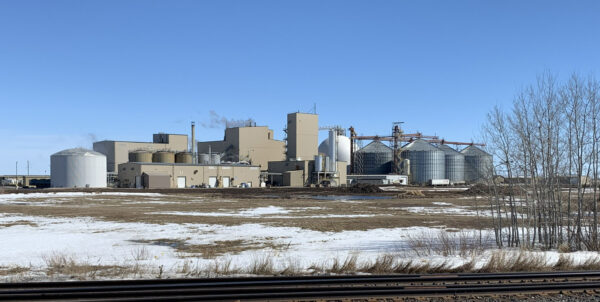
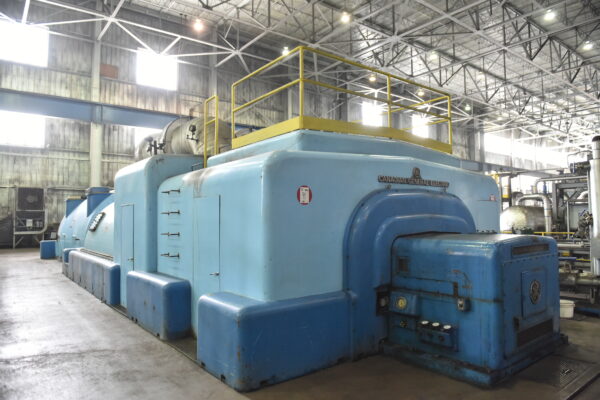
One of the coal units we just can’t seem to shut down, even though we’re supposed to, according to the feds.

By federal regulation, one coal unit at Boundary Dam Power Station was supposed to shut down in 2021, another in 2024. Well, we’re not going to do that. Because we can’t. We still need them. Turns out all those wind turbines can’t be relied on, after all, can they? Like on April 4, when they put out less that 4% in Saskatchewan.

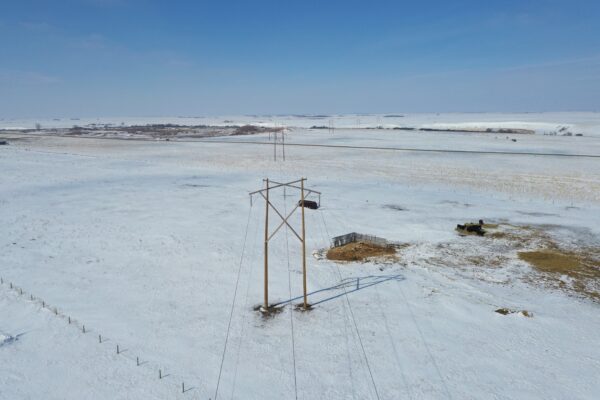
This US power line is a big deal for Saskatchewan

Some people are not happy about the idea of being replaced by imported, carbon tax-free coal and natural gas-fired power, while we move to shut down our own coal mines and power facilities. Op-Ed: Saskatchewan Coal Transition Centre: Sabotaging our future: How SaskPower’s $1 billion scheme to import power from the U.S. will devastate Estevan and leave Saskatchewan’s economy vulnerable

Why don’t you fight for what we have, and what works?

Existing interconnect with US

‘Why don’t you fight for what we have, and what works?‘ SaskPower holds open house in Estevan on $1 billion interconnect with US, solar and nuclear. The crowd was not at all happy.

This is real in-depth on what’s going on. Among the gems- we’re going to build up to 3,000 megawatts of wind and solar in Saskatchewan, stuff that totally fails on a irregular but frequent basis, and NOT build an accompanying 3,000 megawatts of natural gas generation to back it up for days (nights) the sun doesn’t shine and the wind doesn’t blow.

And a related story – did you know that the 650 megawatt power interconnect, the one that’s the same size as coal-fired Boundary Dam Power Station, and will carry carbon tax-free power from the US, will cost us a billion dollars? It turns out the NDP SaskPower critic did the math, and she was correct.

Saskatchewan is aiming to provide the building blocks for the 21st century

Here’s how critical minerals are involved in a typical cellphone. Government of Saskatchewan

To provide the building blocks of 21st century technology, #Saskatchewan releases Critical Mineral Strategy. That includes helium, lithium, potash, copper, nickel, uranium, and a whole pile of rare earth elements. Saskatchewan wants to double its share of the mineral exploration pie in Canada.

In a related story, flow through shares would be great, if only they applied to helium exploration, says Royal Helium CEO.

But Saskatchewan’s Critical Mineral Strategy’s flow through shares are a big deal for junior mining company Buffalo Potash.

Calling out Biden on Keystone XL cancellation

This stirs up serious memories for me, as I was the Canadian reporter in 2016 who asked presidential candidate Donald Trump if he would approve the Keystone XL Pipeline. He said he would, but “he wanted a piece.”

Here we are in 2023, and a Canadian Press reporter challenged President Joe Biden on cancelling the Keystone XL and delaying the Line 5 project, but approving a new oil project in Alaska. And it turns out, math is hard.

I don’t know who that reporter was, but I’d buy him a bottle of 18-year old Scotch.

Also, there’s a hell of a lot said about energy in the joint statement released by Trudeau and Biden. And some in his speech to Parliament, too.

A whole smorgasboard from the CN Tower climber, and the feds in general

Saskatchewan is intervening this week in the “No More Pipelines Act” case. You know, the one that basically will kill any major energy project?

And if the No More Pipelines Act wasn’t enough, our good old CN Tower climber Minister of Environment and Climate Change wants to speed up emissions reductions by another 10 years. And remember, on any given day, Saskatchewan relies on up to 86 per cent of its power coming from coal and natural gas, as it did on March 15 (previously posted).

And when Guilbeault’s not doing that, he’s going to take a hard look at oilsands issues.

And on the lighter side of things, Quick Dick McDick shows us curling in a small-town, two-sheet rink with natural ice, perogies and curling for mickeys. Because nothing says Saskatchewan like curling for mickeys.


And who’s paying for that $9 billion stake?

The cost of the Trans Mountain Expansion pipeline has shot up another 44%, to $30.9 billion. Project managers say it’ll be finished this year (from what I hear, not so much). And yet Indigenous groups are seeking a 30% stake in the project. Where’s that money coming from?

And on the topic of pipelines, it turns out Repsol said it would be too much money to pipeline natural gas from Western Canada to Saint John, New Brunswick, modify an existing LNG import terminal to export, and ship LNG to Europe. Would that be because the pipeline would have to go through Quebec, by chance? So there really wasn’t a business case, or there wasn’t a business case because of a.) Quebec and b.) the federal government? Would this have worked under a Harper or Poilievre government?

In an effort to literally keep the lights on, the Saskatchewan First Act passed by provincial government

Here’s some in-depth coverage about the implications of the Saskatchewan First Act, not just who was or was not consulted.

The second half of the story goes in depth as to what the NDP would do if the federal government and courts force Saskatchewan to shut down natural gas-fired power generation, after having done the same with coal. By the way, the day this act was discussed in committee, SaskPower used natural gas for 47 per cent of our power production, and coal for 39, for a total of 86 per cent. Watch for a story on that soon.

We would have needed a whole lot of those spinny things on Feb. 23

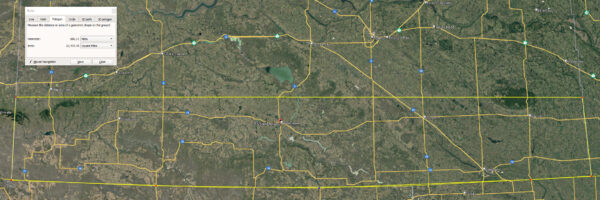
Every single square mile in the yellow box would have needed 2 wind turbines to make up for coal and natural gas that day.

On Feb. 23, when wind power generation produced an average of 10 megawatts throughout the day, you would have needed two wind turbines covering every single square mile south of Gravelbourg, from the Alberta to Manitoba borders, to provide the same amount of power as natural gas and coal did that day. Or, you could have around 10 reactors.

Pay attention to this Newfoundland offshore oil case

Bay du Nord project artist conception. Equinor

Uncertainty about the regulation of downstream emissions was one of the things that ultimately killed the Energy East Pipeline project. This was one of the clearest cases of the federal Liberal government “moving the goalposts.” If legal ecowarriors Ecojustice are successful in this case, it could have profound implications for all oil production in Canada. That’s especially is we are to be “net zero” by any particular date.

Note in the story how the Bay du Nord offshore project was approved by CN-tower climber himself, Steven Guilbeault. The story notes how it was one of the hardest choices in his life. Interesting, how a Newfoundland offshore project could get approval from none other that Guilbeault, and yet the rest of the oil industry feels it has no hope with him. Would that have anything to do with Newfoundland’s consistent election results of nearly every seat going Liberal red for decades? And that this project will be enormously profitably for Newfoundland? Yet when it came to the $20 billion Teck Frontier oilsands project in Alberta, the company walked away because it didn’t feel it could get any regulatory confidence from the feds?

Alberta’s wind power failed, yet again, on Thursday

Alberta wind generation fell to 0.3 per cent capacity at supper last night. And the batteries that are supposed to back them up? Yeah, in the last 30 days, they output power a cumulative 0.09 per cent. That’s not 9 out of 100. That’s 9 out of 10,000. But the public thinks they will be used every night when the sun goes down or the wind doesn’t blow.

Wonder how SaskPower’s doing? We won’t be told for another two days.

Newfoundland will continue to get screwed by Quebec for another nearly 2 decades, just watch

Story: Ahead of Quebec premier’s visit, provincial panel recommends new Churchill Falls deal

The notion that Quebec will change this deal one minute before 2041 is laughable. Quebec locked in a fixed price, with no escalator clause for inflation, in the early 1970s. And then they were able to extend it until 2041, despite Newfoundland’s protests to the Supreme Court of Canada, which backed Quebec. It is perhaps the most lopsided, unfair deal in Canadian history. Quebec gets rich, Newfoundland starves.

Churchill Falls Hydroelectric Generating Facility, with 5,428 megawatts capacity, has more power generating capacity than the entire province of Saskatchewan, combined, if every single coal and gas turbine, every wind turbine are running at 100%, and every solar panel is entirely lit at noon. If Newfoundland actually got a fair deal from its power sales over 50 years ago, it would not have been a have-not province for the last five decades. However, numerous court cases, up to the Supreme Court of Canada, have locked Newfoundland into the deal until 2041, selling power to Hydro Quebec for $2 per megawatt-hour. In New York (which buys power from Hydro Quebec), “Higher fuel costs have led to higher average wholesale electricity prices as well. In February 2022, the average year-to-date wholesale electricity cost was $118.36/Megawatt-hour (MWh), according to NYISO data.” Where do you think they buy wholesale power from?

Navigation