
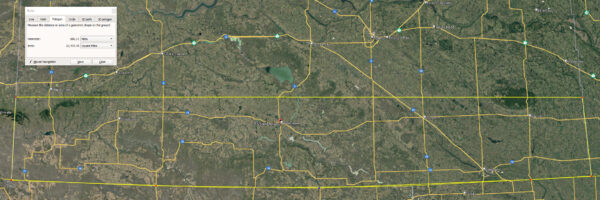
On Feb. 23, when wind power generation produced an average of 10 megawatts throughout the day, you would have needed two wind turbines covering every single square mile south of Gravelbourg, from the Alberta to Manitoba borders, to provide the same amount of power as natural gas and coal did that day. Or, you could have around 10 reactors.
Great article on fossil fuels, vs wind and solar vs nuclear.
Understanding E=mc2 – https://fusion4freedom.com/understanding-e-mc2/
“One elementary source of comparison is to consider what it takes to refuel a coal plant as opposed to a nuclear reactor. A 1000-MW coal plant – our standard candle – is fed by a 110-car “unit train” arriving at the plant every 30 hours – 300 times a year. Each individual coal car weighs 100 tons and produces 20 minutes of electricity. We are currently straining the capacity of the railroad system moving all this coal around the country. (In China, it has completely broken down.)”
“A nuclear reactor, on the other hand, refuels when a fleet of six tractor-trailers arrives at the plant with a load of fuel rods once every eighteen months. The fuel rods are only mildly radioactive and can be handled with gloves. They will sit in the reactor for five years. After those five years, about six ounces of matter will be completely transformed into energy. Yet because of the power of E = mc2, the metamorphosis of six ounces of matter will be enough to power the city of San Francisco for five years.”
Entirely correct, John. Good analysis. It’s also broken down in India, where the Indian railway system is incapable of moving the needed amount of coal from Assam to the southern parts of India around Madras and Mumbai where all the growth is taking place. The inability to move coal was exactly why France built its huge nuclear program in the 1970s, and Belgium as well because the Franco-Belgian coal field was practically empty and abandoned.
You are also quite right about nuclear fuel. Each reactor in the world uses about a cubic metre of uranium fuel per year. given the density of uranium, that works out to about 150 tonnes.
The bit about rail capacity is nonsensical. We were moving 100 140-car trains a day out of one community in Wyoming twenty years ago. It can be built, and it can be managed.
I’d like to see the president of whatever power co is promoting wind turbines to explain why we stopped using windmills in the first place, and then explain how they solved the issues that cause people to stop using windmills.
/they cannot
Has anyone seen that “Where Your Power Comes From” chart show the wind power being 100% at any time (maxed out at 111 MW)? Or even at 75%? Whenever I look at it, it shows some small figure, usually a single digit or low 2-digit figure.
“Yes, wind turbines will be ideal for Saskatchewan,” they reasoned. “Saskatchewan is windy.” Yes, it’s windy. Some of the time. Not all of the time and not nearly at any ideal wind speed most of the time. Basing major decisions on legends rather than actual wind studies and meteorology get us nowhere.
The corresponding argument is often, “Well, if it’s not blowing here, it’ll be blowing somewhere.” Saskatchewan’s wind farms are almost all along Highway 1. And we’ve had numerous occasions where it didn’t blow along that whole length for a whole day. Or more. Saskatchewan is huge, and southern Saskatchewan is the size of southern Germany. And it’s STILL not big enough to be immune to universal calm winds.
Quite right, Brian. This line of faulty logic also assumes infinite free transmission capability capable of accommodating all this excess wind generation. Shortage of transmission was one reason why the Czech Republic was considering an embargo against electricity imports from Germany. The instability caused by German wind variability was affecting their grid stability as well.
“The corresponding argument is often, “Well, if it’s not blowing here, it’ll be blowing somewhere.” Saskatchewan’s wind farms are almost all along Highway 1.
Is the prevailing wind direction all along H1 west to east, or WNW to ESE, like in southern Alberta? If so, it’s even more foolish to line the wind farms up along H1. If it ain’t blowing in Maple Creek, it ain’t going to be blowing anywhere else, either.
I think I’ve seen it average over 500 MW per day, which is considerable, given max capacity of 617 MW. But that’s a rare day.
We really need to end the windmill fantasy and the solar panel nonsense. They simply cannot do the job. Unless the job is to deprive the population access to energy. They are doing that with food right now, and air travel. Soon we will be shovelling horse shit off the streets, if you happen to be lucky and rich enough to own a horse and buggy.
It’s all coming apart.
The ironic thing is that in today’s day in age in Canada, if you own a horse, you’re probably rich. My best friends have several, and I point this out to them on occasion.
They aren’t supposed to do the job. We’re supposed to freeze and starve. How else do the do-gooders get the numbers of people down to level they can tolerate?
Ha ha ha, Spinny Things
Reading about Dawkins in NZ, one could surmise that “green energy” and “aboriginal science” come from the same line of thought…legends and myths for the most part.
Native lies and bullshit.
(Live not by lies)
Brian,
You might need 11 reactors instead of 10. After all, their average capacity factor of a nuclear plant is “only” around 90%.
The best part of Nuclear Power? The fuel is cheap. The downside is that building the plants are very expensive, and nuclear plants do have large staffs of about one person per Megawatt. However, those nuclear plant workers are all well educated, and they make middle to upper middle class wages. They are also drug free, mentally stable, disciplined workers. A lot of US Nuclear workers are ex-navy nuclear sailors, spouses, and their kids.
Imagine if 600-800 families, each making $100,000 to $300,000 were dropped into your town? A lot of them can be you instead. I worked at several plants in the Midwest, and farmers often had a career at “the Nuke” in addition to their farm.
A lot of the mechanics, electricians and operators reminded me of Quick Dick McQuick.
https://www.youtube.com/@QuickDickMcDick
All good points. And the reality is if we replace all our gas and diesel vehicles with electric, we’re going to need an additional 10-15 reactors on top of that, never mind redundancy for maintenance, as you mention.
I am personally encouraging my 16 year old to consider going into electrician or instrumentation tech precisely so that he is in the right trade and right place to work on the planned nuclear reactors that will be built within 15 miles of our house, and the wages you mention are a part of that. But in this town, already, almost every coal miner and power plant worker makes an average of $100,000 a year, or more, and those jobs are going away soon.
How about a small reality check. To power a city the size of Toronto, a wind farm the size of PEI, with constant 24/7 winds would be needed just to keep the lights on. The people of this country are too stupid to survive.
AND the wind would have to blow. No guarantees on that.
Infinity x zero = zero.
Now calculate the cost of 44,000 wind turbines…the entire concept is insane.