
“Financial Irregularities”
That’s what we’re calling it now.
The head of Sandy Bay First Nation’s child welfare agency has been fired after financial irregularities were discovered, the Southern Chiefs’ Organization alleged Wednesday.
At this point, Prince alleges millions of dollars have been taken from the CFS agency, which has about 100 children in its care, although he doesn’t yet know exactly how much.
“That’s basically like stealing from the kids,” said the chief, who was elected in October. “We’re going to do what we can to get whatever funds we can back to where it’s supposed to be.”
When 19% Of New Covid Cases In 12+ Are Fully Vaccinated
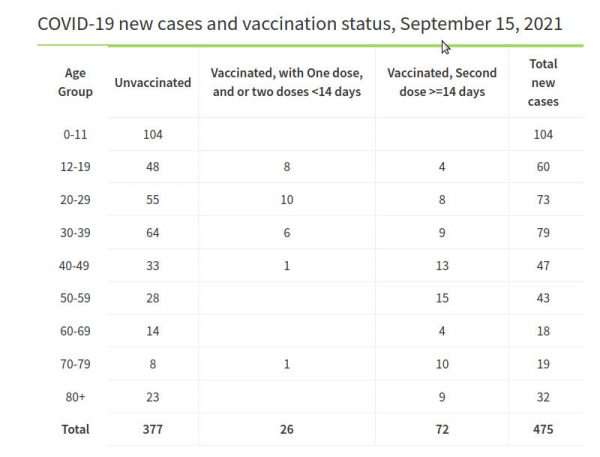
Wuhan Flu: Lies, Damned Lies, And Statistics

When The FBI Does It, That Means That It’s Not Illegal
U.S. gymnast @McKaylaMaroney: "After telling my entire story of abuse to the FBI in the summer of 2015, not only did the FBI not report my abuse, but when they eventually documented my report, 17 months later, they made up entirely false claims about what I said." pic.twitter.com/FfMuIWWBhV
— Daily Caller (@DailyCaller) September 15, 2021
Remember: Stories of pedophile rings operating at the highest levels of government are dangerous conspiracy theories.
What About Canada And New Zealand??
A new security pact has been formed to confront China. For some reason Canada and New Zealand were not included. Perhaps because they both have socialist, China loving leaders.
Update: Biden goes full dementia
Justine The Vaccine
Rex takes a look at Dear Leader’s claim that only he can solve the China virus pandemic. And what about Trudeau’s connection to China?
And The Budget Will Balance Itself
As of Q4 2020, Canada’s total credit to the non-financial sector sits at a staggering 359% of GDP according to the Bank of International Settlements. This is one of the highest totals in the G-20, right alongside Japan. The Japanese economy has been suffering under a mountain of debt for decades, with current credit to non-financial sector debt sitting at 418% of GDP. In other words they’re caught in a debt trap and haven’t been able to raise interest rates for over two decades. The Bank of Japan has been forced to keep interest rates pinned to the floor, requiring them to soak up government debt in order to keep bond yields and thus borrowing costs stable. The BoJ now owns over 48% of the entire bond market.
Back to Canada, where the debt loads are marginally less bad. Interest rates are frozen at zero and the Bank of Canada now owns 40% of the total government of Canada bond market. Are we turning Japanese? Sure looks like it.
Don’t forget, Canada & Japan are not alone. Most of the developed market is saddled with heavy debt loads. So now what? Financial historian Russell Napier suggests there are really only four policy options.
Related: Inflation hits 18-year-high with election just days away
September 16, 2021: Reader Tips
Inspired by a comment from Ontario Kate, here’s Scott Joplin‘s classic song, The Entertainer.
Your most interesting tips of the past day would be appreciated!
It’s A Poll!
Kenney Survive?
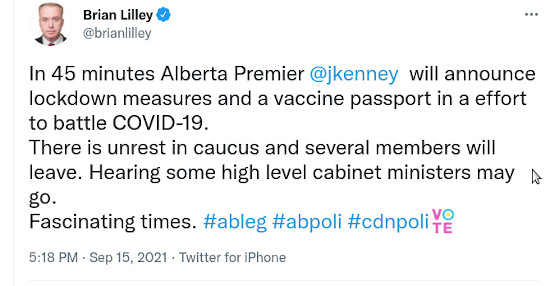
9% of Alberta’s ICU patients are fully vaccinated. That’s not how the Calgary Herald frames it, of course.
Alberta Panics
Andrew Lawton
BREAKING: Alberta Jason Kenney declares “state of public health emergency,” predicting Alberta will run out of ICU beds in next 10 days. Kenney calls for three steps: Maximize healthcare capacity, reduce transmission by reducing interactions, increase vaccination
Add anything else you find in the comments details are still coming out.
Need A Ventilator? Justin Has A Whole Warehouse Of Them
Gee, some people might think what happened is illegal. Too bad we don’t have a media that would show some interest in this. They are to busy earning their bribe money.
“Rare”
As compared to what?
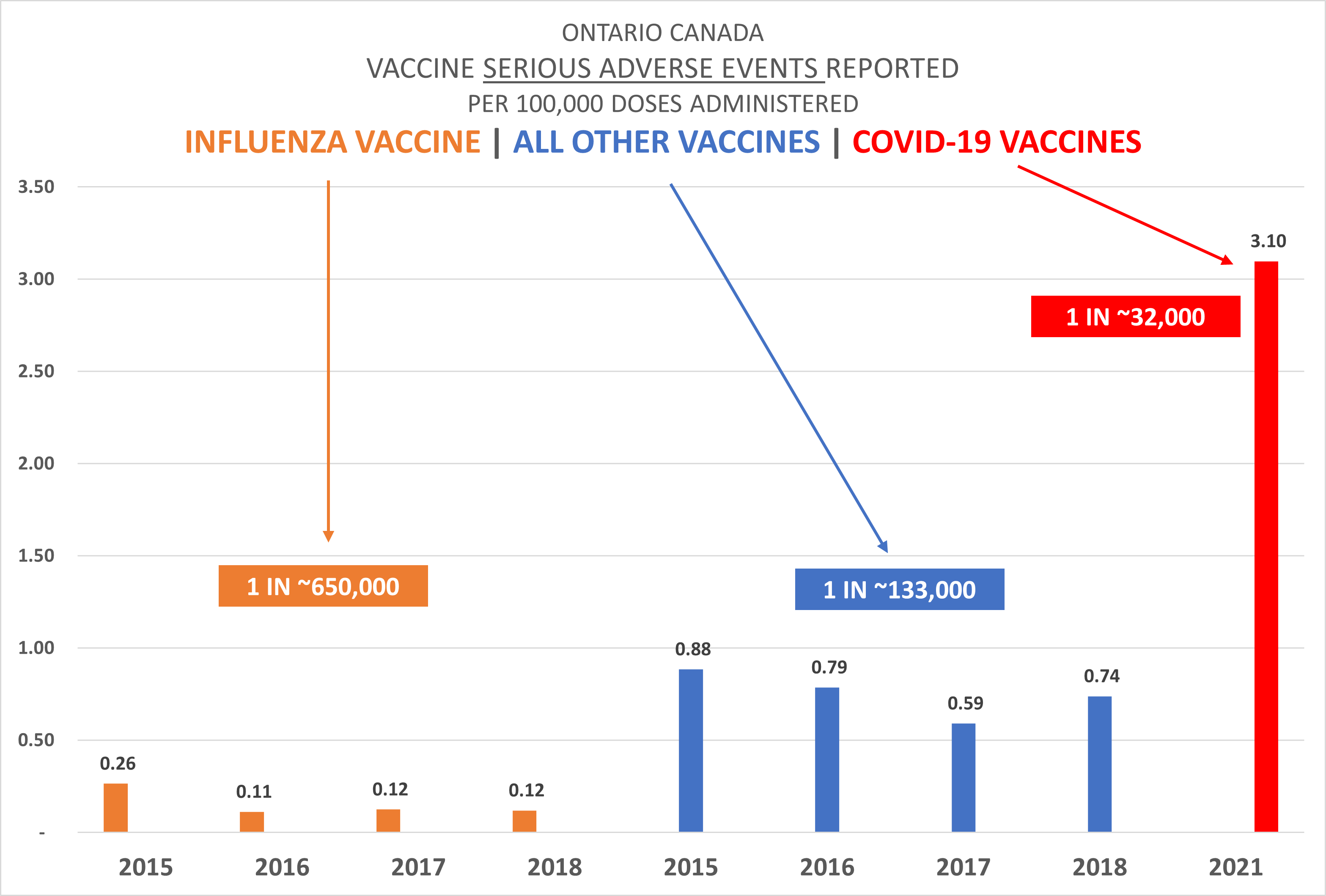
~20x more serious event incidence than flu vaccine
~4x more incidence than all other vaccines combined
Chart Sources: One here and one here
Now, are these cases over reported or under reported?
h/t Kelly Brown
Liberal Elites Want The Toronto Island Airport Shut Down
Former Liberal MP Vaughn and the Liberal replacing him, want the airport closed because their leftist buddies living on the island want it all to themselves. Justin will take care of it.
The Uniparty
Liberals, Conservatives suddenly agree on the need for EV sales quotas. How will they deliver post election?
Protecting the Vulnerable
To quote Pete Townsend I hope I die before I get old.
COVID-19 was repeatedly cited as a cause of death at the Herron nursing home to obscure the fact that dozens of elderly residents died from thirst, malnourishment and neglect, a Quebec coroner’s inquest heard Tuesday.
In an emotional testimony, an auxiliary nurse recalled how the facility in Montreal’s West Island was already poorly run before the crisis, how most of its staff abandoned their posts when the coronavirus struck, and how the local health authority then took over in a high-handed and inefficient manner.
The New Segregated Economy
We’re on the tale end of a federal election and so far the only two things being talked about on this topic is a billion dollar app and firing health care workers who don’t want the jab.
‘Getting dangerous’: Calls grow for federal action amid Canada’s nurse shortage
“I don’t think I can do a fourth wave with this kind of staffing,” she told Global News. “It’s not good for my mental health. It’s not good for my family. It’s not a workable situation anymore.”
Across the country, hospital staff are leaving their jobs at an alarming rate. And that’s prompting experts and health-care workers to call for more action from the federal government. Nearly one in five job vacancies in Canada is in health care and social assistance, according to Statistics Canada. In early 2021, those sectors experienced the largest losses year-over-year compared to all other sectors.
On Turtle Island Some Blockades are OK And Some Are Not
Although Robson didn’t do a very good job at it in this story, at least someone in the media is pointing out the hypocrisy of blockades. But Justin will let us know which blockades are ok.
The Election About Nothing
Jordan Peterson and Rex Murphy go over the upcoming Canadian federal election. The candidates, the debates and the mind numbing stupidity of it all.