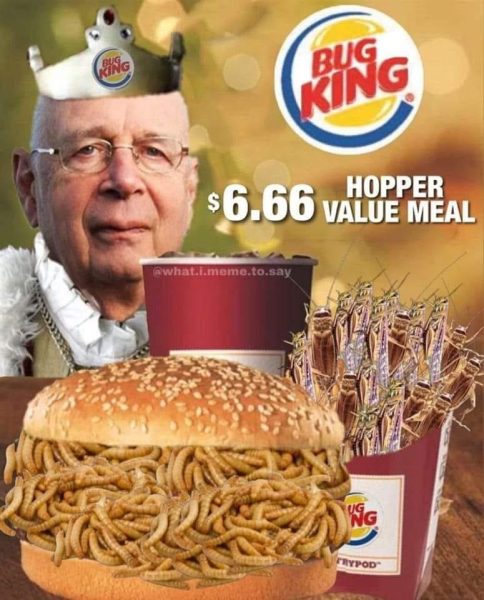
Category: We Need A Famine

War On Agriculture

Farmtario;

Agriculture and Agri-food Canada scientists have historically spent their time on things like improving yields, fighting crop diseases and increasing livestock feed efficiency — mostly agriculture production and risks to production.

Now, their top priorities should be sustainable agriculture and climate change, says the department’s Strategic Plan for Science, a document released last fall.[…]

A spokesperson for Canada’s agriculture minister Marie-Claude Bibeau said the change in the science strategy came from department leaders at AAFC, including Gilles Saindon, assistant deputy minister for the science and technology branch.

In an interview, Saindon said the shift in priorities was based on the Sustainable Canadian Agricultural Partnership, a five-year funding agreement between federal and provincial governments that came together last summer and takes effect April 1.

AAFC didn’t consult directly with farm groups or agriculture sector leaders before changing its scientific priorities.

There’s a reason for that.
Where’s The Beef?

I’ll have a side of ribeye with my striploin please. Medium

National Library of Medicine- Meat and mental health: a systematic review of meat abstention and depression, anxiety, and related phenomena

The majority of studies, and especially the higher quality studies, showed that those who avoided meat consumption had significantly higher rates or risk of depression, anxiety, and/or self-harm behaviors. There was mixed evidence for temporal relations, but study designs and a lack of rigor precluded inferences of causal relations. Our study does not support meat avoidance as a strategy to benefit psychological health.

War On Agriculture

Kevin Hursh;

The most blatant example is European farm policy mandating less fertilizer, fewer crop protection products and more organic production. The measures are particularly severe in the Netherlands where agriculture is in a downward spiral with thousands of farms being expropriated.

The Canadian issue sparking the most controversy is the 30 percent reduction target for fertilizer emissions. Although the government continues to maintain this will never mean a mandated reduction in fertilizer use, some farmers and farm groups are skeptical. The government used to promise that firearms would never be confiscated and look how that has evolved.

Less obvious to the average producer is the switch in emphasis on government funding for research. Increasingly, research money is tied to projects tied to climate change mitigation.

In the near future, farms with net sales of more than $1 million per year will have to complete an environmental farm plan to receive AgriInvest support. This isn’t totally unreasonable, but it seems like the thin edge of the wedge with climate change considered by the woke culture to be an emergency that requires all sorts of drastic action.

Related: Farmers say they are still struggling. Restaurants say price increases are pushing them to closure. Critics say supermarket prices are artificially inflated without international competition. Politicians, leery of offending voters, don’t say much at all.

Also: Edinburgh “bans meat” from schools, hospitals and nursing homes.

War On Agriculture

TNC Exclusive: Documents reveal feds considered carbon tax-like rule for farm fertilizers

The federal Liberal government has considered forcing a carbon tax-like “regulatory backstop” onto farmers should voluntary agreements to reduce fertilizer emissions not meet Ottawa’s arbitrary standards – and it could see crop production across the country drastically decline.

The Liberals have been pulling out all the stops in recent months as part of their ongoing efforts to reduce emissions in the name of fighting climate change. Carbon taxes, plastic bag bans and electric vehicle sales rules are just some of their initiatives, but they’ve also set their sights on emissions from fertilizer use by farmers.

The feds maintain that fertilizer targets will remain voluntary and be based on individually-crafted agreements with farmers and industry leaders. However, a Jul. 16, 2021, discussion paper acquired by True North from Agriculture and Agri-Food Canada via an access to information request shows the government floating a federal backstop as a “policy option” should all else fail. 

“A number of policy measures could be put forward for consideration beyond just a ‘voluntary agreement’,” wrote Agriculture Canada officials. “A suite of policy approaches will be necessary, and consideration to be given to a regulatory backstop should voluntary approaches not be successful.” 

True North received a document dump from the federal government that covered the inception of the program in 2020 through 2021. Agriculture Canada officials are currently processing another request pertaining to the program’s developments in 2022. 

Good Answer

CBC;

Federal government employees who enter private land without the owner’s consent face fines of up to $200,000 under an amendment to Saskatchewan’s anti-trespassing law.

“This formalizes and reinforces the change to trespass regulations, made earlier this year, that requires federal employees to comply with the Act, which prohibits individuals from entering private land without the owner’s consent,” Justice Minister Bronwyn Eyre said in a news release about the Trespass to Property Amendment Act, 2022.

The legislation comes in response to a complaint the province received in August from a person claiming federal employees taking water samples near Pense, Sask., had trespassed on their land.

Previous: Good Question

Beyond Appétit!

New York Post;

A leaked internal document revealed Beyond Meat products manufactured at the plant had tested positive for the harmful bacteria Listeria at least 11 times in the second half of 2021 and the first half of this year, Bloomberg reported on Monday.

The document was reportedly provided by a former employee who was worried about conditions in the plant, which is located within an hour of Philadelphia. Two other ex-employees confirmed that bacteria had been found at the facility.

The outlet also obtained internal documents stating that various contaminants, including string, metal, wood and plastic, had been found in Beyond Meat products produced at the plant as recently as last December.

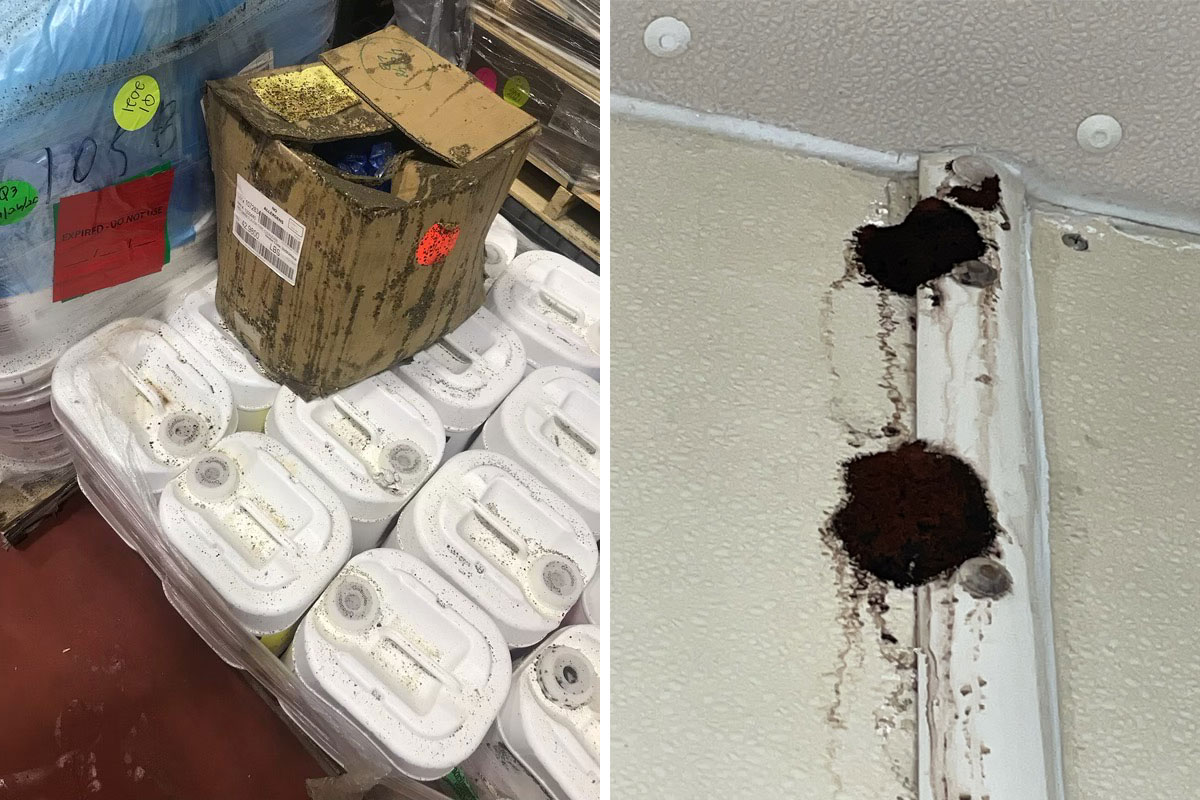
Bloomberg published photos from inside the facility that were provided by a former employee. The pictures showed “what appear to be spills, unsafe use of equipment, and mold on walls and ingredient containers,” according to the report.

What Happened To Beyond Meat?

The media moved on to the next latest thing.

Beyond Meat shares have dropped ~83% this year while sales have stagnated, per The New York Times.

– In October, it laid off 200 workers, or ~19% of its workforce.
– The company lost four execs, including the COO, who was accused of biting a man’s nose during a fight.

Employees also told The Wall Street Journal that CEO Ethan Brown, who founded Beyond Meat in 2009, rushed timelines, resulting in wasted resources and unenthused customers.

But it’s not just Beyond Meat

Brazilian meatpacker JBS announced it would shutter its plant-based arm in October, while Kellogg’s Morningstar Farms has seen sales drop, reportedly over supply chain issues.

Y2Kyoto: Schadenfrozen

“Germany is now the largest meat importer in Europe;

While Green politicians have condemned meat eating, the social reality is different, with nearly the entire German population eating meat on a regular basis. However, agricultural and green policies are stifling German meat production, making Germany wholly dependent on meat from foreign countries; this is creating a new dependence similar to Germany’s reliance on Russian gas, which turned out to be a catastrophic mistake.

Let them eat lettuce.

It’s Probably Nothing

Via True North;

President of Yara International, Svein Tore Holsether, told stakeholders during a third quarter conference call that global food supplies can’t be maintained if the supply of nitrogen fertilizer continues to tighten.

“The world’s food supply cannot be maintained without nitrogen,” said Holsether.

“We are deeply concerned about the state of global agriculture… Yara’s markets have never been more challenging than what we have seen in the past 12 months with European production costs reaching an all-time high.”

Warnings by Holsether coincide with what many Canadian farmers are experiencing here at home. […]

Farmers in Ontario have also seen fertilizer prices spike by a shocking 238% this year with no signs of relief.

“For example, farmers across eastern Canada continue to experience uncertain access to fertilizer and recognize that scarcity of this essential input is potentially a reality for years to come,” executive director of the Canadian Federation of Agriculture Scott Ross told the Sept. 28 committee.

Canada has Lots

Go talk to our Prime Minister.

BBC- Fuel protests gripping more than 90 countries

A third were countries which had no protests at all over fuel in 2021. For example, Spain had none in 2021, but saw 335 individual rallies just in March this year.

In Indonesia there have been more than 600 protests over petrol so far this year compared to just 19 in 2021. In Italy, there were over 200 in the first eight months of 2022 compared to just two last year. And in Ecuador, there were over 1,000 protests over fuel in the month of June alone.

Most surprising to Henry Wilkinson, the chief intelligence officer from Dragonfly, a security and intelligence service, is where the protests are occurring.

Okay fuel is a problem but at least the world still has lots of food…

Navigation