
What’s that I don’t hear?
Schadenfrozen
It’s probably nothing.
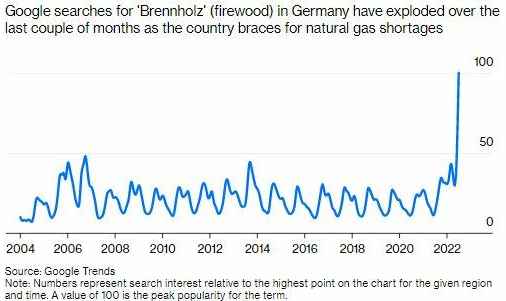
Y2Kyoto: State Of Anorexia Envirosa
The UK has more than 11,000 wind turbines.
The UK is planning for several days over the winter when cold weather may combine with gas shortages, leading to organized blackouts for industry and even households.
Under the government’s latest “reasonable worst-case scenario,” Britain could face an electricity capacity shortfall totaling about a sixth of peak demand, even after emergency coal plants have been fired up, according to people familiar with the government’s planning. Under that outlook, below-average temperatures and reduced electricity imports from Norway and France could expose four days in January when the UK may need to trigger emergency measures to conserve gas, they said.
Y2Kyoto: I’ll Miss The Great Barrier Reef
I know all of you will be surprised that an organism which survived the dinosaur killer has has shown an unexpected ability to cope with a degree of global warming over the last 172 years.
The Return of Coal
Oilprice.com- Global Coal Demand On Track To Match Record
Y2Kyoto: Schadenfryin’
There’s such a thing as too much sun for solar panels, and Europe’s solar industry is starting to buckle.
Y2Kyoto: Act Of God
Russia’s Gazprom tells European buyers gas supply halt beyond its control
Russia’s Gazprom has told customers in Europe it cannot guarantee gas supplies because of “extraordinary” circumstances, according to a letter seen by Reuters, upping the ante in an economic tit-for-tat with the West over Moscow’s invasion of Ukraine.
The Russian state gas monopoly said in a letter dated July 14 that it was retroactively declaring force majeure on supplies from June 14. The news comes as Nord Stream 1, the key pipeline delivering Russian gas to Germany and beyond, is undergoing 10 days of annual maintenance scheduled to conclude on Thursday.
The letter added to fears in Europe that Moscow may not restart the pipeline at the end of the maintenance period in retaliation for sanctions imposed on Russia over the war in Ukraine, heightening an energy crisis that risks tipping the region into recession.
Via Richard Fernandez – “The kindest thing you can say is that the Greens believed their own miscalculation, and in a well meaning way, accidentally made possible war in Europe”.
Y2Kyoto: The Art Of Theatre
the EU is in serious trouble on power grids. they chased a made up green dream where over-priced and under-reliable power sources like wind and solar were subsidized and mandated into adoption while longstanding and effective nuclear was shut down (though france did mostly keep theirs). and now, as they rapidly discover their newfound dependence on geopolitical rival russia and desperately need solutions, what is the grand plan of france?
Y2Kyoto: I’ll Miss The Polar Ice Caps
Let’s check in on our planetary doomsday clock.
Despite rhetoric to the contrary, there is still plenty of sea ice over Arctic regions this summer, supplying feeding platforms for polar bears, ice-dependent seals, and walrus cows nursing their young calves. Forget about whether the numbers are below or above some short-term average, there is no catastrophe in the making for marine mammals in the Arctic at this time. […]
This post is predominantly sea ice charts for mid-July, what we in the science field call observational evidence, aka ‘facts’. Keep in mind that satellites used to produce these images have an especially hard time distinguishing ice topped with melt water from open water, which means much more ice useful to these marine mammals is almost certainly present than is shown in the charts (as much as 20% more in some regions).
Y2Kyoto: Schadenfrozen
The German Economy Is On The Brink
The economist Herbert Stein once wrote that if something cannot go on forever, it will stop. It seems like the German — and with it probably the European — economy is reaching that point. Most of Europe’s 100 largest companies were founded in the 1980s or before, which means that the old continent has entirely slept through the digital revolution of the 1990s and 2000s. There is no European counterpart to American corporations like Facebook, Amazon, E-Bay or China’s Alibaba or WeChat.
This became painfully clear during the Covid pandemic, when the once vaunted German bureaucracy was revealed to rely on paper, pens and fax machines in its health care system due to a complete lack of digitalisation in key areas. Not surprisingly, the German economy shows cracks elsewhere as well. Measured by market capitalisation, only one German company makes it into the top 100 worldwide, and German market capitalisation as a share of global market capitalisation has shrunk to 1.97%, an all-time low. These are devastating numbers for a country that just a few years back was seen as a model for the world with its transition to Green energy and the planned exodus from nuclear power.
In fact, to add insult to injury, one of the largest German producers of rotator blades for wind turbines has announced it will close down production in Germany and move to India. Similarly, Villeroy & Boch, a company that has produced tiles in the German city of Merzig since 1879 will retire its factory and move manufacturing to Turkey, quoting high energy and labour costs as the main reason. One could argue these are just anecdotes, but it is probably no coincidence that for the first time in 30 years Germany posted a trade deficit of over one billion euros, meaning that Germans are importing more than they are exporting.
More: Germany Is Quietly Shutting Down As Energy Crunch Paralyzes Economy
According to the FT, Germany is now rationing hot water, dimming its street lights and shutting down swimming pools as the impact of its energy crunch begins to spread like the proverbial Ice-Nine wave, from industry to offices, leisure centers and residential homes.
Y2Kyoto: Sanity On The Sub-Continent
The action is just one of the many measures that the country has taken to ensure a seamless supply of coal to power plants that generate more than 70 percent of the electricity consumed by the subcontinent’s industries and 1.3 billion people. Leaders in developing parts of the world are ready to wear a badge of dishonor that climate alarmists award those who reject their absurd policy proposals.
“Earlier we were hailed as bad boys because we were promoting fossil fuel and now we are in the news that we are not supplying enough of it,” said India’s Coal Secretary, pointing to the negative coverage of a media that change colors as frequently as chameleons and the global hypocrisy over fossil fuels.
The post-pandemic economic recovery has sent power demand to unprecedented levels, resulting in rapid depletion of coal stockpiles at power plants and threatening serious consequences both to individual lives and major industrial processes.
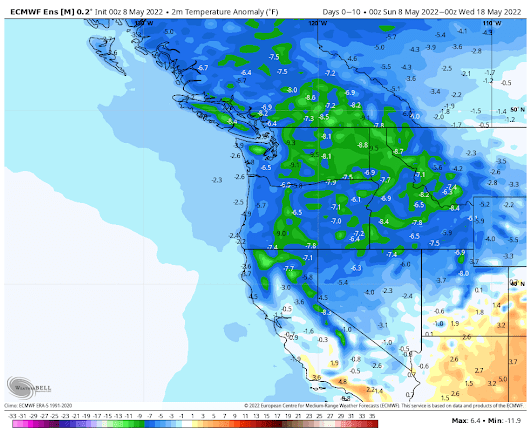
Spring Fever
h/t DeNihilist
Y2Kyoto: The First Cut Is The Deepest
Because until now, no one was this stupid: Operating rooms are the climate change contributor no one’s talking about
Y2Kyoto: Fixes Exist!
If you’ve been reading this blog lately, you know that the mythical transition to an energy future of pure “green” wind and solar electricity faces a gigantic problem of how to provide energy storage of the right type and in sufficient quantity. To make the electrical grid work, the wildly intermittent production of the wind and sun must somehow be turned into a smooth flow of electricity that matches customer demand minute by minute throughout the year. So far, that task has been fulfilled largely by natural gas back-up, which ramps up and down as the sun and wind ramp down and up. But now governments in the U.S., Europe, Canada and elsewhere say they will move to “net zero” carbon emission electricity by some time in the 2030s. Natural gas emits CO2, so “net zero” means that the natural gas must go. The alternative is energy storage of some sort.
Clearly, it is time to start figuring out how much energy storage we’re going to need, and of what type. Indeed, it is well past time to start figuring that out. If our government were even slightly competent, and also serious about “net zero” electricity by 2035, it would by this time have long since put together detailed feasibility and cost studies and demonstration projects showing exactly how this is going to work. Naturally, they don’t have any of that.
Y2Kyoto: THIS CHANGES EVERYTHING
BREAKING: Singapore and New Zealand to jointly tackle climate change
Weird
Conservative Treehouse: The G7 countries (including the U.S.) announced today they were demanding that Russia accept payment for oil and gas in euros and dollars. This is happening at the same time NATO is demanding (via sanctions) that Russia be blocked from accepting payments in euros and dollars.
Y2Kyoto: State Of Anorexia Envirosa
From reader “DN”, on today’s earlier post on spiking ammonia prices;
The lower a product is in the Jenga tower of the modern economy, the more disastrous it is when you screw with it. Hydrocarbons are at the root of absolutely everything. Leftists are trying to replace the entire basis of the modern industrial economy, and they’re trying to do it in a way that has never happened in all of human history. Coal didn’t replace wood, it supplemented it. Oil didn’t replace coal, it supplemented it. Nuclear didn’t replace oil, it supplemented it. Each step involving exploitation of a more energy-dense fuel source didn’t replace the previous source, it merely reduced reliance upon it. People still burn wood and coal, we’re just burning less of it, and allowing it to be used for other things instead of keeping us alive and warm. Humanity will never stop using hydrocarbons; even if we were to replace every oil-fired power plant and vehicle with nuclear/electric, we’ll just redirect the hydrocarbons to places where they’re more profitably used, like fertilizer and plastic.
The one thing that we will never be able to do is “leave it in the ground”. That’s not how a modern industrial economy works. So what the progs are really trying to do is destroy the modern industrial economy – and with it, about 7/8ths of the population of the planet. They are advocating nothing less than deliberate genocide in the service of their Gaia-worshipping death cult. Anyone who knows the basics of science and can perform simple arithmetic understands this. Their ultimate goal is to outdo Hitler, Stalin and Mao combined, by a couple of orders of magnitude.
The funny part is that they think they’ll be the last ones left alive. I wouldn’t bet on that; people facing starvation tend not to go gentle into that good night.
Y2Kyoto: On Second Thought
Nothing sharpens the mind like a cruise missile. (h/t Adrian)
Y2Kyoto: End of Coal

Y2Kyoto: The Planet Has A Fever
