Category: youmightbeinsaskatchewan

Poland is planning on 20, possibly more, SMRs of the same design SaskPower chose

I’ve been waiting to see a story come out about this for a while. A few weeks ago I saw that Poland may be building as many as 79 of the General Electric Hitachi BWRX-300 reactors, the exact same design chosen as SaskPower. This story indicated 20 at this point, but hints it could be more.

Ontario Power Generation is building the first one. Tennessee Valley Authority is building the second. Saskatchewan may have thought we were all that and a bag of chips by announcing four. But we won’t finish our second until around 2038. In the meantime, Poland might have built all 79 by that time.

We might have thought we’d be driving the bus on this SMR rollout. We’re not. In other words, the instruction manuals will likely be written in Polish. But it also means a lot of confidence is being expressed by the Poles in the design, if they build 20, or 79, or whatever.

As for how much uranium will go into these, I sat at a banquet a few weeks ago with some Cameco reps. They explained that SMRs actually use very little uranium. You fill them up at the start, and basically that’s it. That was very insightful, I thought, because that’s exactly how current US nuclear submarines (with small reactors) work.
Leading indicators and closing indicators in Saskatchewan oil

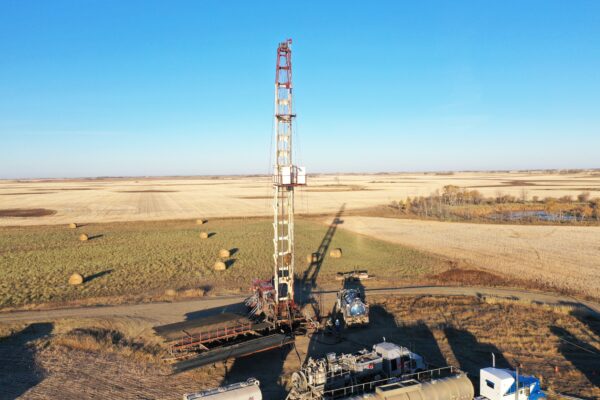
An oil well abandonment near Bienfait in the fall of 2022.. Photo by Brian Zinchuk

One of the key leading indicators of oil and gas development is Crown land sales. And the Saskatchewan April sale saw increased interest in all four oil production areas of the province.

On the opposite end of the timeline is well abandonment and cleanups.  When the crap hit the fan for the industry when COVID-19 hit, there was a cry for some sort of relief program. That ended up being the Accelerated Site Closure Program, which properly abandoned inactive wells and facilities. That program just recently concluded, having been fully subscribed.

And on the other side of the country, Newfoundland’s Muskrat Falls hydro project is finally online. This project almost bankrupted Newfoundland, but the feds quietly bailed them out during COVID. That kinda got swept under the rug. Muskrat Falls was Newfoundland’s attempt at squeezing additional power out of the same river system as the massive Churchill Falls project, which produces about 50 per cent more power than the entire province of Saskatchewan on any given day. Quebec pays Newfoundland next to nothing for that power, and uses it domestically and sells it to the US and enormous margins. Muskrat Falls, at a much lower output, was basically Newfoundland’s F You to Quebec.

These canola crushing plants aren’t because everyone decided they want Becel

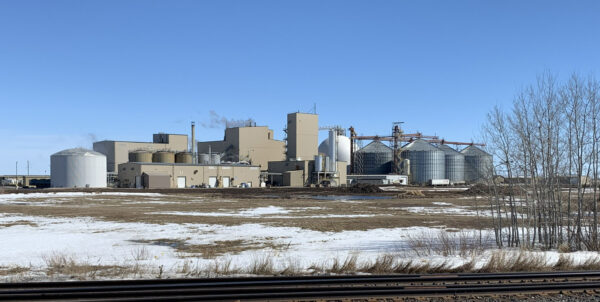
Yorkton Louis Dreyfus canola crushing plant
Yorkton’s Louis Dreyfus canola crushing plant to double in size, driven by the Clean Fuel Standard Saskatchewan’s government opposes.
This is a real conundrum for the provincial government. The mantra, for decades, is to bring value-added processing here. But in this case, it’s to replace petroleum with biofuels. Which, in turn, takes farmland out of food production and puts it into fuel production. That might be okay, if everyone on this planet was properly fed. They aren’t, 
My mom lives directly across the fence from both this plant and the JRI plant. She was there long before they were built in 2009. They were both built directly upwind of the city of Yorkton. And they smell like the contents of a diaper of a four-month-old baby, ALL THE TIME. Oddly enough, the prevailing winds sometimes sweep that smell right past the acreage and straight into the heart of Yorkton. You can often clearly smell it clear across the city, from Broadway to the Parkland Mall. While that may be the smell of money for the few hundred people that work at them, it’s definitely not for the 16,000 other residents.

And now you know why Moe pushed the Saskatchewan First Act

Federal justice minister David Lametti “looking at” taking away natural resources from provinces. Scott Moe says national unity at stake. This is precisely what the Saskatchewan First Act, proclaimed April 6, is about.

Notably, the request for the feds to take away control of natural resources from the provinces of Manitoba, Alberta an Saskatchewan came from the grand chief of the Prince Albert Grand Council. The federal minister will “look at” it.

Breaking up with coal is hard to do

One of the coal units we just can’t seem to shut down, even though we’re supposed to, according to the feds.

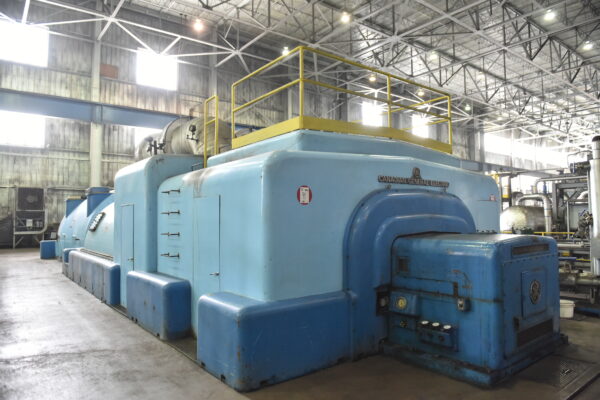
By federal regulation, one coal unit at Boundary Dam Power Station was supposed to shut down in 2021, another in 2024. Well, we’re not going to do that. Because we can’t. We still need them. Turns out all those wind turbines can’t be relied on, after all, can they? Like on April 4, when they put out less that 4% in Saskatchewan.

This US power line is a big deal for Saskatchewan

Some people are not happy about the idea of being replaced by imported, carbon tax-free coal and natural gas-fired power, while we move to shut down our own coal mines and power facilities. Op-Ed: Saskatchewan Coal Transition Centre: Sabotaging our future: How SaskPower’s $1 billion scheme to import power from the U.S. will devastate Estevan and leave Saskatchewan’s economy vulnerable

A million dollars isn’t cool. You know what’s cool? A billion dollars … from lithium

Here’s why Pipeline Online has been doing such a deep dive into lithium in Saskatchewan. If current lithium prices hold, the standard-sized lithium project (of which there are several) planned for Saskatchewan will result in just under a billion dollars (CAD) per year in revenue. That’s right – per year, each. If they can get direct lithium extraction to work, we’re talking about a multi-billion industry in this province in a few years time

Independent Farmer Sighting!

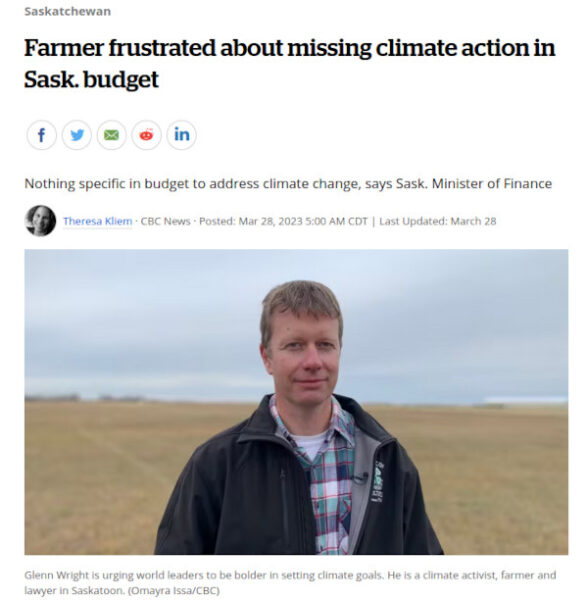
Oh noes! CBC’s Theresa Kliem has found a farmer whose unhappy with the SaskParty budget! Glenn Wright is “a climate activist, farmer and lawyer in Saskatoon.” Somehow, the photographer captured him standing before a field without snow.

“Really this budget has nothing to offer by way of trying to address our climate crisis,” said Glenn Wright, who grows a variety of crops on his farm near Delisle, west of Saskatoon.


“It’s worse than that because it perpetuates this business-as-usual.”

Wright looked for words such as greenhouse gas or emission, but couldn’t find either of them, he said.


Well, I looked for words such as “NDP candidate for Rosetown Elrose SK provincial riding”, and I couldn’t find that either.

I wrote an email to Ms. Kleim a few minutes ago. I await her explanation.

Related, for old tymes sake…

Saskatchewan is aiming to provide the building blocks for the 21st century

Here’s how critical minerals are involved in a typical cellphone. Government of Saskatchewan

To provide the building blocks of 21st century technology, #Saskatchewan releases Critical Mineral Strategy. That includes helium, lithium, potash, copper, nickel, uranium, and a whole pile of rare earth elements. Saskatchewan wants to double its share of the mineral exploration pie in Canada.

In a related story, flow through shares would be great, if only they applied to helium exploration, says Royal Helium CEO.

But Saskatchewan’s Critical Mineral Strategy’s flow through shares are a big deal for junior mining company Buffalo Potash.

Everything you need to know about the Saskatchewan 2023 budget, from the energy perspective

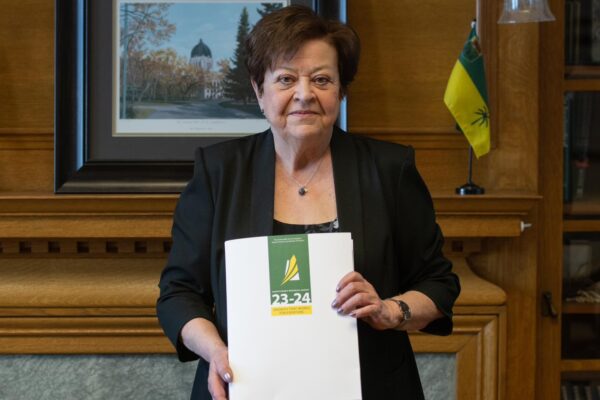
Donna Harpauer, Minister of Finance and Deputy Premier. Government of Saskatchewan photo

Pipeline Online poured through the 2023 provincial budget to dig up everything possibly applicable to the energy sector.

On Tuesday, hearings began before the Supreme Court of Canada on the “No More Pipelines Act”.

And for something totally not political, an Oxbow couple saw a need for a Saskatchewan-focused oilfield services directory app, so they made one.

A whole smorgasboard from the CN Tower climber, and the feds in general

Saskatchewan is intervening this week in the “No More Pipelines Act” case. You know, the one that basically will kill any major energy project?

And if the No More Pipelines Act wasn’t enough, our good old CN Tower climber Minister of Environment and Climate Change wants to speed up emissions reductions by another 10 years. And remember, on any given day, Saskatchewan relies on up to 86 per cent of its power coming from coal and natural gas, as it did on March 15 (previously posted).

And when Guilbeault’s not doing that, he’s going to take a hard look at oilsands issues.

And on the lighter side of things, Quick Dick McDick shows us curling in a small-town, two-sheet rink with natural ice, perogies and curling for mickeys. Because nothing says Saskatchewan like curling for mickeys.


In an effort to literally keep the lights on, the Saskatchewan First Act passed by provincial government

Here’s some in-depth coverage about the implications of the Saskatchewan First Act, not just who was or was not consulted.

The second half of the story goes in depth as to what the NDP would do if the federal government and courts force Saskatchewan to shut down natural gas-fired power generation, after having done the same with coal. By the way, the day this act was discussed in committee, SaskPower used natural gas for 47 per cent of our power production, and coal for 39, for a total of 86 per cent. Watch for a story on that soon.

Navigation