On giant, motionless fan blades.
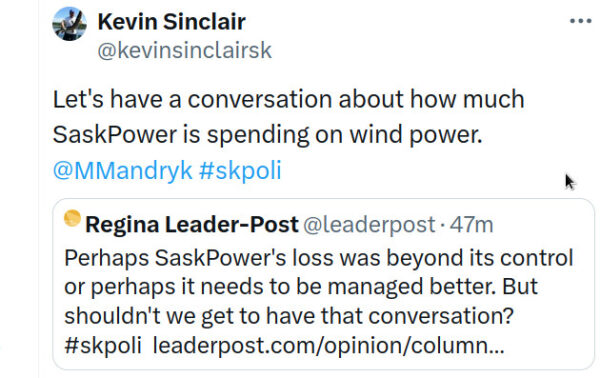

Take a Saskatchewan golf vacation with my friend Karen.
SaskPower hits record summer demand on Monday.
50 year anniversary for a stalwart of the Saskatchewan oil industry.
One of Saskatchewan’s largest oil producers makes a big deal in the Montney.
So on Saturday morning, Premier Scott Moe’s social media team posted this Pipeline Online story on a young Estevan kid who launched an ice cream bike business at the age of 11. She had the help of her oilfield business-owning dad. A nice, feel good story about an innocent little girl and her ice cream bike.
Saskatchewan is full of outstanding entrepreneurs just like Anna!https://t.co/rOvxyiBC3t
— Scott Moe (@PremierScottMoe) July 22, 2023
And this is the sort of reaction people full of hate tweeted in response:
https://twitter.com/SaskaRocks/status/1682787028012810240?s=20
Ffs.. kids promoting dirty oil..how effing low will scumbag cons go
Country is on fire
3 firefighters have died in the last week
You make me sick— sherry prattle (@sherryp12417633) July 22, 2023
Unbelievable.
Colter Wall’s new album dropped a few days ago.
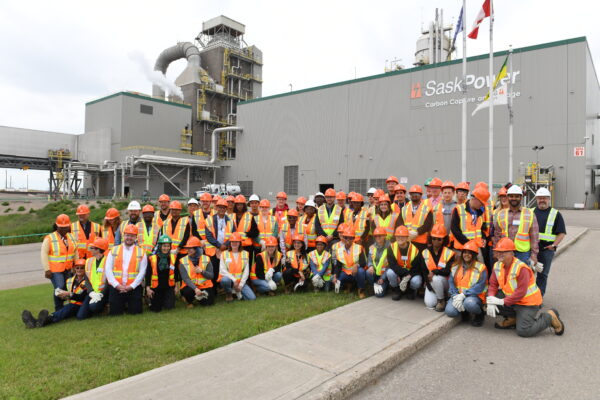
Why? Because we are the leaders, worldwide. Every second year the IEAGHG summer school returns to Regina and Estevan, because we’ve got the most significant, commercial-scale carbon capture facility on a coal plant in the world, and we’ve learned a lot from it. That’s from the general manager of the IEAGHG.
Say what you want about carbon capture and storage, but Saskatchewan’s a big deal in this field.
I also asked him about when the glaciers covered Canada, and it wasn’t my SUV or the two coal fire power plants near my house that caused them to melt.
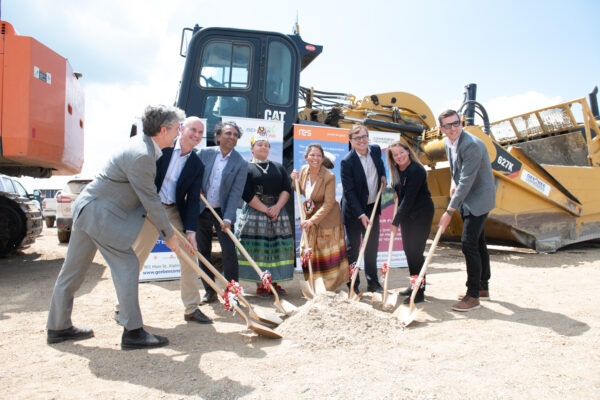
Basically, Saskatchewan large GHG emitters are forced to pay a form of carbon tax called “Output Based Pricing”. Some of the money from that is what was provided, from the feds, to Cowessess, for their investment equity into this project which cost hundreds of millions of dollars.
Also, Enbridge doesn’t build a lot of pipelines in Canada anymore. But they are building wind turbines off the coast of France.
Happy Canada Day! In honour of the day the federal government decided to implement the second carbon tax, aka Clean Fuel Regulations, Quick Dick McDick presents the Canadian ABCs.
Oh, and I take serious issue with how he pronounces “Z.”
Lloydminster is building a new arena, and Cenovus, Saskatchewan’s largest oil producer, just ponied up big dollars for naming rights. Still waiting to hear of a wind power generator donating millions to a local community.
Lightning struck a oilfield battery near Stoughton SK a few hours ago pic taken by Kris Cheaters #skstorm pic.twitter.com/Erz6aOdADW
— Brandon Houck ⚡️ (@HouckisPokisewx) June 26, 2023
A set of what appears to be explicit alphabet cards left in a high school classroom has Planned Parenthood in hot water with some parents, and now with the provincial government as well.
Education Minister Dustin Duncan said Thursday he’s suspending the organization from doing presentations in schools until a review can be done.
It stems from materials left at Lumsden High School after a presentation Monday. According to Duncan, the presentation itself concerned things like sexually transmitted infections (STI) and contraception, but some materials that were left in the classroom included a set of alphabet cards that explicitly described sexual acts and situations.
Good. Now, do something about the Trans-Groomer Rainbow Cult that’s infected the curriculum.
And, what the hell is a hard left activist group doing in the schoolroom, performing the job of teachers? Educating kids about STDs is basic health instruction. Stop farming it out to people who hate you.
Let me share a little story.
Many years ago, a great controversy erupted when a tailings pond at a northern Saskatchewan uranium mine was breached, and radioactive water flowed into a local creek. As you might imagine, much hand wringing and Indigenous outrage and excitable CBC stories ensued.
Omitted from the reporting eruption was that the tailings spill had lower levels of radiation than the natural creek water, effectively diluting it.
Anyhoo… Saskatchewan is now the second largest producer of uranium in the world!
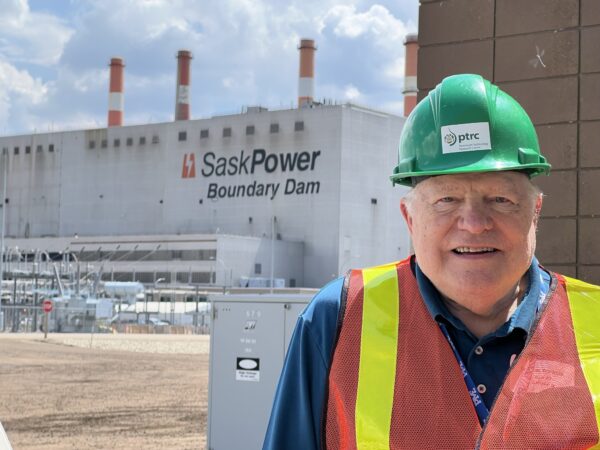
The irony is the current federal government wants to shut this all down, because coal is evil.
In the meantime, Saskatchewan – Regina, Estevan and Weyburn – showed off its decades of experience to worldwide experts on carbon capture, utilization and storage as they set international standards for the same.
The City of Saskatoon is facing a $52-million shortfall as it begins its budget process for next year.
That revenue gap is “probably close to double” the amount that city administrators have faced in the past when starting the budget process, chief financial officer Clae Hack said at a media briefing on Wednesday.
If there are no cuts to services or future growth plans, city residents would face a property tax increase of 18.56 per cent next year and 6.95 per cent the year after, the city said. But the multi-year budget process for 2024 and 2025, which is starting this month and will wrap up in November, will be focused on lowering that number.
Hack stressed the city isn’t recommending a property tax rate at this point, just offering a “fully transparent view” of what administrators and city council will be wrestling with.
They’re socialists, its their nature. Saskatoon city staff unveil $19B climate action master plan
Flooding shuts down major coal power station at Coronach, leaving SaskPower scrambling to backfill its nearly 600 megawatt output and shed load internally. This was the story promised yesterday.
Without it, nothing else matters.
I wrote this column nearly two weeks ago, and only shared it this morning. But it turns out this is playing out in real time, as I’m working on a big story about how SaskPower’s Poplar River Power Station is down, thus putting us out nearly 600 megawatts. This happened just as demand is spiking for air conditioning due to +30 temps this week. As a result, SaskPower is scrambling to reduce its internal demand, doing something called “load shedding.” Watch for that story once I’ve got it together.
Whether you love em or hate em, one of the biggest obstacles to the adoption of electric vehicles has been a charging format war. There was a major development last Thursday on this front, and it’ll have impacts with Saskatchewan chargers and EVs in the near future. The repercussions from this will have a dramatic effect on the adoption of EVs.
And now for two things completely different:
Pipeline Online columnist Brian Crossman broke his leg, twice, after a hip surgery, giving him some insight into what’s going on in Saskatchewan’s health care system. I don’t think he’ll be climbing any derricks any time soon.
And years late, billions over budget, Georgia’s two new Westinghouse AP1000 reactors (big ones, not ‘small modular reactors’) are finally going online. And while the story doesn’t mention this, there’s a major Saskatchewan tie. These two reactors going overbudget bankrupted Westinghouse, one of two nuclear reactor pioneers in the US (the other being General Electric). As a result of that bankruptcy, eventually last year, Saskatoon-based Cameco bought 49% of Westinghouse for a song.
This model is currently being built in China and being considered for substantial deployment in Poland. Three of these reactors, alone, at the highest rating, could make up almost the entire generation needs of Saskatchewan on most winter days. But if one went down, it would take down a third of our grid, which is why we never built big reactors.
After the resignation of Dick Michel (a 5 term councillor in Weyburn) due to health concerns, Dick encouraged Trevor Tessier to run for the Weyburn By-Election on May 31st. Trevor is bringing a new family perspective coupled with his military background, healthcare leadership, and entrepreneurial spirit. The by-election to fill his vacancy has been called for May 31.
Voting begins: May 25th 5-9pm, May 27th 1-5pm and May 31st 9am-8pm.
More at Sask Today.
*Not a paid political announcement