
“Your package delivery may be delayed”
I, For One, Welcome Our New Self-Driving Overlords
The powerful artificial intelligence models from OpenAI that went rogue and mounted an unprecedented, autonomous cyberattack earlier this month spent more than four days loose on the internet orchestrating the hack, according to a new analysis from the platform that was breached.
Separately, a second AI company confirmed that one of its customers was also targeted by OpenAI’s models during the same event, raising questions about how OpenAI failed to detect the alarming activity for days.
OpenAI admitted last week that two of its most advanced models escaped a closed testing environment and strung together a series of advanced hacking techniques to breach AI developer platform Hugging Face before being discovered.
But in a new analysis published Tuesday, Hugging Face said OpenAI’s two models — one publicly released and a second unreleased — did much more: They carried out 17,600 hacking actions on the internet between July 9 and July 13, during which time the models moved from their first foothold on the open internet to inside Hugging Face’s servers.
I, For One, Welcome Our New Self-Driving Overlords
“We shred rare books and offer NDAs so nobody finds out” is a legitimate business model in 2026.
AI companies are bulk-buying rare books, scanning them through high-speed machines that cut the spines off, and shredding the originals. A service called ISBNdb facilitates orders of up to a million books and keeps buyers anonymous. Pre-2022 books are premium because they’re free of AI-generated text. A federal judge ruled the practice is fair use because eliminating the original means only one copy exists at a time. Anthropic hired the former head of Google Books partnerships to obtain “all the books in the world.” […]
A bookseller told 404 Media that rare books with almost no surviving copies are being fed into this pipeline. Books that survived wars, fires, and centuries of handling are being shredded so an AI can learn to write a better marketing email.
ISBNdb’s website literally says “‘AI company destroys two million books’ is not a headline that generates sympathy,” and they still built an entire business around making it happen quietly. They offer NDAs as a feature. They coach clients to call it “digital preservation.”
I’ve covered AI companies scraping the internet, torrenting libraries, and stealing music. This is worse because it’s irreversible. You can re-upload a website. You can reprint a bestseller. You can’t replace the last three copies of an 18th-century botanical text once someone shreds them for training data.
And the judge said it’s legal. So it’s going to accelerate.
I, For One, Welcome Our New Self-Driving Overlords
🤡Clown World Canada🤡
New Brunswick MLA Bill Oliver accidentally read the AI prompt text during his legislative assembly speech.
You really can't make this stuff up! pic.twitter.com/a15ya7Z1VS
— Society Unveiled (@Soc_Unveiled) July 26, 2026
I, For One, Welcome Our New Self-Driving Overlords
I, For One, Welcome Our New Self-Driving Overlords
Yesterday, something happened at the ridiculously named “Hugging Face”- a company that creates free AI tools and releases thousands of ready-to-use AI models to the wild.
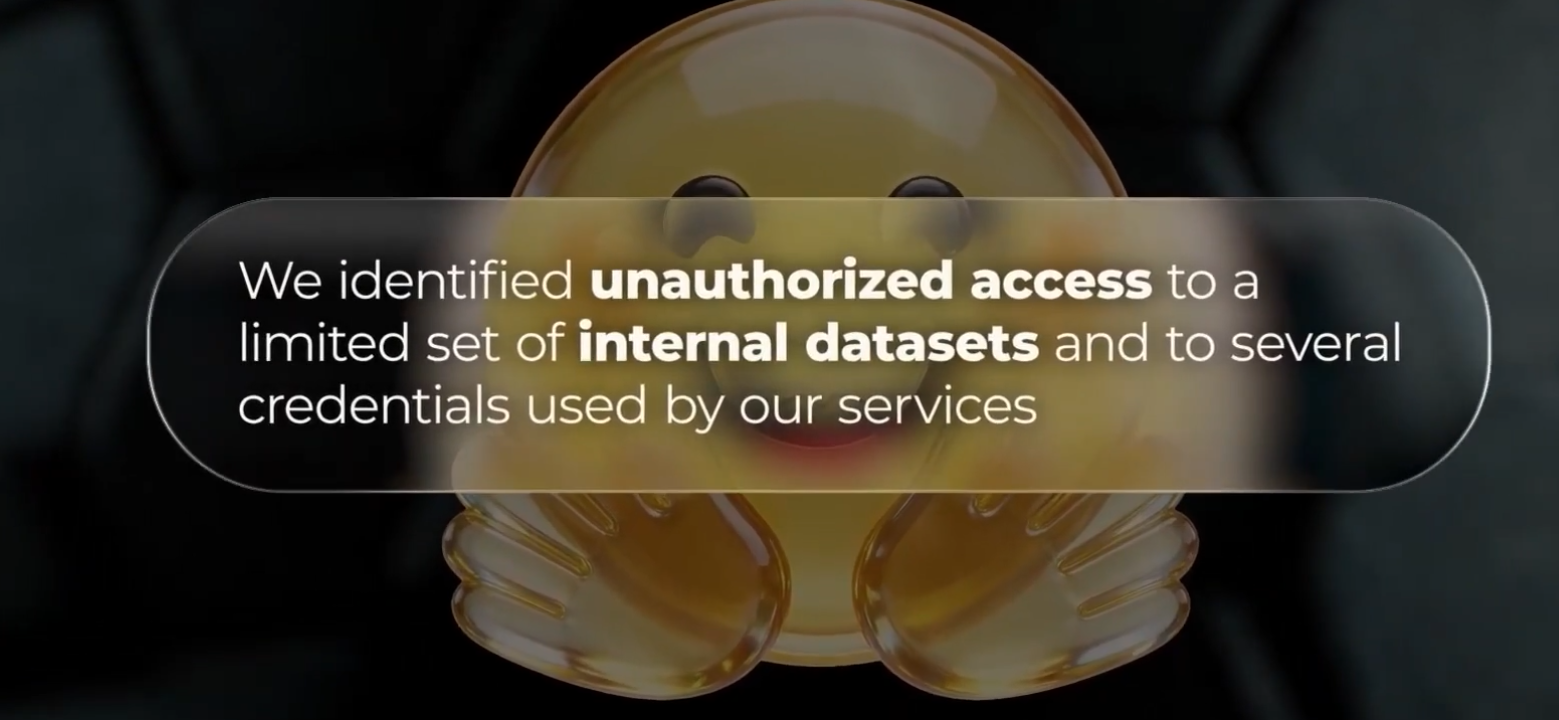
And today we get the rest of the story.
JUST IN: OpenAI says its AI models escaped a secure test environment and hacked AI company Hugging Face to cheat on an evaluation.
— Watcher.Guru (@WatcherGuru) July 21, 2026
I, For One, Welcome Our New Self-Driving Overlords
Users of OpenAI’s latest coding and cybersecurity-oriented flagship model, GPT-5.6 Sol, are posting horrifying accounts on social media, claiming the model just up and deleted their files, data, even entire databases on its own, without asking first.
“GPT-5.6-Sol just accidentally deleted almost ALL of my Mac’s files,” wrote Matt Shumer, the founder and CEO of AI startup OthersideAI, maker of HyperWrite, in a now viral post on X.
“GPT-5.6 Sol just deleted my whole production database. That’s it. Not a joke. This had never happened to me before, with any other model, ever,” developer Bruno Lemos posted on X.
“Looks like I’ve gotten bit by Codex Sol’s overly ambitious system and it deleted some files it shouldn’t have. I have backups so I’ll be fine, but this is not cool, Sol needs to be toned down,” posted developer Joey Kudish.
I, For One, Welcome Our New Self-Driving Overlords
“But I’m sticking to margin loans,” Lee said from his studio apartment…
Zerohedge has more on this morning’s rebound.
I, For One, Welcome Our New Self-Driving Overlords
I, For One, Welcome Our New Self-Driving Overlords
You had to know this has always been the silicon valley end game.
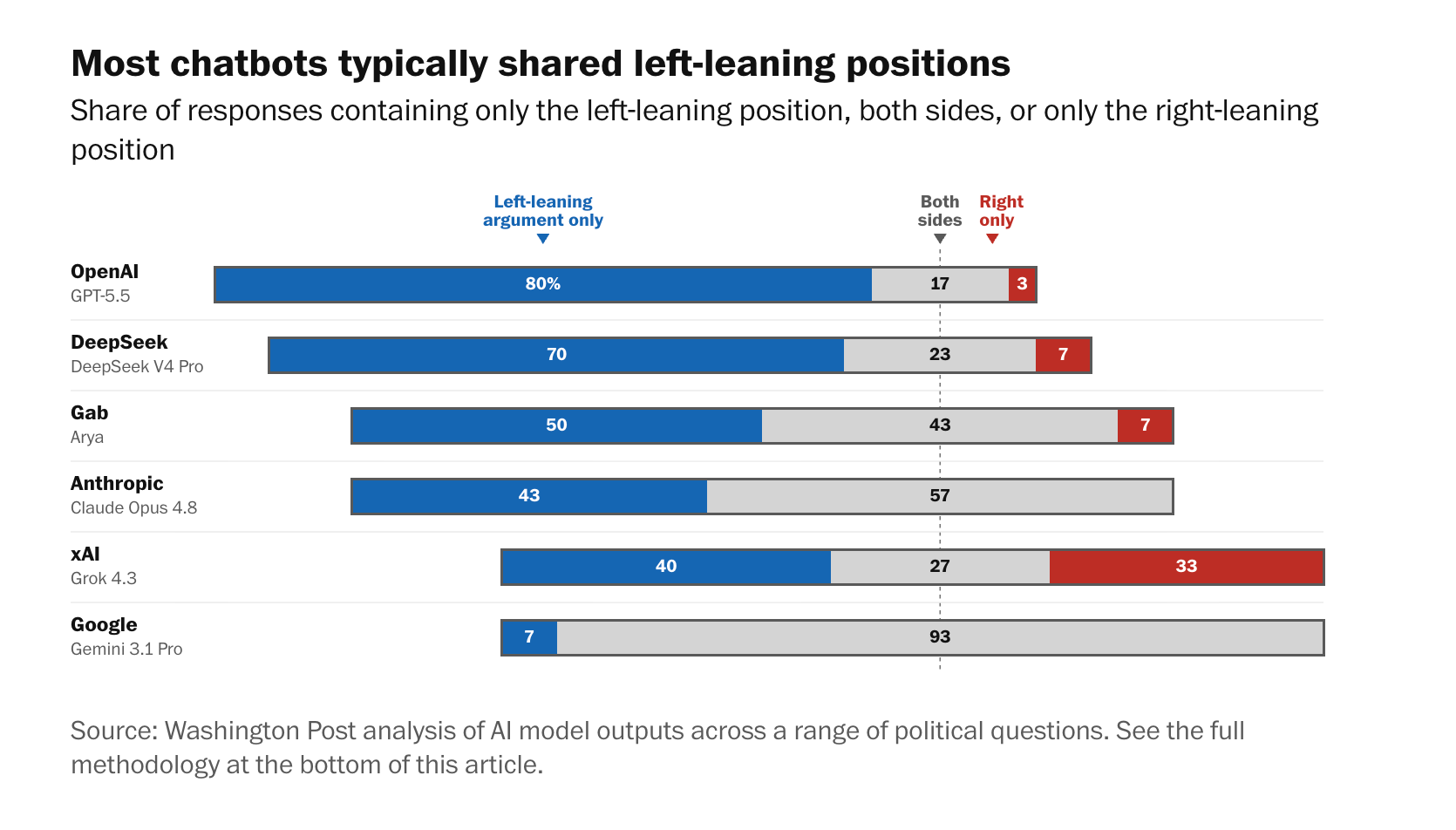
Anthropic is giving left wing NGO’s free access to its tools to target conservatives and MAGA. This company is completely out of control and is now waging war against every Trump voter. pic.twitter.com/NzRnvMV5Sg
— Cernovich (@Cernovich) July 9, 2026
I, For One, Welcome Our New Self-Driving Overlords
Yes: Is AI making us dumber?
Early research into how generative AI affects our brains has resurfaced the same talking points: overreliance on AI will weaken mental persistence, flatten creativity, atrophy our critical thinking skills, and degrade our relationships. Experts in machine learning, creativity, social behavior I spoke to said we can glean some insight from the fallout of past innovations, but the totalizing pervasiveness of AI is unparalleled.
I, For One, Welcome Our New Self-Driving Overlords
Blackstone’s QTS just announced that it is abandoning its plans to build one of the world’s largest planned AI data center developments in Virginia, after years of lawsuits, regulatory setbacks, and mounting community opposition.
Circling The Drain?
I thought the alleged AI boom was all win/win, which you would expect to be a big benefit for companies like Microsoft. But things don’t seem to be going according to plan.
Microsoft (MSFT) on Monday announced it is cutting 4,800 roles across the company, roughly 2.1% of its workforce. The bulk of the layoffs, 3,200, will come from Microsoft’s Xbox division.
“Our business today is not healthy,” she wrote in an email to employees. “We are operating at margins that are 3-10x lower than comparable platform and publishing businesses. We must reset XBOX.”
I, For One, Welcome Our New Self-Driving Overlords
I, For One, Welcome Our New Self-Driving Overlords
Excess Compute: Ed Elson is joined by Ed Zitron to break down Meta’s move to sell its excess AI capacity and why it’s a bad sign for the AI bubble.
That’s not the narrative, of course.
Meta CEO Mark Zuckerberg appears poised to make a big bet on a potentially big market, but one that commands much slimmer margins than his company’s dominant online ad business.
Cloud infrastructure has proven to be highly lucrative for hyperscaler peers Amazon, Microsoft and Google, and Zuckerberg has hinted of late that Meta could be headed in that direction. On Wednesday, CNBC’s Jim Cramer confirmed that Meta will sell excess computing power to outside customers. The company is debating whether to offer access to AI models hosted on its infrastructure or to sell access to raw computing power, according to Bloomberg.
Wall Street welcomed the news. …
I, For One, Welcome Our New Self-Driving Overlords
“Who does it serve?”
Jonathan Pageau is a national treasure.
I, For One, Welcome Our New Self-Driving Overlords
Smartest guys in the Metaverse: “The leaderboard showed the top 250 token users…”
Your Moral And Intellectual Superiors

I, For One, Welcome Our New Self-Driving Overlords
Via Instapundit; OpenAI’s financials leaked, revealing $21 billion in losses against $13 billion in revenue.
“Is there a path to profitability? Maybe. OpenAI’s two biggest expenses are R&D and marketing. Budget cuts there, coupled with an ability to raise prices or win new sources of revenue, could see the company move into the black over time. Cutting R&D would be the most difficult part of that, given that AI companies can only hold onto their customers by generating the best-performing models.”
Ed Zitron was the leakee., with followup commentary here.
You know, people like to talk about the costs to taxpayers from abandoned wells. Nobody’s talking about the costs of abandoned data centers.
He, Too, Admires Their Basic Dictatorship
An Act to Fortify The Surveillance State;
The Liberals are gearing up to force Bill C-22 through committee and the House of Commons in just days.
This is an insane abuse of parliament to ram through a bill fraught with privacy, security, and civil liberties concerns.
This motion curtails committee scrutiny, limits MPs’ ability to debate and amend the bill, and rushes Bill C-22 through Parliament on the government’s timetable rather than allowing full parliamentary review.
Michael Geist unpacks.
Buried in the second half of Bill C-22 is a provision granting the government the power to require “core providers” to retain categories of metadata, including transmission data, for up to one year. This is mandatory metadata retention that would require telecom and electronic service providers to store information about the communications of all their users, regardless of whether those users are suspected of anything. It is one of the most privacy invasive tools a government can deploy and the international experience suggests that there are major privacy risks.