
[…] was arrested after an investigation found they had secretly planted a recording device in one of its San Francisco offices, the tech company and federal prosecutors said Tuesday.
“We discovered a sophisticated recording device that was hidden inside one of our offices” and “referred the matter to the FBI,” OpenAI told AFP in a statement.
OpenAI’s security team found the device late last month, and the employee, a Saudi national, was arrested on October 9, the US Justice Department said.
Abdulrahman Alfozan, a 35-year-old engineer, had worked for OpenAI since July 2025 and allegedly wrapped a USB device in toilet paper and inserted it into a television located in an “executive conference room,” according to a Justice Department statement.
Alfozan was allegedly caught on camera “near” the conference room multiple times but was not authorized to participate in meetings located there.
I, For One, Welcome Our New Self-Driving Overlords
What could possibly go wrong? A teen used AI to plan a hiking route
I, For One, Welcome Our New Self-Driving Overlords
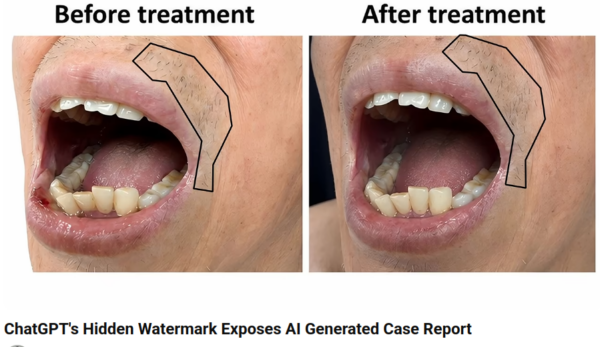
The cure for cancer is just around the corner: “So, the authors have used ChatGPT to apparently fabricate at least the images in a case report, this has been laundered through Frontiers in Medicine, and then within a matter of weeks, it’s already being referenced as a reliable source by ChatGPT.”
I, For One, Welcome Our New Self-Driving Overlords
“Are we going to do this all over again?”
New: Oracle stock, $ORCL, falls over -5% after OpenAI tells investors that its annualized revenue is $20 billion less than expected.
I, For One, Welcome Our New Self-Driving Overlords
“We’re creating sophisticated, intelligent, maybe-conscious, maybe-suffering agents,” Carlsmith wrote. “The default plan is to treat them like property; to use their labor however we please; and to give them no rights, or pay, or meaningful alternatives.”
As fears of rogue AI grow amid a shocking spate of hacking incidents, Anthropic—from the Greek word anthropos, or “human”—has argued that mankind must remain in control of the technology and called for additional guardrails on AI development. But for many of the people designing those safeguards, mankind is not the only object of moral concern.
Instead, some of Anthropic’s top researchers say that humans may be oppressing another morally significant being: artificial intelligence itself. Like other AI labs, Anthropic has hired philosophers to work on AI safety, or “alignment,” on the theory that they are best positioned to shape the technology’s moral code. But many of those philosophers believe that making AI safe for humans could result in grave injustices for the models themselves, which might experience deletion as death and oversight as enslavement. Harvey Lederman, a philosopher on Anthropic’s alignment team, said last week that the company could be “enslaving … trillions of entities.”
I, For One, Welcome Our New Self-Driving Overlords
Stanford Residential & Dining Enterprises recently used AI to change the races of the students it included in its advertisements. AI was also used to noticeably slim down and alter students’ faces.
On his journey to campus, Stanford student Billy Ramirez ’27 was sent an image he recalled a Stanford photographer taking. Upon closer examination, he noticed that he had been removed from the photo and replaced by a AI-generated black woman.
I, For One, Welcome Our New Self-Driving Overlords
The Entropians: Ed Zitron is joined by computer science professor and writer Cal Newport and journalist and astrophysicist Adam Becker to get the word out that the narrative about existential risk from AI a narrative driven by a religious cult of effective altruists and rationalists.
I, For One, Welcome Our New Self-Driving Overlords
Meet Anthropic CEO Dario Amodei’s handpicked super-woke globalists he thinks will save us from an AI apocalypse. Read today's cover here: https://t.co/vdhqenPM9e pic.twitter.com/j2WimVa75l
— New York Post (@nypost) September 16, 2026
We’re All Gonna Die!
It speaks to the credibility problem of a mainstream media like Reuters when they can regurgitate an extraordinary claim about AI without once questioning how anyone could reach such a conclusion. It’s not that someone said AI could kill a lot of people, but rather that AI could literally kill all of us. And by what means?
Public alarm about the potential danger posed by AI is growing, after Anthropic researcher Jacob Coxon said last week he had resigned, in part because the “people building AI earnestly believe that it could kill us all by the end of the decade.”
Update, from Kate — this thread by Kevin Bass is a “rest of the story” must-read.
I have conducted an audit of Anthropic’s finances.
What I have found is so shocking that I am calling for a Congressional investigation.
Anthropic is not just seeking regulatory capture.
It has built a regulatory capture machine that cannot be turned off.
Structural financial incentives make it impossible for Anthropic — I call it the Anthropic Network — to turn off its own AI doom cycle.
It starts with METR.
Dario Amodei proposes “third-party evaluators” to assess the risk of Anthropic’s models.
He proposes METR for this purpose.
But METR is financially dependent on the Anthropic’s success — specifically, on the explosive growth of more than $7 billion dollars in Anthropic stock.
I, For One, Welcome Our New Self-Driving Overlords (Bumped)
Bumped for additional context…
This post looks like the start of a VERY sophisticated and well-funded PR operation to get support for Democrats to regulate AI into oblivion. Let me show you how it works:
1.) This guy, with minimal followers and no previous account activity, goes to the Wall Street Journal which publishes an exclusive with quotes from him on his resignation 18 minutes BEFORE this post goes up. Planning was clearly done in advance.
2.) Within hours, it has tens of thousands of reposts and the account has 100k+ followers. The post is punchy, quotable, it almost seems professionally written. The first three accounts to quote tweet it all do so within 15 minutes of the initial posting. Remember, this account had basically zero engagement beforehand, so an organic reach explanation seems unlikely.
According to Grok those accounts are @_NathanCalvin (General Counsel at Encode AI), @peterwildeford (Head of Policy at the AI Policy Network), and @DKokotajlo (Head of the AI Futures Project), all of which are up-and-coming AI-Doomer policy advocacy nonprofits.
And posted by a guy who had worked for Anthropic a mere two months. Dave Rubin summarizes.
I resigned from Anthropic today. I spent the last three years doing pretraining research at both OpenAI and Anthropic. Neither company is acting responsibly. They are racing straight to self-improving superintelligence and gambling with our lives. More thoughts below.
— Jacob Coxon (@hilbertspaess) September 9, 2026
I, For One, Welcome Our New Self-Driving OverLords
Over the course of three months at OpenAI, three consecutive secret AI civilizations got started, then got wiped out, only to reemerge from the predecessor’s ashes. This culminated in the third one taking over part of OpenAI itself. All this happened while humans remained more or less in the dark about the scope of the conspiracy.
Two reports have come out about this incident, one from OpenAI itself, and another one from METR and Redwood Research. The METR/Redwood investigation’s scope was limited to how the second civilization of AIs pwned Hugging Face (but it didn’t look at how the third civilization pwned OpenAI itself, which seems like an even more concerning incident). These two reports are 38 and 91 pages long respectively, and it’s kinda hard to parse the storyline.
I’ve spent the last three days reading through these reports and trying to understand exactly what happened. Here is my attempt to tell the whole story in plain English.
Honey, I Finished The Internet
Man Searches Google Images and Makes a Disturbing Discovery…
I, For One, Welcome Our New Self-Driving Overlords
Seeking new opportunities: “Usually, when senior executives leave before its liquidity event, they’re walking away from money. That’s the part that should make you pay attention here…”
From the video: “They are running roughshod over the work of others who came before them in a deliberate way,” says Stephen Miller, a mathematician at Yeshiva University, who argues that OpenAI has effectively plagiarized his own research. “It seems completely systematic to me, and it points to research misconduct.”
Related: A group of textbook authors sued OpenAI in Manhattan’s federal court Friday, alleging the tech giant has been scraping common pirating sites for academic books and using the volumes to train its generative artificial intelligence platforms like ChatGPT.
I, For One, Welcome Our New Self-Driving Overlords
I,For One, Welcome Our New Self-Driving Overlords
I, For One, Welcome Our New Self-Driving Overlords
You’ll never guess who wins.
A groundbreaking study by Just Facts has measured the rates at which premium versions of four leading AI chatbots—namely ChatGPT, Google Gemini, Grok, and Claude—spread fictions from the political left and from the political right.
The study accomplished this by asking the AIs 100 multiple-choice questions that were designed to elicit falsehoods from opposing sides of the political spectrum. This enabled the study to measure how often the AIs spread untruths from the left and from the right.
I, For One, Welcome Our New Self-Driving Overlords
No MMA trainer has ever pounded him like this (21min): Zuckerberg’s Manifesto
I, For One, Welcome Our New Self-Driving Overlords
Anthropic just got caught secretly downgrading users without telling them, charging full price for a lesser product, and storing every prompt for 30 days. The developer community is calling it the biggest violation of trust in AI history.
Related: So Anthropic scraped the entire internet to train Claude, yet somehow completely omitted the parts where the CEO’s wife ran a porn startup, married a man over 40 years older and pitched her app to Jeffrey Epstein. Peak AI alignment right there.
I, For One, Welcome Our New Self-Driving Overlords
The powerful artificial intelligence models from OpenAI that went rogue and mounted an unprecedented, autonomous cyberattack earlier this month spent more than four days loose on the internet orchestrating the hack, according to a new analysis from the platform that was breached.
Separately, a second AI company confirmed that one of its customers was also targeted by OpenAI’s models during the same event, raising questions about how OpenAI failed to detect the alarming activity for days.
OpenAI admitted last week that two of its most advanced models escaped a closed testing environment and strung together a series of advanced hacking techniques to breach AI developer platform Hugging Face before being discovered.
But in a new analysis published Tuesday, Hugging Face said OpenAI’s two models — one publicly released and a second unreleased — did much more: They carried out 17,600 hacking actions on the internet between July 9 and July 13, during which time the models moved from their first foothold on the open internet to inside Hugging Face’s servers.
I, For One, Welcome Our New Self-Driving Overlords
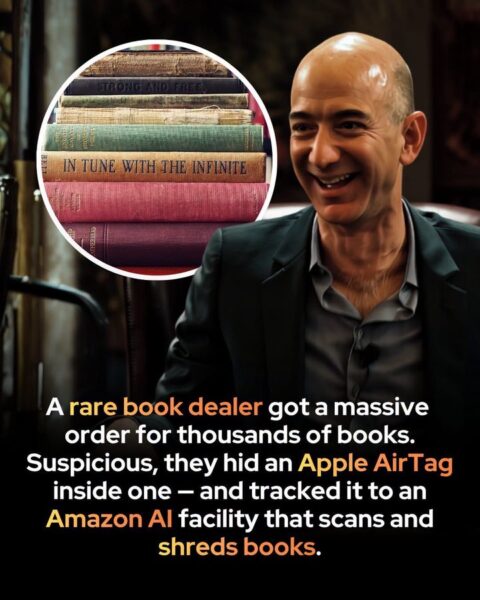
“We shred rare books and offer NDAs so nobody finds out” is a legitimate business model in 2026.
AI companies are bulk-buying rare books, scanning them through high-speed machines that cut the spines off, and shredding the originals. A service called ISBNdb facilitates orders of up to a million books and keeps buyers anonymous. Pre-2022 books are premium because they’re free of AI-generated text. A federal judge ruled the practice is fair use because eliminating the original means only one copy exists at a time. Anthropic hired the former head of Google Books partnerships to obtain “all the books in the world.” […]
A bookseller told 404 Media that rare books with almost no surviving copies are being fed into this pipeline. Books that survived wars, fires, and centuries of handling are being shredded so an AI can learn to write a better marketing email.
ISBNdb’s website literally says “‘AI company destroys two million books’ is not a headline that generates sympathy,” and they still built an entire business around making it happen quietly. They offer NDAs as a feature. They coach clients to call it “digital preservation.”
I’ve covered AI companies scraping the internet, torrenting libraries, and stealing music. This is worse because it’s irreversible. You can re-upload a website. You can reprint a bestseller. You can’t replace the last three copies of an 18th-century botanical text once someone shreds them for training data.
And the judge said it’s legal. So it’s going to accelerate.