
Hear my drum: Look Everybody, It’s A Reverse Outhouse!
The “W” Word

The Broken Record
You could erase the dates in this article and aside from the monetary amounts there would be no way to tell whether it was written today or 5, 10, 20 or 50 years ago. No half-awake thinker need be perpetually stumped as to why an economic system premised on the Soviet model doesn’t suddenly produce great outcomes. Note to Canada’s developers of aboriginal policy: stop banging your head against the wall.
“Time after time, whether in housing, policing, safe drinking water or other critical areas, our audits of federal programs to support Canada’s Indigenous Peoples reveal a distressing and persistent pattern of failure,” Hogan said at a press conference Tuesday.
“The lack of progress clearly demonstrates that the government’s passive, siloed approach is ineffective, and, in fact, contradicts the spirit of true reconciliation.”
It’s the fourth time since 2003 that the auditor general has held the government responsible for unsafe and unsuitable First Nations housing.
Thirsty Proletarians
First there was the collapse of the electricity grid, then the collapse of the railway network, and now the water is running out. Yet few South African voters seem able to make a connection between these events and a political philosophy of nationalizing the mines, banks and monopoly industry. They cannot fathom that a mix of African superstition, tribalism and Marxism-Leninism is nothing less than toxic.
The shortages, which have lasted nearly two weeks, have affected some 50% of Johannesburg Water’s supply area, officials said. The South African city has a population of almost 6 million people.
Businesses have been hit hard, and several hospitals have been affected. Nurses at one medical center told local media that they were not able to wash their hands.
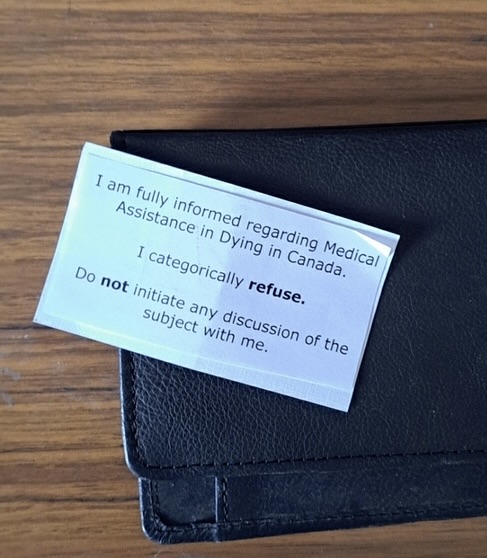
Canada: Culture of Death
First voluntary, then mandatory.
Don’t Mess With Texas

A Hankering For Knickers
Brooke Lyn Sonia, formerly known as Brett David Sonia… was moved between multiple male facilities in Washington, and left a trail of complaints with regards to not being given adequate access to “gender affirming care,” such as women’s underwear and laser hair removal.
Or, convicted paedophile demands pampering, women’s undies. Among other things.
Your Moral And Intellectual Superiors
Video: Elon Musk tries to explain how lowering the standards for doctors could result in more deaths. Don Lemon is unable to grasp the concept.
This Just In
Your stable, two-parent family is racist, apparently.
Please update your files and lifestyles accordingly.
Biden’s America
A cynical public now expects any accused prominent leftist to remain unindicted. – Victor Davis Hanson
Avert Your Eyes
The Fitzwilliam Museum has suggested that paintings of the British countryside evoke dark “nationalist feelings.” The museum, owned by the University of Cambridge, has undertaken an overhaul of its displays… The new signage states that pictures of “rolling English hills” can stir feelings of “pride towards a homeland.”
Y2Kyoto: MAID By Any Other Name
Patrick Christys: ‘The NHS cares more about net zero than saving lives. People will die, quite literally, sacrificed on the alter of the big green agenda’
Update: The link is gone, but you can watch the segment on Youtube
City Of Champions
Heaven Or Hell
He could be describing Trudeau’s Canada. Anytime ideology and dogma trump merit, logic, and safety, the result is-predictably scary and dangerous. – Victor Davis Hanson
Stop Picking Winners and Losers
Just lower taxes across the board.
Fraser Institute- The Cost of Business Subsidies in Canada: Updated Edition
Business subsidies delivered through government spending since 1961 came with significant costs to Canadian taxpayers.
In 2019, provincial business subsidies reached $27.0 billion ($2022). This represents the single largest year of provincial subsidies in Canadian history prior to COVID.
Federal business subsidies increased significantly as a result of COVID-related programs, reaching $88.5 billion in 2020 and $47.0 billion in 2021.
Although federal business subsidies declined in 2022, the new total ($11.2 billion) is nearly double the amount the federal government spent in the final pre-COVID year ($6.5 billion in 2019).
“The law contains 19 sections aimed at helping minority groups”
https://thehill.com/opinion/4517470-dei-killed-the-chips-act/
The Biden administration recently promised it will finally loosen the purse strings on $39 billion of CHIPS Act grants to encourage semiconductor fabrication in the U.S. But less than a week later, Intel announced that it’s putting the brakes on its Columbus factory. The Taiwan Semiconductor Manufacturing Company (TSMC) has pushed back production at its second Arizona foundry. The remaining major chipmaker, Samsung, just delayed its first Texas fab.
This is not the way companies typically respond to multi-billion-dollar subsidies. So what explains chipmakers’ apparent ingratitude? In large part, frustration with DEI requirements embedded in the CHIPS Act.
Commentators have noted that CHIPS and Science Act money has been sluggish. What they haven’t noticed is that it’s because the CHIPS Act is so loaded with DEI pork that it can’t move.
“The most degenerate will set the tone of sexual politics because they’re the slim minority that cares the most…”
Public Choice Theory and How This Ends
Concentrated minority interests will ALWAYS defeat dispersed collective majority interests in any system of government/institution that doesn’t terminate in an individual owner.
This is basic public choice theory. […]
The most degenerate will set the tone of sexual politics because they’re the slim minority that cares the most and has the most to gain, whereas normal people have 10k other concerns and can’t dedicated their lives to defending normality. Same with farm policy, it will always be set by the narrow concentrated interest of corporate food producers and recipients of subsidized government food stuff: This is what’s happened to America’s food supply, it’s what happened to Rome’s before the fall. Down the list of every policy.
Every individual item will be controlled not by the public good or even majority will, but by the narrowest interest that can make it their life’s work and either get rich, or lead a life of sloth by controlling it.
Radical Regurgitation
On the incantations of progressive art:
I think it’s fair to say that, whatever her creative limitations, Liberal Jane, aka Ms Caitlin Blunnie, does like her slogans. One might say incantations. Almost all of which have an air of self-satisfaction, as if some previously unregistered profundity had been heroically unearthed.
One creation extols the radical virtues of skiving in the workplace and not doing the work one is being paid to do. “Craft is resistance in a late-stage capitalist society,” reads another. Also, “Self-love is self-care.” “Riots, not diets.” “Hex the imperialist, white supremacist, capitalist patriarchy.” “Fantasy is for everyone.” “Abortion builds new futures.” Oh, and “Smash the state and masturbate,” and “Stretch marks are ubiquitous to the human experience.”
The Decline And Fall Of The American Empire
Senate Democrats just voted unanimously to defeat an amendment that would have stopped counting illegals for congressional seat…
Mercantilist Pensions
Rather than tackle the pressing question as to why pension funds have decreased the their investments in Canada from 28% in 2000 to 3% today, a gaggle of milquetoast business leaders is demanding that Ottawa force those pension funds to invest within Canada despite lower returns. It’s as if these Wesley Mouch types believe that a depressed business climate is an unalterable fact of nature.
Government has the right, responsibility and obligation to regulate how this savings regime operates,” says the letter signed by dozens including BlackBerry Ltd founder Jim Balsillie, Metro Inc. chief executive Eric La Flèche, the CEOs of telecommunications companies Telus Corp., Rogers Communications Inc. and Quebecor Inc., and former Bank of Nova Scotia and Air Canada CEOs Brian Porter and Calin Rovinescu.
“We think the government does have some right to have an influence over the regime” in which these large funds operate, he said. “But we’re not suggesting the government tells these pension funds exactly where to invest.”