Category: We Need A Famine

Coming Soon?

World Economic Forum- Feeding the future: why Renovation and Reinvention are key to saving our food system

Our global food system is in urgent need of transition. At present, one-third of anthropogenic greenhouse gas emissions come from food production. At the same time, the global population is projected to reach nearly 10 billion people by 2050, which could increase the demand for food by 60%. Many of the ways we grow, manufacture and consume food are causing a dual crisis of human and environmental health, and the complexity will only intensify.

h/t Jim

Ha-Pea News!

New York Post- Vegan fake meats linked to heart disease, early death: study

“While ultra-processed foods are often marketed as healthy foods, this large study suggests that plant-based ultra-processed foods do not seem to have protective health effects and are linked to poor health outcomes,” she said.

The Lancet Regional Health- Implications of food ultra-processing on cardiovascular risk considering plant origin foods: an analysis of the UK Biobank cohort

Conversely, plant-sourced UPF consumption was associated with a 5% increased risk (1.03–1.07) and a 12% higher mortality (1.05–1.20). The contribution of all UPF was linked to higher CVD risk and mortality, and no evidence for an association between contribution of all plant-sourced foods and CVD incidence and mortality was observed.

We Need A Famine

And by golly, a famine is what we’re going to get.

WHO Director-General calls for a “transformation” of the food system, away from meat-eating and traditional agriculture, in the name of fighting “climate change”:

“Our food systems are harming the health of people and planet. Food systems contribute to over 30% of greenhouse gas emissions, and account for almost one third of the global burden of disease.”

“Transforming food systems is therefore essential, by shifting towards healthier, diversified and more plant based diets.”

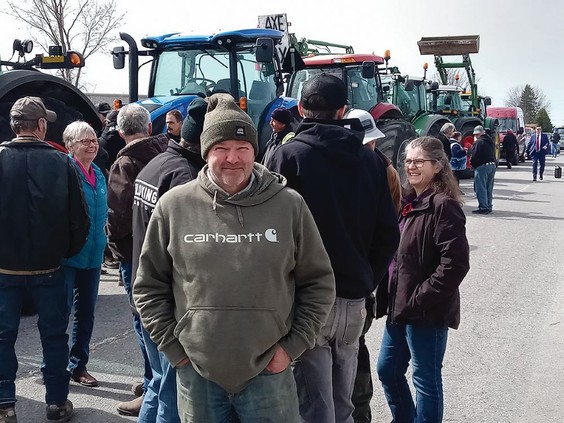
“The warning from the OPP had come over the farmer’s phones the night before.”

HONK!

Anyone with a farm tractor, transport or other vehicle going slow on the highway on April 1, to protest the carbon tax hike that day, would be charged under the Highway Traffic Act for endangering people.

There was a shrug from the dairy and cash crop farmers, transport drivers and other drivers, including a Scot with a French accent wearing a tin foil hat, all congregated in Herb’s Truck Stop parking lot.

They had seen this movie before, where threats were made.

Related.

Whatsisname’s Britain

Where the foxes caper unmolested, the government packs your school lunchor not.

FARMING in England is facing a crisis as thousands of farmers have accepted government payments of up to £100,000 to leave their land. The Department for Environment Food and Rural Affairs (Defra) say that their ‘Lump Sum Exit Scheme’, launched in 2022 by Boris Johnson, aims to ‘support farmers in England who wish to leave the industry’.

It has been successful. Last month Defra told me they had received ‘just over 2,200 eligible applications’. Approved farmers who want to throw in the towel have until May 31 of this year to transfer their land, but there is no rule that says it must remain as farmland.

Contrary to a previous statement, Defra said: ‘The scheme itself doesn’t have any specific restrictions – however, we expect that most of the surrendered land will stay as agricultural land.’ Earlier they had said: ‘In return for signing up to the scheme, farmers need to either rent out or sell their land or surrender their tenancy in order to create opportunities for new entrants and farmers wishing to expand their businesses.’[…]

It comes from the Absolute Zero report produced by six of our universities, Cambridge, Oxford, Bath, Nottingham, Strathclyde and Imperial College, and funded by the Engineering and Physical Sciences Research Council (EPSRC), a government agency. The research programme goes under the name UK FIRES with the convoluted slogan Locating Resource Efficiency [RE] at the heart of the UK’s Future Industrial Strategy [FIS].

They suggest drastic measures. By 2029 (five years from now), they aim to reduce beef and lamb consumption by 50 per cent. By 2030, they recommend that fertilisers are phased out, by 2050 all beef and lamb production should end and energy used to cook and transport food should be reduced by 60 per cent.

Related.

Soylent Cow

The garden utopia is not blooming as we were promised;

Plant-based meat spiked in popularity in 2016 when the Impossible Burger and the Beyond Burger — both made to look and taste like beef — launched and gained mainstream media attention. Some ingredients that make up plant-based meat include soy, potato, pea protein, artificial flavors, coconut oil, beans, etc.

Now, start-up companies who produce plant-based meat products are experimenting with blending animal fat into plant-based ingredients as they are now prioritizing taste over sustainability, according to the Post. Companies also don’t mind straying away from its vegan and vegetarian customers as they are more interested in reaching a larger base of consumers.

According to a recent Gallup survey, in the United States, only 4% of Americans claim they are vegetarian and 1% vegan, revealing a slight decline to figures that were seen in previous years. In 2018, 5% of Americans in the survey claimed they were vegetarian, and 3% said they were vegan.

Master Plan for Humanity: I’ll eat the still-beating hearts of my enemies before I eat bugs.

When You Piss Off People Who Work With Heavy Equipment

Telegraph- Farming is in peril throughout Europe

Telegraph- French farmer vows to ‘starve Paris’

A tractor blockade established at eight points around Paris is intended to “starve Parisians”, a French farmer has claimed.

Benoit Durand, a grain farmer, told French broadcaster BFM TV: “We are holding a siege in Chartres, one hour away from Paris. It’s part of the blockade… the goal is to put pressure on the government.”

Y2Kyoto: They’re Not After Your Meat

Or your guns, nor your gas stoves…

The world’s most-developed nations will be told to curb their excessive appetite for meat as part of the first comprehensive plan to bring the global agrifood industry into line with the Paris climate agreement…

The guidance on meat is intended to send a clear message to governments. But politicians in richer nations typically shy away from policies aimed at influencing consumer behavior, especially where it involves cutting consumption of everyday items.

‘Livestock is politically sensitive, but we need to deal with sensitive issues to solve the problem,’ said Dhanush Dinesh, the founder of Clim-Eat, which works to accelerate climate action in food systems. ‘If we don’t tackle the livestock problem, we are not going to solve climate change. The key problem is overconsumption.’


India has by far the largest herd in the world with over 300 million head of cattle! Who is gonna tell them?

Navigation