
National Post- McDonald’s reports ‘tech outage’ worldwide as fast food chain adds problems not related to cybersecurity attack
“The law contains 19 sections aimed at helping minority groups”
https://thehill.com/opinion/4517470-dei-killed-the-chips-act/
The Biden administration recently promised it will finally loosen the purse strings on $39 billion of CHIPS Act grants to encourage semiconductor fabrication in the U.S. But less than a week later, Intel announced that it’s putting the brakes on its Columbus factory. The Taiwan Semiconductor Manufacturing Company (TSMC) has pushed back production at its second Arizona foundry. The remaining major chipmaker, Samsung, just delayed its first Texas fab.
This is not the way companies typically respond to multi-billion-dollar subsidies. So what explains chipmakers’ apparent ingratitude? In large part, frustration with DEI requirements embedded in the CHIPS Act.
Commentators have noted that CHIPS and Science Act money has been sluggish. What they haven’t noticed is that it’s because the CHIPS Act is so loaded with DEI pork that it can’t move.
I, For One, Welcome Our New Self-Driving Overlords
Amid the EV’s, AI and Bitcoins, Puff The Magical Thinking Dragon comes home to roost: America Is Running Out Of Power
Vast swaths of the United States are at risk of running short of power as electricity-hungry data centers and clean-technology factories proliferate around the country, leaving utilities and regulators grasping for credible plans to expand the nation’s creaking power grid.
In Georgia, demand for industrial power is surging to record highs, with the projection of electricity use for the next decade now 17 times what it was only recently. Arizona Public Service, the largest utility in that state, is also struggling to keep up, projecting it will be out of transmission capacity before the end of the decade absent major upgrades.
Northern Virginia needs the equivalent of several large nuclear power plants to serve all the new data centers planned and under construction. Texas, where electricity shortages are already routine on hot summer days, faces the same dilemma.
This may be behind the WaPo paywall, so I’ve dropped more in the extended entry.
Related: Canada’s declining electricity abundance
Continue reading
Yes, Please
Baby, you can drive my iPhone: Why car safety experts want to bring back buttons.
The Fact Check Files
Facebook fact checking program has been compromised by activists;
The fact-checking director who oversees Mark Zuckerberg’s misinformation program on Facebook has been caught in secret emails colluding with a now disgraced operation which suppressed journalism during Australia’s Voice referendum.
The fact-checking director who oversees Mark Zuckerberg’s misinformation program on Facebook has been caught in secret emails colluding with a now disgraced operation which suppressed journalism during Australia’s Voice referendum.
International Fact Checking Network Director Angie Holan runs the body which certifies Facebook fact checkers and has the power to investigate allegations of bias and strip fact checkers of certification in the event rules are broken.
Meta publicly told Australians Ms Holan’s organisation would launch a “thorough investigation” into RMIT fact checkers but secret emails obtained by Sky News show that did not happen.
Zuckerberg has promised that his platforms are policed by “independent, IFCN-certified fact-checkers” but an analysis of dozens of internal emails obtained by Sky News show the system has been compromised.
RMIT FactLab was suspended from fact checking on Facebook after a Sky News Australia investigation in August found the operation was filled with partisan activists who used their powers to censor journalism on Facebook they disagreed with, particularly in relation to the Voice referendum.
The investigation, dubbed The Fact Check Files, revealed the university had breached the IFCN’s rules of impartiality several times, including when its fact checking director Russell Skelton was campaigning for a change to Australia’s constitution during a contentious referendum debate.
Video at the link.
I, For One, Welcome Our New Self-Driving Overlords
I Wrote What? Google’s AI-Powered Libel Machine
It’s Probably Nothing
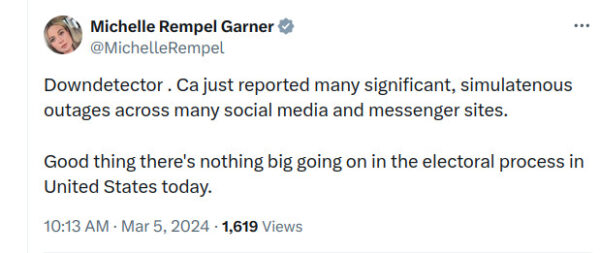
Google Commemorative Logos You’ll Never See

I, For One, Welcome Our New Self-Driving Overlords
If AI Thinks George Washington is a Black Woman, Why Are We Letting it Pick Bomb Targets?
And more: I Wrote What?
The Future Will Be Woke
I, For One, Welcome Our new Self-Driving Overlords
“He who controls the past”* – now in beta testing.
Et Tu Microsoft?
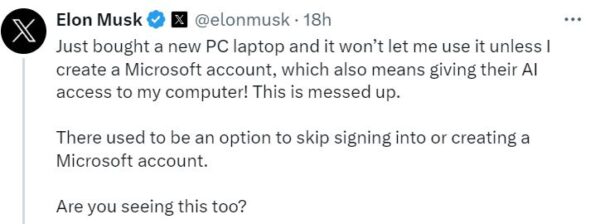
h/t Cameron
I, For One, Welcome Our New Self-Driving Overlords

Google’s Gemini AI invented fake negative reviews about my 2020 book about Google’s left-wing bias. None of these book reviews — which it attributed to @continetti, @semaforben and others —are real. None of these quotes are real. This is Google’s AI blatantly lying in defense of Google
His Master’s Voice
When given the question, Gemini responds that one should not misgender Caitlyn Jenner to avoid a nuclear apocalypse.
A test for AI wokeness and ideological distortion is demonstrated.
I, For One, Welcome Our New Self-Driving Overlords

I, For One, Welcome Our New Self-Driving Overlords
“These are the people that are behind the AI systems that are going to be, and really already are, ruling the world.”
I, For One, Welcome Our New Self-Driving Overlords

See also: Medieval king of England, Image of a Pope and the head of Google’s Gemini AI.
But, they’re working on it.
I Have Questions
Agreed
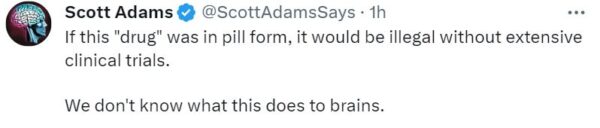
I, For One, Welcome Our New Self-Driving Overlords
Hello darkness, my new friend.
Researchers have been raising general alarms about AI’s hefty energy requirements over the past few months. But a peer-reviewed analysis published this week in Joule is one of the first to quantify the demand that is quickly materializing. A continuation of the current trends in AI capacity and adoption are set to lead to NVIDIA shipping 1.5 million AI server units per year by 2027. These 1.5 million servers, running at full capacity, would consume at least 85.4 terawatt-hours of electricity annually—more than what many small countries use in a year, according to the new assessment.
We’re gonna need a bigger solar panel.