
Companies that have paid to source agricultural produce that complies with the European Union’s anti-deforestation law would lose out if the EU decides to delay implementing the legislation by a year, industry groups and traders said.
Deforestation is the second largest source of the greenhouse gas emissions that cause climate change after the burning of fossil fuels, according to the European Commission. The EU had planned to ban the import of commodities from suppliers unable to prove their goods were not linked to deforestation.
The EU Deforestation Regulation (EUDR) would have impacted imports of cocoa, coffee, cattle, soy, oil palm, timber, rubber and related products such as chocolate and leather.
It was scheduled to come into effect Dec. 30, but the EU Commission recently proposed a 12-month delay, under pressure from industries and governments who said it would cause supply chain disruptions, exclude poor, small-scale farmers from the EU market and drive up the cost of basic foodstuffs because many farmers and suppliers were not ready to comply.
The EU’s vegoil and oilmeal group Fediol said its members, which include trading giants such as Cargill and food processors such as AAK, will suffer losses from a delay after paying premiums to secure raw materials that comply with the law.
“It’s a financial loss they are making by having been ready on time,” Fediol director general Nathalie Lecocq said.
Cocoa processors and chocolate makers face the same scenario with traders saying they had sold deforestation free beans to them at a premium of up to six per cent.
The premium will now likely fall to zero because consumers won’t be willing to pay more for cocoa that complies with a law that has been pushed back.
Related: Trudeau’s Anti-Growth Agenda Chokes the Life Out of Local Economies


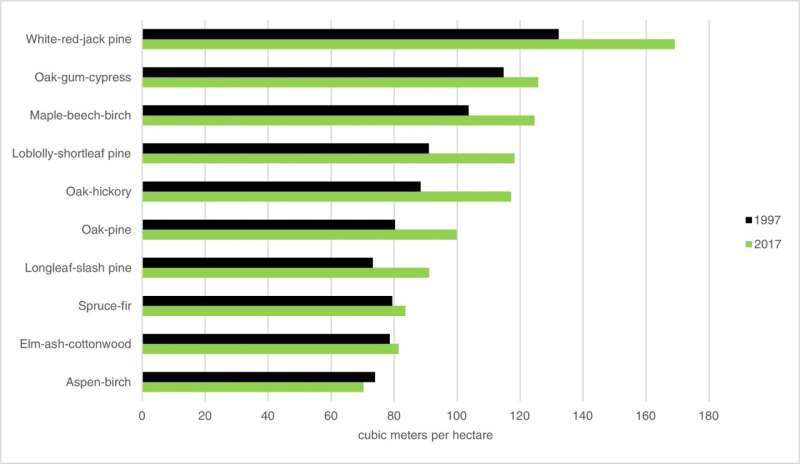 Scientists tracked wood volume in 10 different tree groups from 1997 to 2017, finding that all except aspen-birch grew larger. Over that same period, carbon dioxide levels went from 363 parts per million to 405 parts per million, owing largely to the burning of fossil fuels. More abundant CO2 accelerates photosynthesis, causing plants to grow faster, a phenomenon known as “carbon fertilization.” The findings were published in the journal Nature Communications.