
The Nemeth Report Podcast: Energy transition crisis, with Irina Slav, has some real straight-forward talk about the realities of the energy industry, and keeping people scared about climate change. Expect to see more on Pipeline Online from T Nemeth, who is originally from Saskatchewan.
Poland is planning on 20, possibly more, SMRs of the same design SaskPower chose
I’ve been waiting to see a story come out about this for a while. A few weeks ago I saw that Poland may be building as many as 79 of the General Electric Hitachi BWRX-300 reactors, the exact same design chosen as SaskPower. This story indicated 20 at this point, but hints it could be more.
Ontario Power Generation is building the first one. Tennessee Valley Authority is building the second. Saskatchewan may have thought we were all that and a bag of chips by announcing four. But we won’t finish our second until around 2038. In the meantime, Poland might have built all 79 by that time.
We might have thought we’d be driving the bus on this SMR rollout. We’re not. In other words, the instruction manuals will likely be written in Polish. But it also means a lot of confidence is being expressed by the Poles in the design, if they build 20, or 79, or whatever.
As for how much uranium will go into these, I sat at a banquet a few weeks ago with some Cameco reps. They explained that SMRs actually use very little uranium. You fill them up at the start, and basically that’s it. That was very insightful, I thought, because that’s exactly how current US nuclear submarines (with small reactors) work.
Pointing out the environmental lobby’s vulnerabilities
University of Regina professor Jim Warren writes in Pipeline Online about Big Green’s big vulnerabilities. This is part 2 of a 4 part series. The first column in this series described the masterfully executed campaign waged by environmental organizations in opposition to Alberta’s oil sands
Trudeau says taking back natural resources “a non-starter”
Prime Minister Justin Trudeau will not move to take away provincial control of natural resources.
The issue of First Nations vs provincial control of natural resources came up at a town hall held at First Nations University in Regina held on April 13. It was a continuation of the dustup between the provincial governments of Saskatchewan, Alberta and Manitoba and federal minister of Justice and Attorney General David Lametti.
We’re going to build nukes, but today, Germany is shutting its last three down
France is building new nuclear reactors. So is the UK, Czechia, Finland, Canada and the U.S., to name a few. I’ve even seen an article that Poland intends on building 79 small modular reactors that are the same design SaskPower has chosen. 79! And they want to do it by 2038. But Germany? They know better. They had shut down all of their numerous reactors except three, and today, those last three are done. But hey, they just bulldozed another village to burn coal.
What do you get when you divide 6 by 3,618? The fraction of power output of Alberta wind on Thursday morning

One Alberta coal plant put out 135x what the whole wind fleet did. Not 1.35x, or 13.5x, but 135x.
Saskatchewan is going down this path. We are going to give up what we know works, for what we know absolutely does not work, on an irregular but frequent basis. SaskPower is intent on adding an additional 3,000 megawatts of wind and solar power production in this province by 2035. This will generally be done through independent power producers, with a power purchase agreement.
This low wind situation lasted from 3 a.m. until at least 2 p.m. on Thursday. And its low again right now, around 165 megawatts of 3618.
What will happen to our grid when 40% or more of it is wind and solar, everyone’s driving electric vehicles, and we have days like this? Do we not charge the ambulances? Or the grain trucks for farmers? Shut down Evraz and maybe a half dozen potash mines? Rolling blackouts?
Didn’t see that one coming
If you didn’t see the post yesterday about CBC taking Justin Trudeau to task about natural resources and letting the premier know he’s coming, Pipeline Online transcribed those key parts of the interview for your reading pleasure. CBC played the clip of Lamettie for Trudeau, which he at first denies, then acknowledges.
Leading indicators and closing indicators in Saskatchewan oil
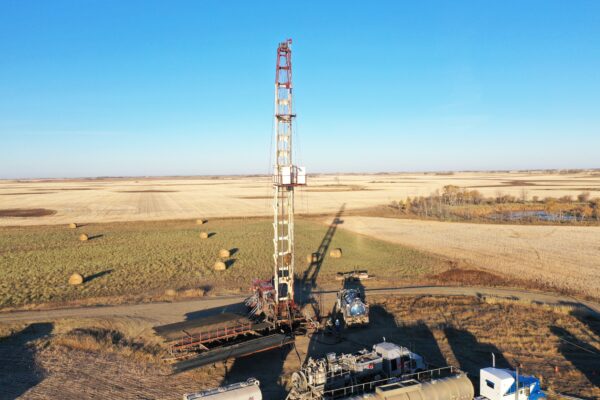
One of the key leading indicators of oil and gas development is Crown land sales. And the Saskatchewan April sale saw increased interest in all four oil production areas of the province.
On the opposite end of the timeline is well abandonment and cleanups. When the crap hit the fan for the industry when COVID-19 hit, there was a cry for some sort of relief program. That ended up being the Accelerated Site Closure Program, which properly abandoned inactive wells and facilities. That program just recently concluded, having been fully subscribed.
And on the other side of the country, Newfoundland’s Muskrat Falls hydro project is finally online. This project almost bankrupted Newfoundland, but the feds quietly bailed them out during COVID. That kinda got swept under the rug. Muskrat Falls was Newfoundland’s attempt at squeezing additional power out of the same river system as the massive Churchill Falls project, which produces about 50 per cent more power than the entire province of Saskatchewan on any given day. Quebec pays Newfoundland next to nothing for that power, and uses it domestically and sells it to the US and enormous margins. Muskrat Falls, at a much lower output, was basically Newfoundland’s F You to Quebec.
Trudeau responds to Lametti natural resources controversy with denial
The dustup on natural resources continues. Trudeau’s says Lametti “said no such thing,” Poilievre accuses Lametti of threatening something he didn’t, and Lametti says he didn’t commit to what he committed to
I didn’t say what you clearly heard me say
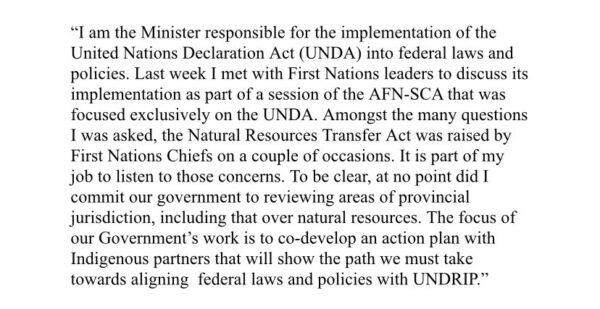
At least that’s how the federal Justice Minister is spinning it on this natural resources dustup with the provinces. Moe, Smith and Stefanson are not happy.
These canola crushing plants aren’t because everyone decided they want Becel
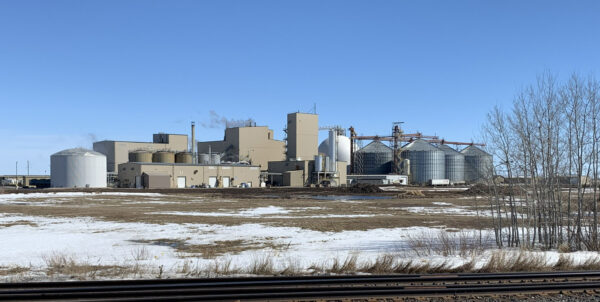
Yorkton’s Louis Dreyfus canola crushing plant to double in size, driven by the Clean Fuel Standard Saskatchewan’s government opposes.
This is a real conundrum for the provincial government. The mantra, for decades, is to bring value-added processing here. But in this case, it’s to replace petroleum with biofuels. Which, in turn, takes farmland out of food production and puts it into fuel production. That might be okay, if everyone on this planet was properly fed. They aren’t,
This is a real conundrum for the provincial government. The mantra, for decades, is to bring value-added processing here. But in this case, it’s to replace petroleum with biofuels. Which, in turn, takes farmland out of food production and puts it into fuel production. That might be okay, if everyone on this planet was properly fed. They aren’t,
My mom lives directly across the fence from both this plant and the JRI plant. She was there long before they were built in 2009. They were both built directly upwind of the city of Yorkton. And they smell like the contents of a diaper of a four-month-old baby, ALL THE TIME. Oddly enough, the prevailing winds sometimes sweep that smell right past the acreage and straight into the heart of Yorkton. You can often clearly smell it clear across the city, from Broadway to the Parkland Mall. While that may be the smell of money for the few hundred people that work at them, it’s definitely not for the 16,000 other residents.
Sure, let’s give instruction manuals to eco-terrorists. It’ll work out well
They actually made a movie called “How to Blow Up a Pipeline.” It opened April 7.
As a side note, when it comes to giving unhinged people bright ideas, the terror attacks of Sept. 11, 2001, appear to have been closely modelled on the plot of the Tom Clancy Novel Debt of Honor, a 1994 book. The conclusion of the book saw a bereaved airline pilot fly an empty but fully-fueled Boeing 747 airliner into the United States Capitol Building during a joint session of Congress, killing the president and nearly every member of Congress as well as the Supreme Court. Seven years later, 19 Al Qaeda terrorists attempted a very similar attack, with the last plane, United Flight 93, widely believed to have been targeted at the U.S. Capitol. It was brought down by its own passengers, who fought the terrorists for control of the plane.
And now you know why Moe pushed the Saskatchewan First Act
Federal justice minister David Lametti “looking at” taking away natural resources from provinces. Scott Moe says national unity at stake. This is precisely what the Saskatchewan First Act, proclaimed April 6, is about.
Notably, the request for the feds to take away control of natural resources from the provinces of Manitoba, Alberta an Saskatchewan came from the grand chief of the Prince Albert Grand Council. The federal minister will “look at” it.
How does an ice age start? With one snowflake
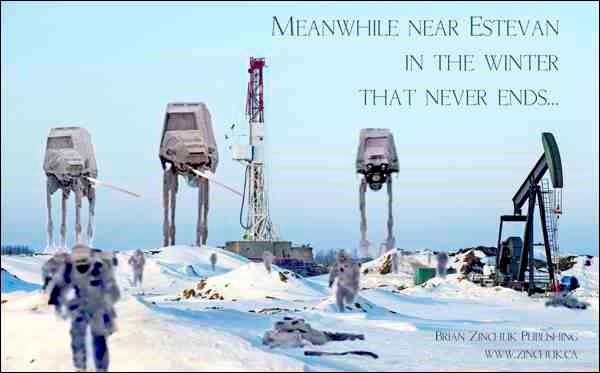
I originally wrote this column in mid-April 10 years ago, at the tail end of a winter that never seemed to end. Funny how things haven’t changed that much since then, have they? Wasn’t the world supposed to warm up in the meantime? Anyhow – take the dates in that context. Also, looking at what Lake Tahoe has been getting, they might be living what I describe here, for real.
Breaking up with coal is hard to do
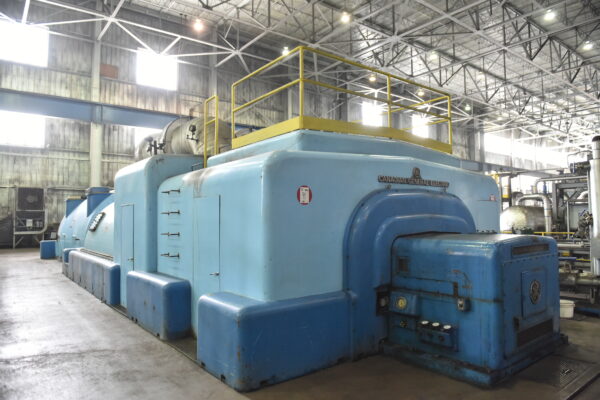
By federal regulation, one coal unit at Boundary Dam Power Station was supposed to shut down in 2021, another in 2024. Well, we’re not going to do that. Because we can’t. We still need them. Turns out all those wind turbines can’t be relied on, after all, can they? Like on April 4, when they put out less that 4% in Saskatchewan.
This US power line is a big deal for Saskatchewan
Some people are not happy about the idea of being replaced by imported, carbon tax-free coal and natural gas-fired power, while we move to shut down our own coal mines and power facilities. Op-Ed: Saskatchewan Coal Transition Centre: Sabotaging our future: How SaskPower’s $1 billion scheme to import power from the U.S. will devastate Estevan and leave Saskatchewan’s economy vulnerable
SaskPower so wants more wind and solar. Here’s how Alberta’s did last night – next to nothing
SaskPower wants 3,647 megawatts of wind and solar. But early this morning, Alberta’s 4,783 MW of the same produced just 29 MW . And it stayed around that number from 11 p.m. to 6 a.m.
But we’re going to shut down our coal and build a 650 megawatt power line to the US.(Previously posted) Carbon-tax free, of course.
A million dollars isn’t cool. You know what’s cool? A billion dollars … from lithium
Here’s why Pipeline Online has been doing such a deep dive into lithium in Saskatchewan. If current lithium prices hold, the standard-sized lithium project (of which there are several) planned for Saskatchewan will result in just under a billion dollars (CAD) per year in revenue. That’s right – per year, each. If they can get direct lithium extraction to work, we’re talking about a multi-billion industry in this province in a few years time
Sask NDP take on energy in provincial budget
Don’t slow walk critical minerals development, says NDP finance critic, regarding 2023 provincial budget
Why don’t you fight for what we have, and what works?
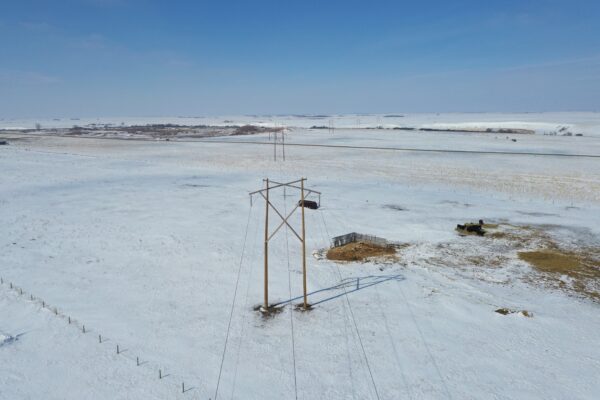
‘Why don’t you fight for what we have, and what works?‘ SaskPower holds open house in Estevan on $1 billion interconnect with US, solar and nuclear. The crowd was not at all happy.
This is real in-depth on what’s going on. Among the gems- we’re going to build up to 3,000 megawatts of wind and solar in Saskatchewan, stuff that totally fails on a irregular but frequent basis, and NOT build an accompanying 3,000 megawatts of natural gas generation to back it up for days (nights) the sun doesn’t shine and the wind doesn’t blow.
And a related story – did you know that the 650 megawatt power interconnect, the one that’s the same size as coal-fired Boundary Dam Power Station, and will carry carbon tax-free power from the US, will cost us a billion dollars? It turns out the NDP SaskPower critic did the math, and she was correct.