
Breaking News: Despite Greta Thunberg’s dire warning about ending fossil fuel usage in five years, five years later, humanity has not been wiped out
The “just transition” report is nothing short of the utter transformation of Canada
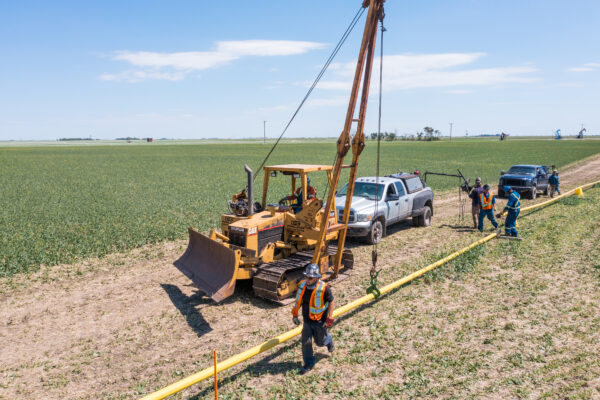
Entitled “Creating a Fair and Equitable Energy Transformation,” The 56 page report outlines nothing short of the utter transformation of Canada, its economy and workforce, by way of transitioning away from fossil fuels to a largely electric economy, with the possibility of hydrogen usage as well. In doing so it means to largely do away with the fossil fuel industry which is one of Canada’s largest industries and contributors to GDP, exports and wealth. The report provides recommendations as to what to do with the people involved in that industry, but not so much the companies who employ them, create those jobs or that wealth.
On Thursday, I’ll have the detailed Conservative response from MP Shannon Stubbs.
About that just transition…
Late on Monday the federal Natural Resources Committee released its final report on the “just transition.” Pipeline Online will have several stories on it over the coming days, but the first is the verbatim 19 recommendations by the committee. Both the Conservatives and Bloc issued dissenting reports.
One of the things all this just transitioning is all about is switching from coal, oil and gas to wind and solar. Well, today, the day before the solstice, solar power in Alberta at noon was producing half its rated capacity.
Freezing in the dark
U of R professor Jim Warren asks about freezing in the dark, 2023 Version. How many do Canadians do Justin Trudeau and Steven Guilbeault anticipate the “just transition” will kill?
Also, on Friday a Wisconsin First Nation (what they call “tribe”) was successful in getting a judge to punt Enbridge Line 5 off their land, but gave them three years to do so. Given how long it takes to get environmental approval for anything pipeline, that could be a tall order. But the fact this order was given in the first place could be an enormous precedent in the US. If tribes can retroactively punt mainline pipelines off their land, there will be utter chaos. Think Standing Rock, times 100.
First they came for the socialists, and I did not speak out …

This column talks about how Pipeline Online has now seen evidence of its links being silenced by Facebook to a small number of Facebook users. On the same day, Alberta Premier Danielle Smith’s Facebook account was banned from posting content.
This is 1984 in real time, folks. Whether you like or don’t like my content, soon all news content, including that which you do like, may soon be banned from Facebook, and possibly Google, too.
Movin’ on up!
Believe it or not, there are successful oil companies growing substantially in Saskatchewan.
Also, Quick Dick McDick goes branding. This video has way too much about prairie oysters. Way too much.
#Justinflation at the food store could defeat the Liberals

Brian Zinchuk: How Brie cheese could defeat a French-Canadian prime minister. And note, the cheese is from Quebec!
The world comes to Saskatchewan to discuss carbon capture international standards
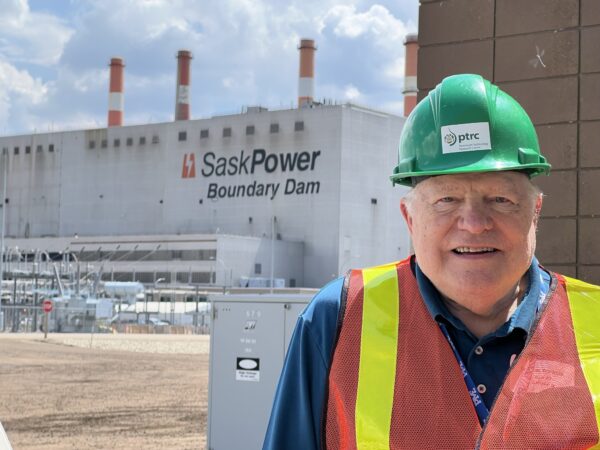
The irony is the current federal government wants to shut this all down, because coal is evil.
In the meantime, Saskatchewan – Regina, Estevan and Weyburn – showed off its decades of experience to worldwide experts on carbon capture, utilization and storage as they set international standards for the same.
How could you possibly drive Alberta into the rhubarb like this?
Only sheer and utter incompetence at the top could result in Alberta again issuing electrical grid alerts. It did so again Wednesday afternoon. In November-December, it issued five alerts in three weeks.
And Saskatchewan is continuing down this path.
Wind collapses across everywhere SaskPower is connected to
Wind power collapses across the central US, Saskatchewan, Alberta and Manitoba at the same time Wednesday morning. That’s 1100 miles north south, and 700 miles east west in the Canadian prairies.
Flooding fouls coal power station, shutting it down just as hot temps put pressure on Saskatchewan grid
Flooding shuts down major coal power station at Coronach, leaving SaskPower scrambling to backfill its nearly 600 megawatt output and shed load internally. This was the story promised yesterday.
Reliability of the electrical grid is everything.
Without it, nothing else matters.
I wrote this column nearly two weeks ago, and only shared it this morning. But it turns out this is playing out in real time, as I’m working on a big story about how SaskPower’s Poplar River Power Station is down, thus putting us out nearly 600 megawatts. This happened just as demand is spiking for air conditioning due to +30 temps this week. As a result, SaskPower is scrambling to reduce its internal demand, doing something called “load shedding.” Watch for that story once I’ve got it together.
Passing of a Southeast Saskatchewan oilfield legend
A few years ago the Weyburn Oil Show Board created a new honour called Southeast Saskatchewan Legends. There are a number of people who, over several decades, were key players in building the Saskatchewan oil industry. Many of them started and operated not one, but several oilfield service companies, and coincidentally, almost every single one of them farmed on the side. You could call them “serial entrepreneurs.”
Ron Wanner of Estevan was one of the first to be honored as a “Legend,” back in 2017. He started wheeling and dealing surplus oilfield equipment, and ended up having a trucking company, an oil company, a drilling rig and a service rig company. He passed away a few days ago. He also had a policy of buying long-term employees their own vehicle after a certain number of years. I remember around 2010 he bought a Hemi Challenger SRT/8 for the engineer who successfully built his oil company from nothing. This is his obituary, as published in Pipeline Online. They don’t make many like Ron Wanner anymore.
Newfie oil – delays and conversion
Geez, wonder who the federal government likes best? Federal government gives $86 million to convert Newfoundland oil refinery to biofuel.
And you know it likes Newfoundland because when they wanted to open up a major new oilfield, the federal Liberal government bit their tongue and said, “Sure!”
But now Newfoundland will also got a taste of what Alberta usually chews on – delays on energy projects. The Bay du Nord sailed through federal approvals (sailed – see what I did there?) , only to find out that Norwegian proponent Equinor is going to delay it three years. Didn’t they know the federal government is supposed to delay oil projects three years, not the oil company?
Whose basic science should be mocked?
Steven Guilbeault mocks Conservative MP Earl Dreeshen for talking about glaciers that once covered Canada. But whose “basic science” should be mocked?
Reaping what they’ve sown
I’m not much of a sports guy, but I think the term might be scoring an “own goal.”
Jim Warren writes about the environmentalists reaping what they’ve sown: how the anti-development approval processes demanded by environmentalists are now blocking green energy projects
Betamax vs VHS vs DVD
Whether you love em or hate em, one of the biggest obstacles to the adoption of electric vehicles has been a charging format war. There was a major development last Thursday on this front, and it’ll have impacts with Saskatchewan chargers and EVs in the near future. The repercussions from this will have a dramatic effect on the adoption of EVs.
For the fourth time in 16 days, Alberta’s wind power drops to near zero output
One more time, Alberta’s wind power generation collapses. You’d think this was a feature, not a bug?
Cenovus CEO: Without cheap, abundant, affordable energy, life is brutal. Life is short
The new CEO of Cenovus, Canada’s second largest oil producer and Saskatchewan’s largest (after they bought Husky during the COVID pandemic), tells it like it is. There’s a healthy dose of reality in his comments, but Cenovus is also leading the charge for carbon capture in the oilsands. He also likes the idea of nuclear reactors usage in the oilsands.
Health care and Georgia nukes
And now for two things completely different:
Pipeline Online columnist Brian Crossman broke his leg, twice, after a hip surgery, giving him some insight into what’s going on in Saskatchewan’s health care system. I don’t think he’ll be climbing any derricks any time soon.
And years late, billions over budget, Georgia’s two new Westinghouse AP1000 reactors (big ones, not ‘small modular reactors’) are finally going online. And while the story doesn’t mention this, there’s a major Saskatchewan tie. These two reactors going overbudget bankrupted Westinghouse, one of two nuclear reactor pioneers in the US (the other being General Electric). As a result of that bankruptcy, eventually last year, Saskatoon-based Cameco bought 49% of Westinghouse for a song.
This model is currently being built in China and being considered for substantial deployment in Poland. Three of these reactors, alone, at the highest rating, could make up almost the entire generation needs of Saskatchewan on most winter days. But if one went down, it would take down a third of our grid, which is why we never built big reactors.