Category: youmightbeinsaskatchewan

Without coal, the lights would have gone out in Saskatchewan this week. The spinny things only put out 6% of their capacity

Boundary Dam Power Station

For months, Pipeline Online has been pointing out that Alberta puts out detailed data on its power grid, but SaskPower did not. Apparently others have been asking for the same information as well. Now, @SaskPower has responded. What does a day of power production look like in SK? Wind put out 6% of its capacity, and 2% of total generation. Coal provided 42% of total  power

REGINA – While it’s not the same minute-by-minute data provided by the Alberta Electric System Operator for their grid, SaskPower has begun breaking down where its power is coming from on a daily basis. And the data from Oct. 3 and 4 showed wind generated an average of just 7.3 per cent and 6 per cent of its rated capacity of 615 megawatts. And while the Crown corporation often points out that “conventional coal accounts for approximately 24 per cent of SaskPower’s total generation capacity,” on those days, coal was providing an average of 42 per cent of the power in this province.

Who’s next? First it was fossil fuels that were demonized, now is it agriculture?

U of R professor Jim Warren: Who’s next? First it was fossil fuels that were demonized, now is it agriculture?

They say misery loves company. But having company is probably small comfort for people working in western Canada’s energy industry. That being said, it is becoming clear that the fossil fuel industry is no longer the only major economic sector in the west to find itself targeted for abuse under federal environmental policy. Just a few weeks ago, farmers and ranchers were singled out for special treatment on behalf of climate change mitigation and environmental protection.

And bonus points for this:

Each bovine would have to fertilize 23 acres – a big job given that over a third of them are young calves. The effort would require the production and distribution of bullsh!t on a hitherto unimagined scale.

Nuclear power is Estevan’s to lose, if Saskatchewan goes ahead with small modular reactors

There’s a pretty obvious choice for where nuclear power development should go in Saskatchewan.

And it’s not Elbow.

On Sept. 20, SaskPower announced they were considering two areas as possible sites for Saskatchewan’s first two nuclear reactors. One is at Lake Diefenbaker, near Elbow, and the other is Estevan, with three nearby reservoirs under consideration.

When it comes to choosing between Estevan and Elbow for future nuclear power development, Estevan would have to try really hard to lose.

Really, really hard.

If Estevan is going to lose coal, it better focus on nuclear, says leading local advocate

Jim Wilson was one of the people who helped get carbon capture built in Estevan. If the province isn’t going to do more, he thinks Estevan should focus on nuclear.

One of the leading advocates for clean coal in Estevan says the community should turn to nuclear, now that SaskPower may not do more carbon capture

“I was very much involved in trying to get it built. I was proud of what we achieved. Everything was good. I remember hearing (Catherine) McKenna in Paris make the announcement,” he said, adding, “Carbon pricing and all that has changed our world.”

He said, “You know, their decisions were not science-based, or business-based. They were politically-based. They were clearly political. And that’s what (Morgan) answered to you. It’s sad for you and I, and the community that built the first clean coal facility of its type. And it was probably a transition solution more than anything, right?

“That’s the point: they’re ignoring this technology. And it works. And to my knowledge, and we’ve developed it and built the first.”


When it comes to shutting down coal in Saskatchewan, they need to just stand up and say, ‘No,’ says RM of Estevan Reeve Jason LeBlanc

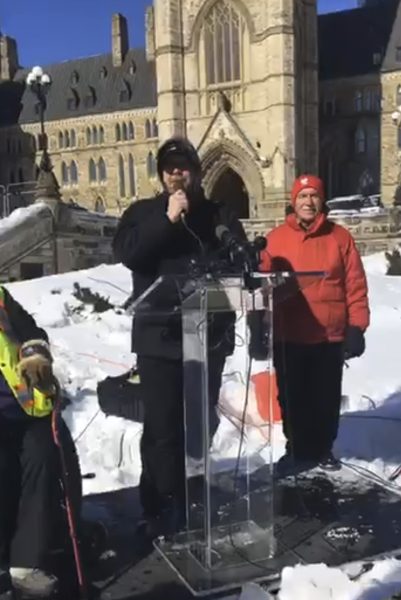
Jason LeBlanc, now reeve of the RM of Estevan, speaking on Parliament Hill in 2019.

In PipelineOnline.ca’s continuing series on the apparent end of additional carbon capture implementation on this province’s coal-fired power plants, leading to the eventual death of the coal industry, today’s story is reaction from the reeve of the RM of Estevan, Jason LeBlanc.

When it comes to shutting down coal in Saskatchewan, they need to just stand up and say, ‘No,’ says RM of Estevan Reeve Jason LeBlanc

Back in 2019, before he became reeve of the Rural Municipality of Estevan No. 5, Jason LeBlanc was standing in deep snow on Parliament Hill, protesting the carbon tax imposed by the Liberal federal government. And now the largest industry in his RM will likely be largely shut down by the end of this decade, due to that government’s policies against coal-fired power.

And

“The government is knocking on our own people,” he said, speaking of Saskatchewan. “The government is who’s buying into this? And they need to just stand up and say, ‘No.’

“The pendulum always swings. Our ancestors looked for any way to heat the house and to do stuff. And they figured out a way, and it was coal.”

“Other parts of the world are starting to go back. They know it’s not sustainable. It can’t be done. And we have it here. It’s already producing,” he said.


We Don’t Need No Stinking Giant Fans

Another grid buckles;

Polish power grid operator PSE asked some companies to lower power use on Friday evening, while generators will need to provide extra capacity to boost reserves for the peak demand hours.

PSE announced the ‘danger period’ during which there would be a lack of sufficient reserves in the system would run from 1700-1900 GMT.

While the announcement of the danger period marks a precedent, the grid manager regularly pays fees to power plants to keep generators on standby and to industrial users to be ready to cut their consumption.

PSE said the announcement would not affect regular energy consumers and was not immediately available for further comment, Poland’s climate ministry said it was monitoring the situation.

“I have called for the energy security team to convene. The situation is due to low winds and renewable energy today. Power reserves are being refilled. We are not threatened by a blackout,” Minister of Climate and Environment Anna Moskwa wrote on Twitter.

This seems like a good time to introduce the Board of Directors of SaskPower, the people responsible for bringing this system to our economy. You’ll be impressed by depth of their electrical generation credentials.

Coal will soon be gone, and nuclear is a long ways away for Estevan, and spinny things are not the answer


Boundary Dam Power Station. On the left is the carbon capture unit.

 
The reality that coal-fired power in Saskatchewan is being forced to an end, despite the possibility of carbon capture technology, is now weighing heavily on Estevan, as reported by PipelineOnline.ca.

Estevan mayor on coal: “The closer we get without any good answers by 2030, the harder it is for everyone in our community. We deserve some answers”

Estevan Mayor Roy Ludwig:

“And we’re not getting any answers. I mean, we’ve been meeting now with the province a few times and we said, ‘Listen, we want to know. We have to start meeting. 2030 is coming very quickly. What are we going to do? We need the federal government involvement. They don’t even answer our emails. We have to get them to the table.

“They want to shut down coal, which is a great baseload power. The only option to that would be close to that would be nuclear. And that won’t be coming (soon). Once we make a decision toward the end of this decade, it probably won’t be built till 2035-2036, something like that.”

And

“It’s weighing on the employees already. We have people saying, ‘You know, I don’t know for sure what’s going to happen, come 2030, so I’m bailing now. I’m going to where the jobs are now.’

“And it’s this sense of frustration, this sense of not knowing, you know, it’s a killer. And the closer we get without any good answers by 2030, the harder it is for everyone in our community. We deserve some answers. And the federal government owes us some answers. And the province, well, we’re starting to talk with them. SaskPower, we have a pretty good relationship with them, but it’s, you know, the final decisions with SaskPower are made by the provincial government, not SaskPower.”

This is a follow up to Further carbon capture on coal “not an option,” according to CIC Minister Don Morgan

First Rule Of Conservative Governance

Pleasing your enemies does not turn them into friends;

Since the opening of the Boundary Dam Unit 3 Integrated Carbon Capture and Storage Project in late 2014, Saskatchewan’s coal-fired power industry, and Estevan in particular, has been waiting for a clear message from the provincial government whether it would pursue additional carbon capture projects. To date, nothing has come forward, but the minister responsible indicated on Sept. 20 it would not happen.

Hanging in the balance is the future of both Coronach and Estevan, with the Poplar River Power Station at Coronach, Boundary Dam and Shand Power Stations at Estevan, their respective coal mines, workforces and communities.

On Sept. 20, the clearest indication to date came from the Minister of Crown Investment Corp. Don Morgan. The most recent cabinet shuffle placed all the major Crown corporations, including SaskPower, under one ministry under Morgan. His statements during an announcement on two possible sites for small modular reactor locations did not bode well for the future of coal in this province.


Second Rule of Conservative Governance: Screwing over your friends will turn them into enemies.

Devine’s Upgraders, Part 5

Were the Regina and Lloydminster upgraders worth it?

In 2011, when oil was 14 per cent of revenue, health care was around 41 per cent of expenditures. That meant that during those boom years, oil revenue could be considered having paid the bill for every doctor, nurse, hospital, old folks home and home care worker south of Craven, and that includes Regina.

That revenue became so important to this province that when OPEC opened the taps in late 2014 and oil crashed from over US$100 per barrel for West Texas Intermediate down to US$26, the provincial deficit for several years almost precisely matched the decline in oil prices. I was able to confirm this at the time by asking both the premier and finance minister several times. That remained the case for several years.

Divine’s Upgraders, Part 4

Regina’s upgrader has processed 16 million barrels of heavy oil per year for 30 years.

Gil Le Dressay has spent 43 years with Federated Co-operatives Ltd’s Regina refinery, starting as a process utility operator and working up to vice president of refinery operations then vice president of manufacturing.

Le Dressay responded to a series of questions by email on Sept. 8. He said of its early days, “You have to remember, at that time, the Heavy Oil Upgrader was the first of its kind in Canada. From the outset, it was an ambitious, innovative and strategic project, one that brought people together to ensure that our Refinery and province were set up well for the future.

“The construction of the upgrader would allow our refinery to secure competitive feedstock, to maintain high processing rates and, most importantly, to provide the Co-operative Retailing System (CRS) with a lower cost for transportation fuels – ultimately providing our owners with the highest rate of return.”

There were some tough times and controversy for the Regina upgrader. Its early days were not smooth. Asked what it took to resolve all that, and how have things been going since, Le Dressay said, “A critical project like the upgrader doesn’t just happen successfully. It requires considerable preparation and planning over its entire life cycle. This included upgrades to its overall design that would ensure it operated safely and efficiently in cold weather, as well as modifications designed to improve the reliability of key processes and functions within the upgrader system.

Devine’s Upgraders, Part 3

Brian Zinchuk;

On May 5, Lloydminster Mayor Gerald Aalbers said, “Without the upgrader, Lloydminster would likely be a community of under 15,000.”

The most recent 2021 census put the city’s population at just shy of 32,000, a marginal improvement from 2016.

And it’s been a wild ride getting to that 32,000. In 2003, I was hired as the city hall reporter for the Battlefords News-Optimist. The city manager of North Battleford, Jim Toye, told me at the time that he wished he had the problems of his counterpart in Lloydminster. Lloydminster was building around 600 houses a year at the time, and North Battleford, 150 kilometres down the road, was building 10. […]

After some pioneering work in using steam to produce heavy oil, trying several different extraction methods, Husky started building essentially cookie-cutter projects. Each involved a steam plant, and several well pads composed of well pairs using a technology called “steam assisted gravity drainage,” or SAGD. That might sound like a lot of technobabble until you realize the important points: Each of these thermal projects produces 10,000 barrels of oil per day, and cost $250 to $350 million a pop to build. And Husky built 11 of these projects in northwest Saskatchewan by 2020, prior to the onset of the COVID-19 pandemic and the corresponding crash in oil markets.

Devine’s Upgraders, Part 1

Brian Zinchuk’s first in a six part series on the two heavy oil upgraders built in the late 80s/early 90s that have become fundamental to today’s Saskatchewan economy;

If you had followed Saskatchewan politics in the 1990s, you would have thought the world was ending as a result of the Grant Devine Progressive Conservative government’s two signature megaprojects, the heavy oil upgraders in Lloydminster and Regina.

With oil price fluctuations dramatically hurting their economics, the Alberta government couldn’t abandon its investment in the Bi-Provincial Upgrader in Lloydminster fast enough, leaving Saskatchewan holding the bag and eventually selling it to Husky in 1998. Similarly, the NewGrade Upgrader in Regina was also wrought with financial and political peril.

Well researched and well written, I’ll be linking all six parts as they go live.

Subscribe to the Pipeline Online newsletter here.

ZINCHUK: SaskPower just signed a massive carbon leakage interchange agreement with the States

… and Estevan (and SaskPower consumers) will suffer the consequences.

SaskPower is going to beef up its power transmission interconnect with the U.S. Southwest Power Pool (SPP), from the existing 150 megawatts to 650 megawatts. It’s a connection to 106 utilities across 14 states from North Dakota right down to include the Texas panhandle.

The idea is when they need power, and we have power to offer, we sell power into the SPP. And when we need power, we can buy it from the SPP. And for that privilege, we will pay a tariff of $52 million per year. More on that later.

This sort of interconnected grid is really important when it comes to intermittent power sources like wind and solar. Especially wind and solar. When I was typing up the initial story this morning, I checked on how Alberta’s power grid is doing. And at that moment, at 10:46 a.m., Alberta’s power grid was producing 188 megawatts out of a theoretical 2,389 megawatts of wind power connected to their grid, a measly 7.9 per cent. And this has happened numerous times this summer. I’m losing track, really. […]

Let me be clear on this – Alberta is one of the most energy-rich jurisdictions on the entire planet. It’s got more oil, natural gas and coal then almost every energy producer on the third rock from the sun, never mind wind and solar. And it is routinely, almost every single day, drawing on power production from its neighbours to keep its lights on.

And this is what I anticipate will happen in Saskatchewan. Sure, we could send power to North Dakota. But it’s more likely that we will be drawing power from the SPP, nearly all the time.

[..]

But what really got me thinking were these comments: “Over 50% of North Dakota’s power is coal fired. Carbon tax free,” said one. And that’s true. According to the U.S. Energy Information Administration, “In 2021, coal-fired power plants provided 57 per cent of North Dakota’s electricity generation, and wind energy accounted for 34 per cent, which was the sixth-highest share from wind power for any state.”

And this comment hit home, as most of my neighbours are either coal miners or work for SaskPower.

“And no jobs here in coal. Goodbye Estevan, you’re ruined.”

[…]

And that $52 million annual fee – which I must compliment the Leader Post on finding that out. I missed that. That’s a lot of bucks. Indeed, it’s much more than what SaskPower pays the provincial government in coal royalties via its coal purchases.

Wait, what?

You got that right. We pay next to nothing for coal – at least the coal on crown land, which is most of it.

Read it all and subscribe. Then, call your SaskParty MLA and remind them what happened to the Alberta PC’s.

Related: Judge revives Obama-era ban on coal sales from US lands

I Want A New Country

Just get on with it.

Saskatchewan Premier Scott Moe has asked a former Saskatchewan Party MLA and former MP who recently was a part of the Wexit movement to co-host “in-house” meetings about increasing Saskatchewan autonomy.

Allan Kerpan — who served in opposition with the Saskatchewan Party and was also a Reform MP — and veteran SP MLA Lyle Stewart (Thunder Creek) have been chosen by Moe to lead the closed-door meetings across the province this month.

“The premier has been speaking about some sort of independence from Ottawa for quite a while in terms of the economy,” Kerpan told the CBC’s Morning Edition host Ted Deller on Monday.

Navigation