Category: Animal Rights Extremism

The Sound Of Settled Science

“Spay and neuter”, they said. It’s good for their health, they said.

More troubling, despite the unambiguous statements made by proponents of the salutary effects of spay-neuter on dogs, a series of long-term research programs has begun to show that the effects are far more subtle — and sometimes outright damaging. Benjamin Hart, a researcher and veterinarian at the University of California, Davis, has led the biggest effort to date to see exactly what the repercussions of desexing might be, in the long term, using the database from his university’s veterinary hospital. By removing dogs’ reproductive organs, gonadectomies also remove their main source of hormones — estrogen, testosterone and progesterone — each of which has a role not just in reproduction, but systemically through the body.
 

The first publication by Dr. Hart and his team, in 2013, reported that desexing golden retrievers, especially before six months of age, increased their risk of serious joint diseases, four to five times over the risk intact dogs face. They have since found higher rate of joint diseases among desexed Labrador retrievers, German shepherds, Doberman pinschers, Bernese mountain dogs and St. Bernards. Risks of cancer increase multifold in spayed goldens, neutered boxers and all Bernese. Desexed dogs of all types suffer higher rates of obesity. One of the most touted claims of spay-neuter — that it increases an animal’s life span — may be tempered by the finding that with an increased life span comes an increase rate of life-taking cancers.
 
[…]
 
Similarly, the oft-cited behavioral improvements of desexed dogs are questionable. Dr. Hart has reported that only one in four male dogs neutered for reasons of “aggression” shows less of the behavior after the surgery; the same holds for rates of mounting and excessive urine-marking. In females, there is even some evidence of an increase in aggressive behaviors if they are spayed before the age of 1.

The argument against routine spay-neuter is framed in animal rights blather, which is crocodile delicious. The same activist veterinarians who’ve enacted bans on “elective” animal husbandry procedures (like cat declawing and tail docking) apparently did so without considering that these surgeries keeping their clinic lights on are also “elective”.

This Is Not Your Grandma’s Humane Society

Rat Lawyer: not just a pejorative anymore.

A retired Toronto lawyer has gone to court in a bid to secure the right for advocates to speak up on behalf of animals in legal settings.
 
The case began earlier this year when Sandra Schnurr filed a notice of application against five retail giants selling glue traps, or devices commonly used to catch rodents.
 
Schnurr argued that the traps subject mice and rats to agonizing, prolonged deaths and filed an application seeking to ban Canadian Tire, Walmart, Home Depot, Home Hardware and Lowe’s from selling them.
 
The retailers, in turn, filed a motion to dismiss Schnurr’s complaint on the grounds that she did not have standing to bring such a matter before the courts.
 
But Schnurr argued that the rules surrounding who has the right to speak on various legal issues have been relaxing and animal rights advocates should be permitted a voice in Canada’s courtrooms.
 
The issue of standing was argued before Ontario Superior Court Justice Lorne Sossin last week and should be decided in the coming months.

I know it sounds funny, but it’s not. It’s part of a multi-front assault on agriculture. From the war on meat to the war on animal sport to the war on animal husbandry to the war on herbicides, left wing activism is doing to agriculture what they’re done to energy.

Where are our Ag Ministers and why aren’t they writing legislation that forcefully punts these camel nose cases out of the tent before they’re filed?

h/t Buddy

This Is Not Your Grandma’s Humane Society

Iowa;

Johnson County Fair Officials said animal rights activists have been disrupting the fair which they said stems from the “Family Rodeo” event.
 
Long-time fairgoer Sara Krieger said it’s disturbing what the group has been doing.
 
“They have been going around and cutting halters and cutting the hairs off the tail of cattle as well as letting the animals out,” Krieger said.
 
This has caused her to make extra efforts, needing to take her 12 show animals home every single day of the fair for the safety of the animals
 
“We’ve always felt secure here,” Krieger said. “I’m just confused as to why this is happening.”

They also pull these stunts at dog shows, sometimes opening crates to release dogs. Not the Rottweilers, though.

This Is Not Your Grandma’s Humane Society

Western Producer;

In 2019, animal rights groups have adopted more aggressive tactics.
 
In March, a group of protestors showed up at a dairy near Waterloo, Ont. They barged onto the farm, even after the producer told them to stop, and removed a dead calf from the barn.
 
“The farmer said, ‘you’re not allowed to come on my property,’ and they said, ‘yes, we are,’ ” said Kelly Daynard, Farm and Food Care Ontario executive director.
 
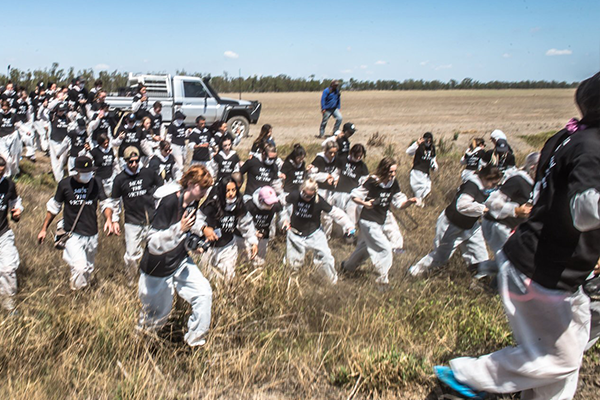
Then in late April, a large group of activists marched into a hog farm in Abbotsford, B.C., and occupied the farm for several hours.

They’re coming for agriculture like they came for pipelines and our governments are asleep at the wheel.

This Is Not Your Grandma’s Humane Society

Battlespace preparation for the coming assault on agriculture by the animal rights activists known as your provincial veterinary associations.

Does the Canadian veterinary profession turn a blind eye to animal abuse? Or rather, to certain kinds of animal abuse?
 
It’s a fair question, given the relative silence from the Canadian Veterinary Medical Association (CVMA) on the treatment of animals at the Calgary Stampede — which kicks off Friday — as well as the active participation of some of its members who work as vets in rodeo events.
 
The CVMA has a commendable policy on animals being used in entertainment, which states that the association “opposes activities, contests, or events that have a high probability of causing injury, distress, or illness.” It also states that “animals should not be forced to perform actions or tasks that result in physical or mental distress or discomfort.”
 
So why doesn’t the CVMA speak out about the distress, discomfort and risk of injury to rodeo animals at the Stampede, or at the more than 100 professional and semi-professional rodeos in Canada?

Legislators could stop this in its tracks by stripping these associations of their powers to legislate through the back door of professional regulation. In Alberta, fewer than 300 people were able to create de facto “law” for the entire province through a show of hands.

They’ll be back for more. Phone your MLA. It’s time for the agriculture ministers to step in.

This Is Not Your Grandma’s Humane Society

Pennsylvania;

Under the recently introduced bill, people would not be allowed to keep their dogs outside even during perfect weather unless the dog has access to shelter that meets a strict building code. That code stipulates that the shelter be waterproof and windproof, built three inches off the ground, out of material that does not conduct heat or cold and with a 6-inch awning covering the entrance.
 
The outdoor dog ban would apply to fenced-in backyards, even if they have big shade trees. It would apply to fenced-in runs at dog kennels. It would apply to a partly cloudy day with a 70-degree temperature. Senate Bill 551 would also ban hay, blankets, or other materials that can retain moisture, no matter how frequently the bedding is changed.

This Is Not Your Grandma’s Humane Society

CTV;

When a British Columbia woman experiencing fever, headaches and weight loss for two months finally went to her doctor, a blood test revealed she’d contracted a contagious disease from a dog she’d rescued in Mexico.
 
Dr. Elani Galanis, an epidemiologist and public health physician at the BC Centre for Disease Control, said the case was surprising because the previously healthy middle-aged patient didn’t seem to be a candidate for the transmission of brucellosis, which medical literature suggests can afflict people with weakened immune systems, or the very young and elderly.
 
“Up until this adult woman became infected and tested positive we felt like the risk to humans, although possible, was very, very low,” said Galanis, who wrote about the anonymous woman in a recent issue of the BC Medical Journal.
 
The woman worked for an animal-rescue organization that transported dogs to Canada from Mexico and the United States, often driving there to pick up the animals, Galanis said.
 
On one occasion, she was bringing back a pregnant dog from Mexico and likely came into contact with the animal’s pregnancy fluids as it spontaneously aborted two stillborn puppies, Galanis said, adding the dog later tested positive for the bacterium brucella canis and the woman was diagnosed after seeking medical treatment last December.
 
“Given the story in other places, like the rest of North America, this hasn’t been seen much before,” Galanis said of transmission of the disease to humans. “We’re just starting to see it so I do believe it’s a true emergence of a new problem.”

Local pet owners should hope she didn’t parade it through a Petsmart dripping fluids. The only cure for canine brucellosis is death.

This Is Not Your Grandma’s Humane Society

The plant-based diet rhetoric is sounding increasingly dictatorial.

Given that the anthropogenic climate change and resource footprint accusations against livestock agriculture do not hold water, what’s really behind the plant-based diet agenda?
 
Well, the empirical evidence suggests it is the advancement of plant-based diets for all.
 
Indeed, the plant-based and alternative protein movement is about more than industry disruption. It’s an ideology, one hell-bent on replacing traditional food with a utopian “food” solution – it’s political as much as it is commercial.

Related.

This Is Not Your Grandma’s Humane Society

Doug Ford will be a one term wonder if he ignores low-hanging fruit like this.

Livestock producer groups are speaking out after a court decision this week to drop charges against an animal rights activist who recorded her trespassing on a Lucan-area hog farm multiple times in 2016 and 2017.
 
The trespasser also admitted to taking animals from the farm. Charges of break and enter and mischief to property worth more than $5,000 were laid, but as Kurtis Andrews, a farm lawyer based at Ottawa, explains, the crown attorney dropped the charges, citing “no reasonable prospect of conviction.”
 
This most recent dropping of charges spurred Andrews to publish an open letter to the Attorney General of Ontario this week, as Andrews says he’s “outraged” that such brazen disregard for the law would go unpunished.

If you’re in Ontario, call your MPP.

h/t James

This Is Not Your Grandma’s Humane Society

Asian influenza, asian distemper and now Asian brucellosis;

In March, six Wisconsin animal shelters and rescue organizations, including the Washington County Humane Society, Humane Animal Welfare Society in Waukesha, Humane Society of Sheboygan County, Elmbrook Humane Society and Underdog Pet Rescue, received 26 dogs transported from South Korea by Humane Society International.
 
None of the dogs transported from South Korea to Wisconsin show signs of illness, but diagnostic testing revealed two dogs to be positive for B. canis. Wisconsin law requires that positive canine brucellosis tests be reported to the state. Public health authorities with the Wisconsin Department of Agriculture, Trade and Consumer Protection were immediately notified and have led the response.
 
Each dog, even those that tested negative for canine brucellosis, will be quarantined until they are no longer considered at risk. In addition, shelter dogs that were potentially exposed to the dogs from South Korea will also be quarantined. In total, approximately 100 dogs are expected to require quarantine.

These dogs aren’t legitimate rescues — they’re profit generators for the “flip-that-rescue” scam.

Some dogs were placed into adoptive homes prior to the positive test results. In those cases, state public health officials are contacting adopters to instruct them to place the dogs in quarantine in the home.

“Quarantine”? The only “treatment” for breeding dogs with canine brucellosis is euthanasia.

This Is Not Your Grandma’s Humane Society

Cornell University;

A young dog imported from South Korea into Western Canada last fall brought along a dangerous hitchhiker: the Asia-1 strain of canine distemper virus (CDV), which had never before been reported in North America.
 
Scientists at Cornell’s Animal Health Diagnostic Center (AHDC) identified the virus in samples from the dog, which they suspect was part of a shipment of animals rescued from a Korean meat market by an animal welfare organization. Dogs that are already immunized against CDV likely are not at risk from the Asian strain. But if the virus comes into contact with wildlife, it may take a serious toll on wild carnivore populations.

The rescue dog racket is now bringing foreign dogs – including many bred for the market – into North America to the tune of hundreds of thousands a year. But don’t get caught smuggling a pork sandwich coming in Vancouver airport.

This Is Not Your Grandma’s Humane Society

University of Sydney backs research into giving plants and animals legal rights (paywalled)

University of Sydney research probing into the “moral, legal and political status” of animals and the environment has been slammed as “out of touch”, prompting questions over who is funding the study.
 
A team of 14 university researchers studying “Multispecies Justice”, claim to explore rights for those that are “more than human” as part of the University of Sydney’s broader FutureFix program they themselves have dubbed as “counterintuitive”, as stated on their website.
 
“Justice is typically thought to be the preserve of humans, and advocacy has sought to ensure all humans are subjects of justice,” researchers wrote on the university’s website.
 
“But harms inflicted on animals and the environment are coming to be understood as injustices.”
 
The 14 researchers claim they are working to reconceptualise justice to accommodate “the vast breadth of the multispecies world” in an issue the University deems is of “global importance”, according to the University of Sydney website.
 
The university today defended the research, stating that many legal systems and scholars see harms inflicted on animals and the environment as a form of injustice.
 
“The project is examining what justice across the human and natural world might entail,” a spokesperson for the University told The Australian.
 
“It will provide a rigorous academic forum for those views to be researched, analysed and debated.”
 
“The FutureFix research themes were established to tackle some of the world’s biggest problems… We require counterintuitive thinking to address the deep complexities involved,” the spokesperson said.

Outline link here.

This Is Not Your Grandma’s Humane Society

Highest bidder journalism;

It’s a frightening prospect to think any person or entity with significant funds could buy editorial time or space to promote a specific ideology, but that’s what’s going on between the Guardian and the Open Philanthropy Project (OPP).
 
In 2017, the daily U.K.-based newspaper sought and received a grant from OPP to regularly print editorial content in support of OPP’s well-established animal rights agenda. OPP is paying the Guardian $886,600 (USD) to publish a series titled “Animals farmed.” It consists of a steady stream of articles that paint animal agriculture as inhumane, unhealthy and dangerous to the environment. […]
 
OPP is no ordinary reader. It’s funded by Dustin Moskowitz, one of the founders of Facebook. It has an unapologetic focus on farm-animal welfare – which it has every right to have, by the way – that is led by Lewis Bollard, a former leader at the Humane Society of the United States. It recently handed over $4 million in support of Prop 12 in California. Oh, and it is an investor in Impossible Foods, the maker of the Impossible Burger. The point is, its resources are significant, and it stands to gain financially and otherwise from the furthering of its anti-livestock agenda.

This Is Not Your Grandma’s Humane Society

Is your farm ready for activists?

It’s an unfortunate reality for many farmers — the very frightening possibility of activists targeting them on their private property, where their homes are, where they care for their livestock and raise their children.
 
Last weekend, Ontario dairy farmers were left shaken when activists trespassed on private property, entered barns without permission, and reportedly, even stole a dead calf.
 
The events have left several outspoken farmers angry, but also feeling extremely violated. It’s one thing for activists to protest in a public space, but it’s quite another to have highly-motivated and agitated strangers enter your place of work and home yard. Imagine if these same people did this in the city? How quickly would police respond? How seriously would they be dealt with?

Navigation