Category: Alternative Subsidy

We Don’t Need No Flaming Sparky Cars

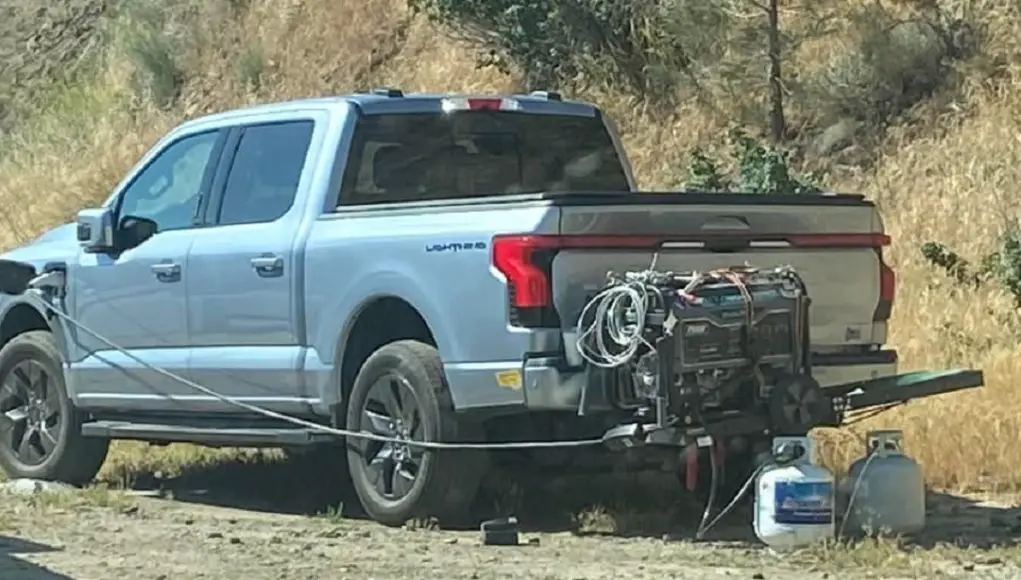
Don’t feed the crocodiles.

The demands by the left that we ‘fundamentally transform’ our society (do those words sound familiar?) into a carbon-neutral economy steps on a lot of rakes. There is Biden’s EPA chief, Joseph Goffman, who doesn’t know how much electricity the United States needs each year, the politicians who don’t realize that charging EVs requires about 90% of traditional grid electricity, and, of course, everyone’s favorite giggling vice president, who famously can’t even figure out how to charge an EV.

But maybe the biggest rake of all so far came recently from Kansas, where a coal-fired power plant that was slated for closure will now remain open because … it is needed to supply power to a brand new, $4 billion Panasonic EV battery factory just outside of Kansas City.

h/t Greg

Milking consumers

I suggest we go one step further: simply close down supply mismanagement and end the marketing boards altogether.

Corporate Welfare Fraud or Abject Stupidity?

Somebody hasn’t been honest about taxpayer-funded subsidies:

It will take 20 years for the federal and provincial governments to break even on massive subsidies to auto giants Volkswagen and Stellantis, not the five years that the government initially pledged, according to the Parliamentary Budget Officer.

Volkswagen, which plans a massive electric vehicle battery plant in St. Thomas, Ont., and Stellantis, which is building a plant with LG in Windsor, Ont., both received massive production subsidies from the provincial and federal government.

h/t James MacMaster

Soviet food systems

With rampant crime infesting so many inner cities in North America, is it really any wonder that large retailers are exiting those environs? Responding with a proposal for state-owned food stores is about as far from a solution as you could possibly get, but these days it seems to be par for the course.

Chicago Mayor Brandon Johnson said he wants to open city-owned grocery stores to serve neighborhoods that have become “food deserts” after four Walmart stores and a Whole Foods closed.

Johnson announced last week that his administration would partner with the nonprofit advocacy group Economic Security Project to put stores in underserved areas of the city — a proposal Republicans called something out of “Soviet-style central planning.“

We Don’t Need No Flaming Sparky Cars

The wheels of the Clown Bus go bump, bump, bump;

Energy Secretary Jennifer Granholm on Thursday addressed her now-infamous electric vehicle charging fiasco, saying her “young” staffers showed “poor judgment” when they used a gas-powered car to hoard a spot for Granholm at a crowded public station. …

Granholm’s charging fiasco occurred during the energy secretary’s June 27 drive from South Carolina to Athens, Ga., which included a stop at a public station outside Augusta to recharge Granholm’s electric vehicle fleet. But before Granholm’s arrival, the energy secretary’s advance staff determined the station would not be able to accommodate the caravan, as one charger was broken and others were in use. A Granholm staffer subsequently used a gas-powered car to hoard the station’s only available charger until Granholm’s arrival, prompting one angry family to call the police.

The ethics of emergencies

The misappropriation of millions of dollars is a feature, not a bug, of systems guided by short-term, “emergency” thinking. Or rather, a complete lack of thinking.

Rai led a “fraudulent scheme” targeting the hotel and PHAC officials, according to the statement of claim, telling the other owners the government was taking over the entire hotel but only paying for 100 rooms — when he had actually negotiated government payment for all 247 rooms.

It’s alleged he misappropriated the revenue difference of those 147 rooms: at least $15.7 million.

We Don’t Need No Flaming Sparky Cars

FP;

Volkswagen AG is cutting temporary workers at its main electric-vehicle factory in Germany after the phaseout of a subsidy in the country caused demand for its EVs to drop.

The manufacturer is letting go 269 people at the Zwickau plant when their 12-month contracts expire in the near future, VW said Thursday. The company expects it will have to adjust the shift schedule at the facility near the Czech border.

The fate of around 2,000 additional temporary staff remains uncertain, according to people familiar with the matter, who declined to be named because a final decision hasn’t been made yet. Corporate orders that accounted for some 70 per cent of VW-branded EVs made in Zwickau have been plummeting since aid for electric company cars expired this month, one of the people said.

We Don’t Need No Flaming Sparky Cars

Secretary of Energy Jennifer Granholm …

… recently took 4-day EV caravan trip across the southeast to “draw attention to the billions of dollars the White House is pouring into green energy and clean cars.”

What happened next is like a scene out of VEEP

Steve from Rockwood – The irony is not lost that a politician is in an Armada of high-priced vehicles to make a point on Earth sustainability and a young family with children appear to be in the way.

We Don’t Need No Stinking Giant Fans

‘Biggest clean energy disaster in years’

No new offshore windfarms will go ahead in the UK after the latest government auction, in what critics have called the biggest clean energy policy failure in almost a decade.

None of the companies hoping to build big offshore windfarms in UK waters took part in the government’s annual auction, which awards contracts to generate renewable electricity for 15 years at a set price.

The companies had warned ministers repeatedly that the auction price was set too low for offshore windfarms to take part after costs in the sector soared by about 40% because of inflation across their supply chains.

We Don’t Need No Stinking Giant Fans

And stinking giant fans don’t need us.

Despite lavish subsidies and tax credits under the Biden Administration’s signature Inflation Reduction Act, the US offshore wind industry is in turmoil after the world’s largest wind producer said it may be forced to walk away from multi-billion dollar wind projects on the eastern seaboard.

The world’s largest publicly listed offshore wind producer, Oslo-based Ørsted, on Wednesday saw its shares fall more than 25% after it said it may be forced to take massive write offs due to what its CEO calls “severe” economic and logistical conditions in the US for renewable energy.

On a conference call with investors, CEO Mads Nipper warned the company may be forced to walk away from five major US wind projects off New Jersey, Virginia and New England. He blamed a combination of supplier delays, higher interest rates and a lack of government subsidies.

“The situation in US offshore wind is severe,” he said.

It came a day after a long-awaited auction of offshore wind parcels in the Gulf of Mexico attracted just two bidders in a blow to Biden’s plans for building 30 gigawatts of offshore wind capacity by 2030.

Y2Kyoto: Carbon Credit Fraud

But I repeat myself;

A number of major carbon traders are finding that offsets they bought may now be valueless.

Trafigura Group, the world’s largest trader of carbon removal credits, has suspended a consignment as it awaits the results of an investigation into the forestry project behind the units. The situation has led the company to replace the offsets in a contract with a corporate client and instead keep the stranded credits on its own books.

Hannah Hauman, global head of carbon trading at Trafigura and a former oil trader, says the complete loss of value seen in some corners of the voluntary carbon market is unlike anything she’s witnessed in oil markets.[…]

Since the first carbon credit was traded roughly 35 years ago, the market has been hit by a steady stream of scandals that have led to wild price swings and even collapsing valuations. That has implications not just for firms trading such credits, but also for companies that use them to underpin green claims to customers and regulators.

We Don’t Need No Flaming Sparky Cars

WSJ: The Electric-Vehicle Bubble Starts to Deflate

It’s ironic, to say the least, that the U.S. is seeking to imitate China’s economic model at the moment that its industrial policy fractures. Look no further than its collapsing electric-vehicle bubble, which is a lesson in how industries built by government often also fail because of government.

Tesla last week slashed its prices in China to boost sales in an oversaturated EV market. In July Tesla and other auto makers in China agreed to stop their EV price war, only to scrap the cease-fire days later owing to government antitrust concerns. While lower prices may benefit consumers, auto makers in China are bleeding red ink and going bust.

A plethora of Chinese EV start-ups launched in the past decade, fueled by government support, including consumer incentives and direct financing. Auto makers churned out EVs to suck up subsidies. Giant property developer Evergrande Group launched an EV unit as its real-estate empire began to implode, but now the EV unit is foundering too.

About 400 Chinese electric-car makers have failed in the past several years as Beijing reduced industry subsidies while ramping up production mandates. Scrap-yards around China are littered with EVs whose technology has become outdated, redolent of its unoccupied housing developments created by government-driven investment. […]

Cox Automotive reported this month that EV inventory had swelled to 103 days of supply in the U.S., about double that of gas-powered cars. Auto makers and dealers are discounting EVs to sell their growing supply. The average EV price paid by consumers has fallen 20% compared with a year ago to $53,438, driven by Tesla’s price cuts and dealer incentives.

Ford recently reduced its EV production targets as its losses and unsold inventory grow. At the end of June, it had 116 days of unsold Mustang Mach-Es, and GM’s electric Hummer had more than 100 days of supply. And this is in a growing economy.

Traditional auto makers will have to raise prices on gas-powered cars to compensate for their EV losses. A United Auto Workers executive said Sunday that Stellantis is threatening to move production of its Ram 1500 trucks to Mexico from suburban Detroit, no doubt to reduce costs. The EV jobs President Biden touts will come at the cost of union jobs building gas-powered vehicles.

Meantime, EV start-ups are floundering as interest rates climb, and they struggle to scale up manufacturing. Lordstown Motors filed for bankruptcy in June. Nikola Corp. warned this year that it had “substantial doubts” about its ability to stay in business.

Don’t make me come up there!

There’s two ways to comply with Canada’s recent legislation regarding online news: either pay every time a user on your social media platform links to said news, or block the link and pay nothing. Meta has chosen the latter option.

The federal government’s response: We demand that you make a different choice! If you don’t, well, …. we’ll complain a lot because what else can you do when you’ve painted yourself into a corner.

The Canadian government on Friday demanded that Meta lift a “reckless” ban on domestic news from its platforms to allow people to share information about wildfires in the west of the country.

Chris Bittle, a legislator for the ruling Liberal Party, complained on Thursday that “Meta’s actions to block news are reckless and irresponsible.”

Y2Kyoto: Screw The Whales

The poster fish of the environmental movement have outlived their usefulness.

Wind energy companies and their foundations have donated nearly $4.7 million to at least three dozen donations to major environmental organizations. Linowes has made public a report and a database documenting the conflicts-of-interest she discovered. — The National Fish and Wildlife Foundation, a granting organization, took up to $1 million from wind energy companies Avangrid and Shell, and then distributed it to other environmental groups. In August 2020, the National Audubon Society received a $200,000 grant from the New England Forest and Rivers Fund. — The same year, the Nature Conservancy received a $165,218 grant from the New England Forest and Rivers Fund. The Nature Conservancy has supported offshore wind since at least 2021. — NJ Audubon has partnered with wind farm developer Atlantic Shores, a joint venture between Shell Oil and EDF Renewables. Ocean Wind, another wind energy developer, has sponsored NJ Audubon’s World Series of Birding event multiple times. The wind industry has also made hefty donations to scientific organizations.

Navigation