
On fatherhood, but done the super-progressive way.
The Progressive Passover
Oddments For The Weekend
Including a Bob Ross diorama; a black hole simulator; the agonies of choosing toothpaste; and a game about terrible volume controls.
Poison Is Queen
Twilight Zone
Because when you think of the dignity of women, you immediately picture drag queens.
Oddments For The Weekend
Including scenes of tilting and irritation; gratuitous cleavage; how to eat spaghetti; and simulated tripping – from the mild to the intense.
Not Going Boldly, If At All
When space exploration is stupefied by progressive imperatives:
We are, however, told that we need more deaf and disabled people in space. Because space exploration just isn’t difficult enough and dangerous enough as it is. And choosing astronauts with hearing problems, poor eyesight and motor-control issues will make things much more exciting.
And frankly. when you’re asking, apparently in all seriousness, how a mission to Mars would benefit Black Lives Matter, as if it somehow should, I think we can say that the foolishness in the room has risen to hazardous levels.
Oh, there’s more. Much more.
Have You Listened To The Lichen?
The class, since you ask, is Ecofeminist Poetry & Poetics. Taught by a Professor of English, Brian Teare, who will, we’re assured, situate relationships and encourage re-feeling. And who will also reveal how “chattel slavery, imperialism, industrialisation, settler colonialism, and militarisation” can be understood – and righteously tutted about – by listening to “birds, goats, willow oaks, and lichen.”
Now Wash Your Hands
“Gosh, that’s good — gosh gosh gosh gosh gosh gosh,” Champ says in the video.
Mr Champ, a middle-school teacher, has been finding pleasure in odd places.
Oddments For The Weekend
Including wave-making at scale; uncanny mental powers; the Star Trek metal detector; and the thrill of testicles.
You May Want To Bite Down On Something
There Was An Attempt To Impart Information. To people of a progressive leaning.
Well, This Is Awkward
Today’s word is hindsight.
Oddments For The Weekend
Including testing for tastiness; interviews with tea ladies; self-sorting chairs; and 21 minutes of morons being tased.
Keepers Of Deep Knowledge
Three tales of leftist librarians. And the loud buzzing inside their heads.
Something-something “white supremacy” something-something “privilege.” I’m paraphrasing, of course.
But really, it’s the same doctrinaire horseshit we’ve seen a hundred times. And according to which, the world will be enormously improved by the “abolition of policing in all its forms.” If that isn’t sufficiently unambiguous, our Ivy League librarians insist that their “ultimate goal” is, and I quote, “the complete abolition of law enforcement… everywhere.” Because “a world without policing” will somehow, rather conveniently, be a world without crime.
And because helping people find the books that they’d like to borrow is just too boring and insufficiently high-status for minds such as these.
Oh, there’s more.
And What Was Your First Clue?
I bring educational news:
The educator in question, whose actual name has not been disclosed, took to social media to express his indignation at not being permitted to wear his false tail at work. “People wanna be straight up pearl clutching bitches,” he said, in a teacherly manner. Among images of stabbed and bleeding teddy bears, and while describing himself as a “butt-sniffing wolf bitch.”
Parents also suggested that a cross-dressing kindergarten teacher wearing mini-skirts, a dog collar and black fishnet stockings was, all things considered, a tad inappropriate.
Land Of Mandatory Make-Believe
Following this eye-widening farce, in which a mentally ill woman claimed to be crushed and psychologically violated by a haircut booking form, I bring you a vision of things to come.
You may want to bite down on something.
Oddments For The Weekend
Including an improbable chicken; some agreeable jiggling; a display of dexterity; and a guide to the dream cars of the 1950s.
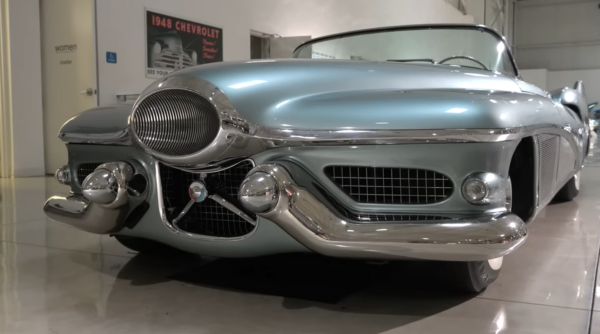
All this and more.
Hair Crisis
Attention, Canadian citizens. A new realm of human suffering has been discovered.
Regarding Tattoos
Appetites
In niche minority news:
Mr Kotetsu and his publishing associates, all trans-identified males, have an extensive history of lively, one might say titillated, online discussions regarding child molestation and its various sub-genres, including sadomasochism and incestuous necrophilia, along with pointers as to how to circumvent normal online proprieties and legal restrictions when sharing… content.
One of Mr Kotetsu’s associates, a cross-dressing man named Violet Rose, enthuses about “hurtcore,” a form of sadomasochism involving minors. Mr Rose chides critics of the phenomenon, i.e., critics within their own bedlamite community – those who find it a little too much – to “stop being ageist.”