Including rocking and bobbing; a history of British radar; why women take so long in the bathroom; and a brief guide to Medieval cats.

All this and more.

Including rocking and bobbing; a history of British radar; why women take so long in the bathroom; and a brief guide to Medieval cats.
All this and more.
Including an unhappy residue; how to distract children; adventures in bicycling; and a choir made up of people who’ve had their voice boxes removed.
A reminder, should one be needed, that we live in an age of ironies.
On racially incongruous casting in period dramas:
Readers will note the unilateral nature and casual, practised arrogance of the underlying conceit. The urge to insert diversity, in one direction at least, regardless of incongruity.
As seen, for instance, in the pages of British Vogue, where Ms Hanna Flint, “a mixed-race woman, of British and Tunisian heritage,” expressed her dismay that new adaptations of works by Emily Brontë and Jane Austen have “cast the protagonists as white once again.” As if this were some kind of scandal or transgression, for which apologies and recompense were in order.
Presumably on grounds that it is somehow unfair that the Yorkshire moors of the eighteenth century did not entirely resemble twenty-first century London. Where Ms Flint happens to live.
Apparently, we must embrace “historical inclusivity,” via modish anachronism and jarring racial contrivance.
Including scenes from the machine uprising; some lively automation; a triumph of hairspray; and when you have a CT scanner and a whole bunch of animals.

All this and more.
Readers may wish to ponder the implication that a high-trust society can somehow be maintained unilaterally, simply by not caring about the number of people who violate that trust, and who do so repeatedly, whether in ways that are audacious or just wearyingly routine but nonetheless degrading.
As if pretending not to mind the evaporation of civilised, reciprocal standards – and pretending not to be alienated by primitive behaviour – somehow means that said behaviour isn’t there and didn’t happen. And that it won’t happen tomorrow, or the day after. And with ever greater boldness.
As if a high-trust society means letting antisocial fuckers act with impunity.
On high-trust societies and those who struggle with the concept.
Including an attempt to warm a car; fun with Goffin’s cockatoo; and raving in Cramlington circa 1993.

All this and more.
Come to think of it, I’m not entirely sure what loving one’s body might mean, beyond the obvious off-colour jokes. But apparently, it’s something that one is supposed to proclaim as an accomplishment, a credential of progressivism. I have, however, noted that it tends to be announced by people whose declared triumph in this matter is not altogether convincing, and whose basis for doing so is generally much slimmer than they are.
On the ideological gratification of thwarting clever children; on shoehorning pretentious racial guilt into the world of dentistry; and on not wearing knickers in a terribly radical way.
All this and more.
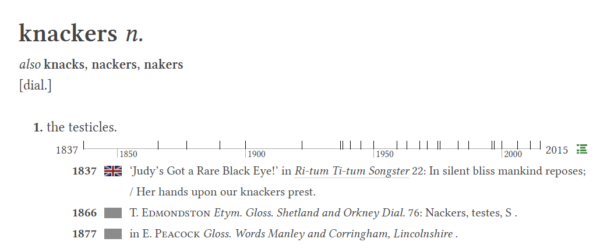
Including some intriguing meat; on preparing the wrong concerto; an impromptu display of vocal range; and five hundred years of the vulgar tongue in searchable archive form.
All this and more.
What struck me was the claim by Dr Nisha Verma, our adjunct assistant professor and “person of science,” that she would be “more than happy to have a conversation” – i.e., regarding whether men can get pregnant – while suggesting quite strongly that this is not in fact the case.
A Senate hearing on drug safety takes a somewhat surreal turn.
The question “what is queer food?” is, we’re told by Professor Elias, “a question that’s coming up a lot lately.” If only among academics desperate for an angle, an excuse for claiming a salary and wasting other people’s time. Academics much like Professor Elias.
Elias said she does not have a definition for what “queer food” is, but wants “recognition” it exists.
Welcome to the bleeding edge of human mental activity.
Quite how one can write “an illustrated guide to queer food,” complete with recipes, as Professor Ilias has, while simultaneously being unable to define what such a thing is, should it exist, is a question I leave to the reader.
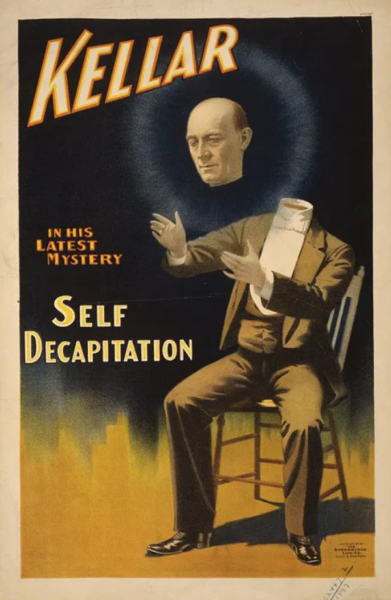
Including breakdancing taken literally; the biology of make-believe; a collection of found cassette tapes; and a gallery of strange phenomena.
All this and more.
Or, How dare you bigots object to his incongruous masturbation in the women’s bathroom?
I paraphrase, of course. But not wildly.
Or, Bint Regurgitates:
Ms Kylie Brewer, featured above, is, she boasts, a “content creator, writer, and activist with a background in education and political storytelling.” Hence, one assumes, the departures from reality. She’s also a high-school teacher, a person who teaches others, and she’s very much “anti-racist.” Which would, I suppose, explain the endless, contrived disdain for people who happen to have pale skin.
Because contradictions don’t exist in Ms Brewer’s mental world.
Being so clever, she shapes young minds.
The Year Reheated, in which he marvel at the mental contortions of our self-imagined betters:
In July, we revisited our experiment in multiculturalism and indiscriminate immigration, in which uninvited newcomers have to be reminded that torturing animals and loitering by school gates in order to film children are activities not generally approved of by the indigenous. There followed a menu of other cultural subtleties not being grasped by new arrivals – say, queuing, courtesy and not raping schoolchildren – along with efforts by governments to tactfully convey local customs, while suppressing any noticing of what must not be noticed. Apparently, we must explain civilisation to those unfamiliar with the concept, while pretending that no such corrective measures are required or taking place.
Via the pages of British Vogue, Ms Hanna Flint expressed her dismay that new adaptations of works by Emily Brontë and Jane Austen have “cast the protagonists as white once again.” Ms Flint bemoaned the “factory setting of a white perspective” in tales about white people, and the lack of “historical inclusivity” in adaptations of novels set in rural England in the eighteenth and nineteenth centuries. Ms Flint informed us that she is “left somewhat cold” by period-appropriate pallor. A train of thought that terminated before arriving at the possibility that others, perhaps some larger number, might be left somewhat cold by modish anachronism and jarring racial contrivance.
We also visited Loughborough University, where senior lecturer Dr Ben Roberts has devised, at taxpayer expense, an unorthodox use for yoghurt – namely, smearing it on windows so as to slightly lower indoor temperatures during that rarest and briefest of phenomena, the British heatwave. Dr Roberts assured those intrigued that, as soon as the yoghurt has dried, “the smell disappears.”
Oh, there’s more.
Including the hazards of navigating bird droppings while on horseback; trying to do a thing while being attacked by bees; the bollards of Islington circa 1976; and two half-hours of Hancock from 1961.

All this and more.