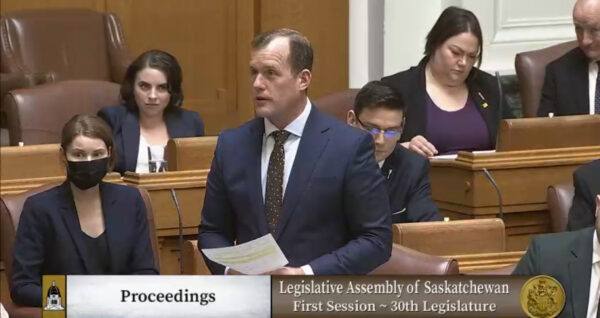
Saskatchewan is rebuildings its coal fleet. Here’s a chance to hear from Crown Investments Corp and SaskPower Minister Jeremy Harrison explain how this came about. It’s the biggest energy decision in 10 years. If you work in the coal industry in take time this weekend to watch/listen.
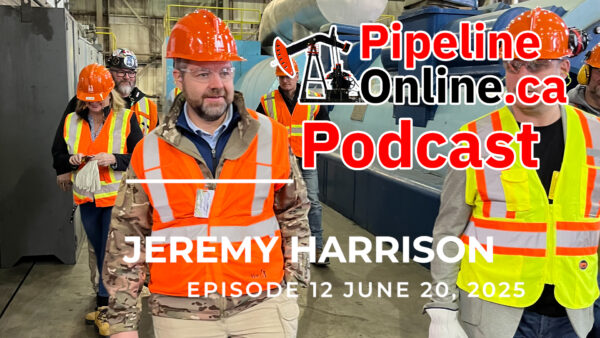
BREAKING: Saskatchewan to rebuild its coal fleet, despite federal regulations calling for its demise. In other words, to hell with the feds, we’re keeping the lights on. At 10 on Friday, Minister Jeremy Harrison will be on the Pipeline Online Podcast
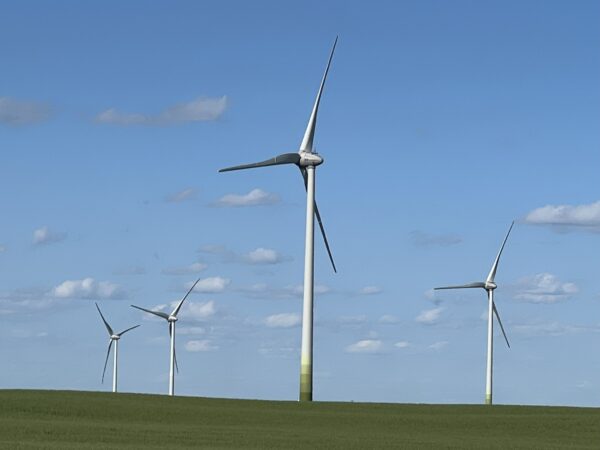
Oddly enough, I was driving through southern Alberta at the very moment wind output cratered. Photo by Spencer Zinchuk
Alberta wind output falls to 0.05 per cent of capacity days before energy election. And the Clean Electricity Regulations, brought into force the last day Parliament sat, do not appear to be up for change according to the Liberal election platform. Read for yourself.
If carried through, Saskatchewan rebuilding its coal fleet could be one of the most consequential policy choices in decades.
I’ve finally had the chance to get caught up on posting these podcasts, originally broadcast live. Originally broadcast in January, this is worth listening to. Pipeline Online Podcast Ep. 2: Jeremy Harrison on Coal
This is a major piece talking about the costs that could be incurred building small modular reactors. Those costs could be unobtainable, which is why coal is back on the table in a big way.
The numbers come from the Tennessee Valley Authority, who already operate three nuclear plants and is the largest utility in the US. They plan on building the same model of reactor.
If SaskPower carries through with rejuvenating coal, it will save three power plants, two mines, ~1000 jobs and two communities.
The significance of the shift on coal cannot be understated. When SaskPower’s then-CEO Mike Marsh came to Estevan in 2018 to say they would not be installing carbon capture technology on Boundary Dam Units 4 and 5, it wasn’t the obituary for the community, but it sure felt like the cancer diagnosis. And with no talk of carbon capture for Coronach’s Poplar River Power station, it seemed all but certain that town would whither away once the coal plant and related mine shut down by the federally mandated 2030 deadline. The January, 2025, announcement of SaskPower looking to rebuild both Boundary Dam and Poplar River, if carried out, would be a decades-long reprieve for both communities.
To extend the metaphor, effectively Estevan and Coronach just went into chemotherapy, and the results may be positive.
The implications of this change in direction, from the impending death of coal, to its possible rejuvenation, have local, provincial, national and international aspects, detailed in the story.
Watch for the Pipeline Online Podcast, Episode 2, to be broadcast on LinkedIn, Facebook and X at 1 p.m. on Friday, Jan. 24.. Crown Investments Corp Minister Jeremy Harrison is the guest, where we will delve even further into this new direction on coal-fired power generation.
[Pinned to top of page by Kate, scroll down for new posts]
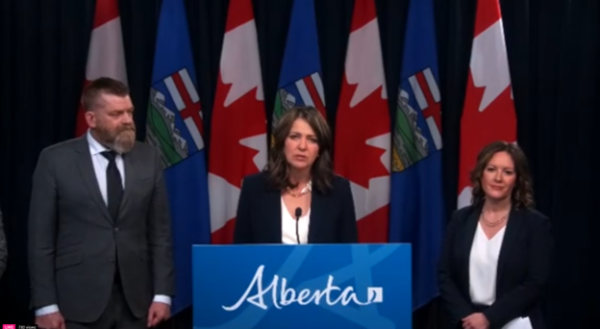
Government of Saskatchewan says coal has a future. SaskPower is to look at running Poplar River and Boundary Dam Units 4,5 and 6 for decades to come, considering rebuilding them and ignoring federal coal mandate to shut down by 2030. Minister Jeremy Harrison was in Coronach and Estevan telling coal workers that coal has a future.
This is an enormous turnaround that cannot be understated. Saskatchewan is not giving up on coal. Estevan and especially Coronach get a huge reprieve.
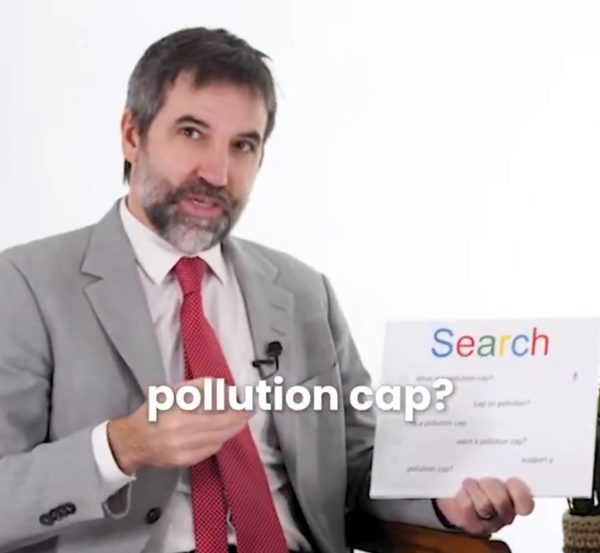
And it’s a giant up yours to the feds. I’m sure Guilbeault will have a canary, and a cow. But he won’t eat the cow because my get is he’s a vegan.
Hopefully my 100+ stories talking about the unreliability of wind and solar, and imploring we shouldn’t throw away what works for what we know absolutely doesn’t work had some impact on this.
I’ll have more to write about this in the coming days. There are lots of implications. For instance, since we own the coal, we charge ourselves basically nothing for it. We do pay for the mining, however. But for natural gas, since our domestic production has dropped like a stone, most of our gas comes from Alberta. So every dollar we spend on their gas is a dollar leaving the province, never to come back (sound like Trump?) And here’s the kicker – when LNG Canada goes online, what do you think is going to happen to gas prices? Does anyone think it’ll stay around $2/gigajoule another 10 years? Or will it go up – maybe to $4, or even $6? All of a sudden, gas won’t be so cheap anymore, nor will the electrical power derived from it. But our nearly free coal will be. And once the carbon tax is gone – smooth sailing!
Also, this just happened (gradually, then suddenly…)
Jonathan Wilkinson near Kipling, announcing $50 million for a wind project in June 2023. Photo by Brian Zinchuk
In Pipeline Online’s continuing mission to ensure we all know exactly what the federal government is telling us on climate change initiatives, this is the verbatim press release from the Government of Canada issued at 18:10 hrs on Dec. 5. Notably, it was not sent out via provincial media releases nor SaskPower’s media releases. And apparently according to the feds, Jansen is a company, not the place the largest mining company in the world, BHP, is building the world’s largest potash mind. Check that out in the opening paragraph.
(You’d think the natural resources minister, and ministry, might be aware of the largest potash mine in the world being built in their country)
The announcement was made by Minister of Energy and Natural Resources Jonathan Wilkinson. He and Minister of Environment and Climate Change Steven Guilbeault are the federal Liberal government’s lead ministers on their numerous and various climate change initiatives. For good measure, we’ve interspersed a healthy dosage of oil and gas ads, that industry that this government’s Bill C-59 is trying to muzzle.
Highlights include money for a number of solar projects, advancing SMR development, the intertie to the United States, grid-scale batteries, and a “forecast that there will be over 130,000 clean energy jobs added in Saskatchewan between 2025 and 2050.”
Oh, and I am willing to bet a Christmas cheesecake the $265 million number was set so they could say it was more than Harper gave carbon capture in 2008 ($240 million). Never mind 9 years of inflation meaning my kid cries after buying groceries.
And what are going to use that CO2 for, pray tell? Producing more oil, baby! (Well, not the stuff that’s going into this well, but all the CO2 that’s going to go in the pipeline past it. You’ll have to read the story to understand.)
Oh, and here’s a bonus: the federal government wants to now subsidize radio news as well. Why do I hear the Emperor from the Return of the Jedi cackling in my head?