Category: Unsettled Science

Let Them Eat Taser

Published this month in the Journal Of Virtue Signaling;

We now have the most authoritative estimate of the value provided by wearing masks during the pandemic: approximately zero. The most rigorous and extensive review of the scientific literature concludes that neither surgical masks nor N95 masks have been shown to make a difference in reducing the spread of Covid-19 and other respiratory illnesses.

This verdict ought to be the death knell for mask mandates, but that would require the Centers for Disease Control (CDC) and the rest of the public health establishment to forsake “the science”—and unfortunately, these leaders and their acolytes in the media seem as determined as ever to ignore actual science.
What Would We Do Without Peer Review?

Science;

Nearly a decade ago, headlines highlighted a disturbing trend in science: The number of articles retracted by journals had increased 10-fold during the previous 10 years. Fraud accounted for some 60% of those retractions; one offender, anesthesiologist Joachim Boldt, had racked up almost 90 retractions after investigators concluded he had fabricated data and committed other ethical violations. Boldt may have even harmed patients by encouraging the adoption of an unproven surgical treatment. Science, it seemed, faced a mushrooming crisis.[…]

That list, formally released to the public this week as a searchable database, is now the largest and most comprehensive of its kind. It includes more than 18,000 retracted papers and conference abstracts dating back to the 1970s (and even one paper from 1756 involving Benjamin Franklin). It is not a perfect window into the world of retractions. Not all publishers, for instance, publicize or clearly label papers they have retracted, or explain why they did so. And determining which author is responsible for a paper’s fatal flaws can be difficult.

Still, the data trove has enabled Science, working with Retraction Watch, to gain unusual insight into one of scientific publishing’s most consequential but shrouded practices. Our analysis of about 10,500 retracted journal articles shows the number of retractions has continued to grow, but it also challenges some worrying perceptions that continue today. The rise of retractions seems to reflect not so much an epidemic of fraud as a community trying to police itself.

The Sound Of Settled Science

They’ll cling to the Big Bang until their fingernails bleed.

Astronomers have discovered what appear to be massive galaxies dating back to within 600 million years of the Big Bang, suggesting the early universe may have had a stellar fast-track that produced these “monsters.”

While the new James Webb Space Telescope has spotted even older galaxies, dating to within a mere 300 million years of the beginning of the universe, it’s the size and maturity of these six apparent mega-galaxies that stun scientists. They reported their findings Wednesday.

Lead researcher Ivo Labbe of Australia’s Swinburne University of Technology and his team expected to find little baby galaxies this close to the dawn of the universe — not these whoppers.

“While most galaxies in this era are still small and only gradually growing larger over time,” he said in an email, “there are a few monsters that fast-track to maturity. Why this is the case or how this would work is unknown.” […]

“The revelation that massive galaxy formation began extremely early in the history of the universe upends what many of us had thought was settled science,” Leja said in a statement. “It turns out we found something so unexpected it actually creates problems for science. It calls the whole picture of early galaxy formation into question.”

The Sound Of Settled Science

The models said otherwise, and the models are never wrong.

When a kilonova was detected at 140 million light-years away in 2017, it was the first time scientists could gather detailed data. Scientists around the world are still interpreting the data from this colossal explosion, including Albert Sneppen and Darach Watson from the University of Copenhagen, who made a surprising discovery.

“You have two super-compact stars that orbit each other 100 times a second before collapsing. Our intuition, and all previous models, say that the explosion cloud created by the collision must have a flattened and rather asymmetrical shape,” says Albert Sneppen, PhD student at the Niels Bohr Institute and first author of the study published in the journal Nature.

This is why he and his research colleagues are surprised to find that this is not the case at all for the kilonova from 2017. It is completely symmetrical and has a shape close to a perfect sphere.

A voice of sanity

John Campbell has been one of my “go-to” sources when it comes to information about Covid, and this interview covers a lot of topics in one convenient go. Neil Oliver engages Dr. Campbell in a discussion of his background and career and then delves into various aspects of Covid and pandemic policy.

Campbell is no conspiracy theorist, but approaches the topic of Covid by recognizing that there are degrees of evidence when it comes to analyzing the effectiveness and safety of various treatments. There is an unfortunate tendency, for instance, to treat the topic of adverse vaccine reactions as if the evidence is utterly conclusive (rare and always treatable) and we can simply close down the discussion. The same goes for Ivermectin and excess deaths, which are discussed in this interview.

Interesting to note that Campbell is no longer certain that, if he knew back then what he knows now about the vaccines, he would be inclined to take the shot.

Update: Robert here. I hope my SDA colleague, Dennis, doesn’t mind but this video directly from John Campbell, is directly related.

The Sound Of Settled Science

Everything keeps getting older.

Archaeologists excavating at the Simbiro III archaeological site have found a trove obsidian hand-axes from 1.2 million years ago, indicating that hand axe production on a mass scale occurred 500,000 years earlier than previously thought.

Simple obsidian tool production has been documented from sites as early as 3.3 million years ago, but the complexity for mass tool production of hand axes by an unknown group of hominins at Simbiro III, predates the earliest known example found at Kariandusi in Kenya which dates to 700,000-years-ago.

The results of the study at Simbiro III have been published in the journal Nature Ecology & Evolution, where the researchers document almost 600 obsidian hand-axes being discovered.

Abstract here: A surge in obsidian exploitation more than 1.2 million years ago at Simbiro III

Scott Adams, “Anti-Vaxxers Were Totally Right”

There are highly edited versions of this floating around the internet this morning. Including an edited version put out by Adams himself. But its well worth watching the whole thing to really get the context and what Adams is thinking.

I don’t completely agree with Adams that his process was largely correct but he got the wrong answer. A lot of people were comparing the wrong things when they decided to get the shots. That was a big part of the propaganda campaign. But kudos to Adams for going public with this. Far more people need to follow his example.

The Sound Of Settled Science

A neuroscience image sleuth finds signs of fabrication in scores of Alzheimer’s articles, threatening a reigning theory of the disease;

In August 2021, Matthew Schrag, a neuroscientist and physician at Vanderbilt University, got a call that would plunge him into a maelstrom of possible scientific misconduct. A colleague wanted to connect him with an attorney investigating an experimental drug for Alzheimer’s disease called Simufilam. The drug’s developer, Cassava Sciences, claimed it improved cognition, partly by repairing a protein that can block sticky brain deposits of the protein amyloid beta (Aβ), a hallmark of Alzheimer’s. The attorney’s clients—two prominent neuroscientists who are also short sellers who profit if the company’s stock falls—believed some research related to Simufilam may have been “fraudulent,” according to a petition later filed on their behalf with the U.S. Food and Drug Administration (FDA).

Schrag, 37, a softspoken, nonchalantly rumpled junior professor, had already gained some notoriety by publicly criticizing the controversial FDA approval of the anti-Aβ drug Aduhelm. His own research also contradicted some of Cassava’s claims. He feared volunteers in ongoing Simufilam trials faced risks of side effects with no chance of benefit.

So he applied his technical and medical knowledge to interrogate published images about the drug and its underlying science—for which the attorney paid him $18,000. He identified apparently altered or duplicated images in dozens of journal articles. The attorney reported many of the discoveries in the FDA petition, and Schrag sent all of them to the National Institutes of Health (NIH), which had invested tens of millions of dollars in the work. […]

But Schrag’s sleuthing drew him into a different episode of possible misconduct, leading to findings that threaten one of the most cited Alzheimer’s studies of this century and numerous related experiments. Continue reading →

The Sound Of Settled Science

Judith Curry;

The loss of glaciers from Glacier National Park is one of the most visible manifestations of climate change in the U.S. Signs were posted all around the park, proclaiming that the glaciers would be gone by 2020. In 2017, the Park started taking these signs down. What happened, beyond the obvious fact that the glaciers hadn’t disappeared by 2020?

Not only are Montana’s glaciers an important icon for global warming (e.g. Al Gore’s Inconvenient Truth), it also seems that the glaciers are an important political icon for progressive politicians in Montana. Earlier this week, Reilly Neill, a (sort of) politician in Montana, went after me on Twitter […]

Well, it just so happens that I have some analyses of Montana glaciers and climate in my archives; maybe I can help Reilly (and the “real scientists of Montana”) understand what is going on.

Safe and Effective®

Andrew Bridgen- Now the BMJ’s Journal of Medical Ethics confirm vaccine causes more harm than benefit to younger people. The roll out must be suspended and children must not be put at risk through these experimental mRNA treatments.

British Medical Journal- COVID-19 vaccine boosters for young adults: a risk benefit assessment and ethical analysis of mandate policies at universities 

University booster mandates are unethical because they: (1) are not based on an updated (Omicron era) stratified risk-benefit assessment for this age group; (2) may result in a net harm to healthy young adults; (3) are not proportionate: expected harms are not outweighed by public health benefits given modest and transient effectiveness of vaccines against transmission; (4) violate the reciprocity principle because serious vaccine-related harms are not reliably compensated due to gaps in vaccine injury schemes; and (5) may result in wider social harms.

The Telegraph- Long Covid or Menopause?

Related- Top doctor says she suffered COVID-19 vaccine injury | 9 News Australia

The Sound Of Settled Science

A new study by a team of leading climate scientists suggests that the effect of carbon dioxide this century might be small if not undetectable when compared to natural climate variability.

Global surface temperature is and always has been the key climate parameter. Whatever is happening to the Earth’s climate balance, it must, sooner or later, be reflected in the global annual average temperature, and not just in regional variations. [emphasis, links added]

But therein lies what is to some an inconvenience as the changes in the global temperature this century are open to differing interpretations including the suggestion that increases in anthropogenic greenhouse gas emissions are not needed to explain the changes we have seen in the last 20 years or so.

It’s a conclusion that many would dismiss as coming from climate “skeptics,” or downright deniers.

But what if it’s the view of scientists from two of the world’s leading institutes researching climate change; the University of Oxford and the US National Center for Atmospheric Research?

The paper is here.

This Is The Way

Trust The Evidence- Writing on Substack

The idea of migrating to Substack was Carl’s. We had been harassed, censored, and blocked in our efforts to understand exactly what had been going on since late winter 2020. We decided not to respond to personal attacks and not to name individuals who we knew conspired against us, although as it’s Christmas, I have made an exception for Mr Hancock. I must confess that I am astounded he is still a sitting MP on the benches of the mother of modern democracies.

On substack, you own what you write and carry the buck if you get it wrong. There are no censorship or arcane rituals like editorial peer review. We can decide even to publish some of our studies, videos of our posts, debates and interact with our paying subscribers.

The Sound Of Settled Science

UPI;

DNA sequences dating back 2 million years, the oldest ever obtained, suggest that the northeastern tip of Greenland was once home to a forested ecosystem unlike any now found on Earth.

The sequences were obtained from frozen soil and indicate that the region, was once home to mastodons and reindeer. The area is now barren and home to hare, musk ox and few plants.

“No one would have predicted this ecosystem in northern Greenland at this time,” said Eske Willerslev, a paleogeneticist at the University of Copenhagen who co-led a study published Wednesday in Nature describing the ancient-DNA findings.[…]

Greenland was much warmer then, but the researchers did not expect the DNA sequences to reveal forests of poplar, spruce and yew trees such as those now typically found at much lower latitudes, alongside sedges, shrubs and birch-tree species that still grow in Greenland, according to Nature.
Advertisement

“Reindeers, according to paleontologists, should not have survived; they shouldn’t even exist at that time,” Willerslev said. Mastodons were thought to have lived in North American forests, and their remains have never been found in Greenland.

The Sound Of Settled Science

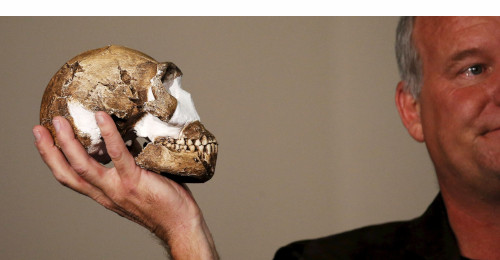
Homo naledi may have lit fires in underground caves at least 236,000 years ago.

Researchers have found remnants of small fireplaces and sooty wall and ceiling smudges in passages and chambers throughout South Africa’s Rising Star cave complex, paleoanthropologist Lee Berger announced in a December 1 lecture hosted by the Carnegie Institution of Science in Washington, D.C.

“Signs of fire use are everywhere in this cave system,” said Berger, of the University of the Witwatersrand, Johannesburg.

H. naledi presumably lit the blazes in the caves since remains of no other hominids have turned up there, the team says. But the researchers have yet to date the age of the fire remains. And researchers outside Berger’s group have yet to evaluate the new finds.

H. naledi fossils date to between 335,000 and 236,000 years ago (SN: 5/9/17), around the time Homo sapiens originated (SN: 6/7/17). Many researchers suspect that regular use of fire by hominids for light, warmth and cooking began roughly 400,000 years ago (SN: 4/2/12).

Such behavior has not been attributed to H. naledi before, largely because of its small brain. But it’s now clear that a brain roughly one-third the size of human brains today still enabled H. naledi to achieve control of fire, Berger contends.

Navigation