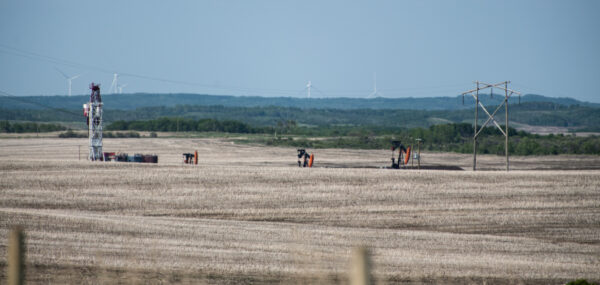
SaskPower asked customers to reduce demand Wednesday as low wind, gas and coal issues reduce power supply

SaskPower asked customers to reduce demand Wednesday as low wind, gas and coal issues reduce power supply

SaskPower awards major wind and solar projects to Meadow Lake Tribal Council, Mistawasis Nêhiyawak and Potentia partnerships
All-of-the-above approach: SaskPower Minister’s speech at wind and solar announcement
Meanwhile:
Energy Realities Podcast: Spain and Portugal’s major blackout
Either a bylaw amendment is approved, or the Weyburn wind project is dead.

Enbridge: Securing the affordable, reliable energy we need takes an all-of-the-above approach
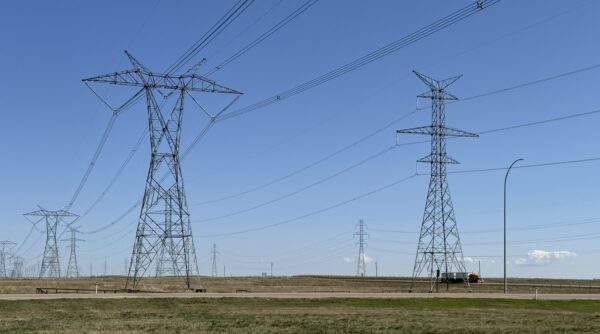
Alberta wind output falls to 0.05 per cent of capacity days before energy election. And the Clean Electricity Regulations, brought into force the last day Parliament sat, do not appear to be up for change according to the Liberal election platform. Read for yourself.
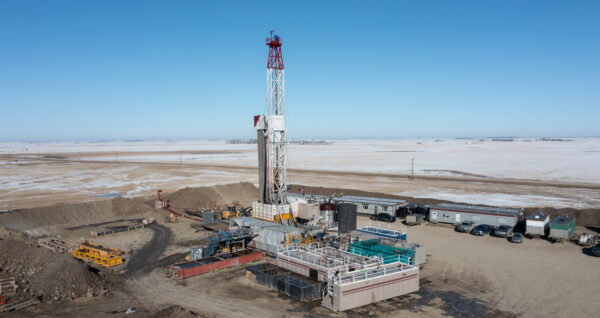
37 rigs still in the field as winter drilling season is about to wrap up
The greenwashing act has not gone away. Op-Ed: Heather Exner-Pirot & Sonya Savage: Canada’s greenwashing amendment: A failure of process and policy
Pipeline Online Podcast Ep. 3: Chad Eggerman on Wind

Op-Ed: Aleana Young: Prairie Powerbroker: Energy Sovereignty and Economic Security for Saskatchewan.
Note: count how many times coal is mentioned.
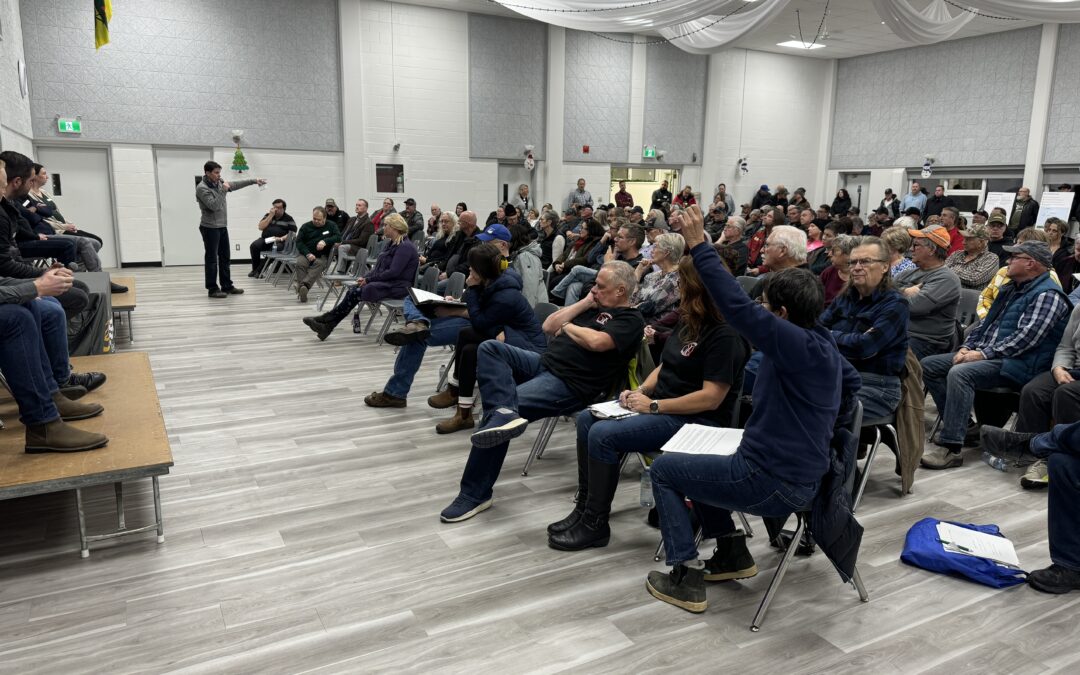
It was right around the time a man walked up to me, leaned close to my face and asked how much I had been paid to write a story talking about the benefits of the Weyburn wind project that I had an epiphany…
Brian Zinchuk: In opposing a wind project, Weyburn might want to be careful what they wish for
This is the column I referenced in those Weyburn wind stories. While I still very much question wind generation in a macro sense, I definitely had an epiphany when it came to NIMBY and the Weyburn wind project being presented by Enbridge. If an energy project can’t get built by an oil town, what’s going to happen when we want to start building reactors? Or a major pipeline is proposed?
And on Sunday, I stopped at the Bekevar Wind Facility. I posted a few videos from there, which I will eventually post as stories on the site. For the second time in a row, there was zero power being produced as not one turbine turned in the hour or so I was there. The wind was around 2-4 knots, according to weather reports.
Santa gave Alberta free power again on Christmas and Boxing Day.

Scott Moe 2024 in Review: Nuclear, Coal, Wind and Solar Power Generation
Also:
Enbridge’s Weyburn wind project open house, Part 5: Health, setbacks, provincial dollars
(conclusion of series)
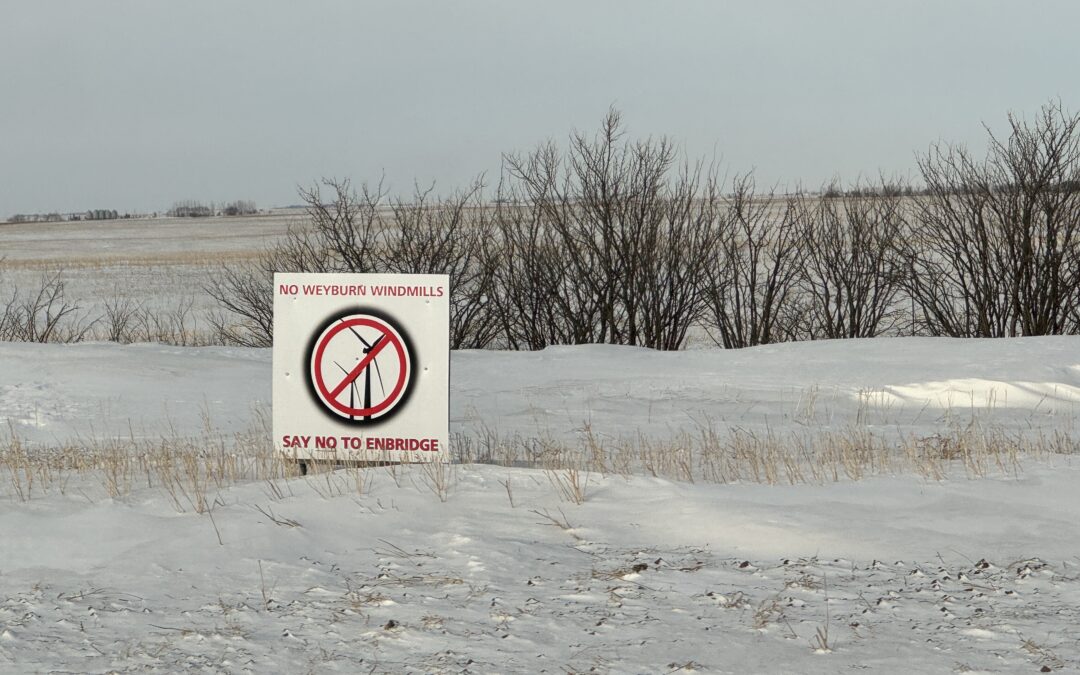
Here’s part five, which includes discussion on health impacts, setback distances, and speaking with Premier Scott Moe about provincial loan guarantees.
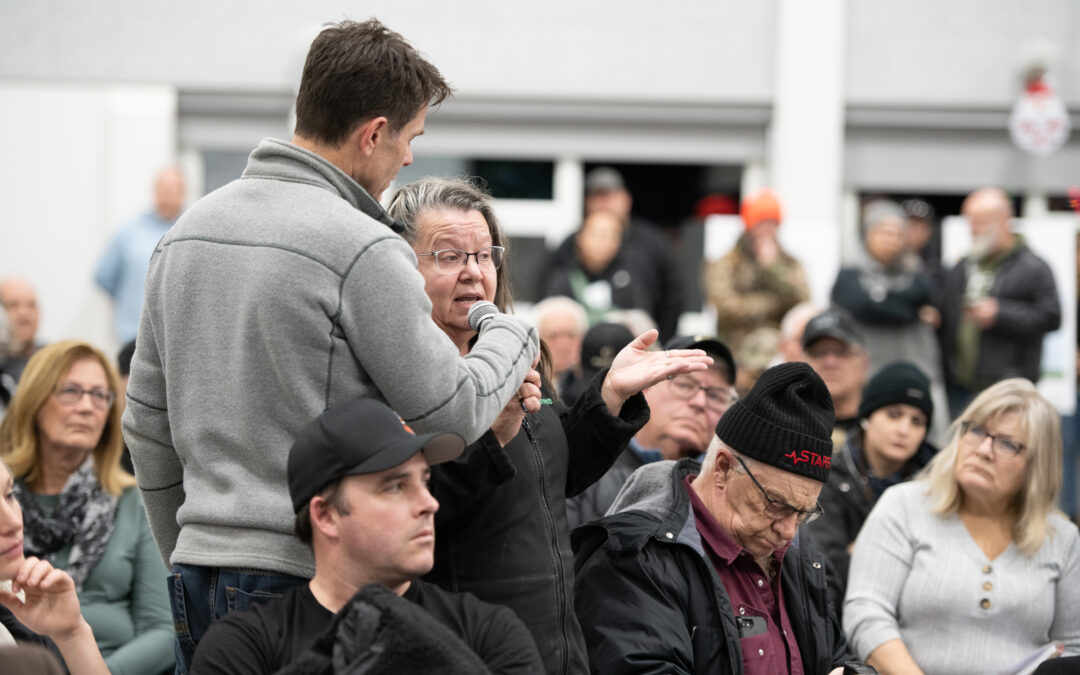
Here’s Part 4 of the Weyburn Wind saga, focusing on acreages, wildlife and referendum
You might be wondering why I’ve gone so deep into this open house. Here’s the thing – this has been the first opportunity I’ve had to really get into the development of one of these projects, and see and hear the arguments from both sides. Alberta just put its 50th online. Saskatchewan has nine. This would be the 10th. So it’s a chance to really get into the weeds.
The numerous stories I’ve written about wind power to date have almost been exclusively about their reliability or lack thereof, and their impact on a macro scale on grids, power pricing and the like. This development side is a totally different aspect.
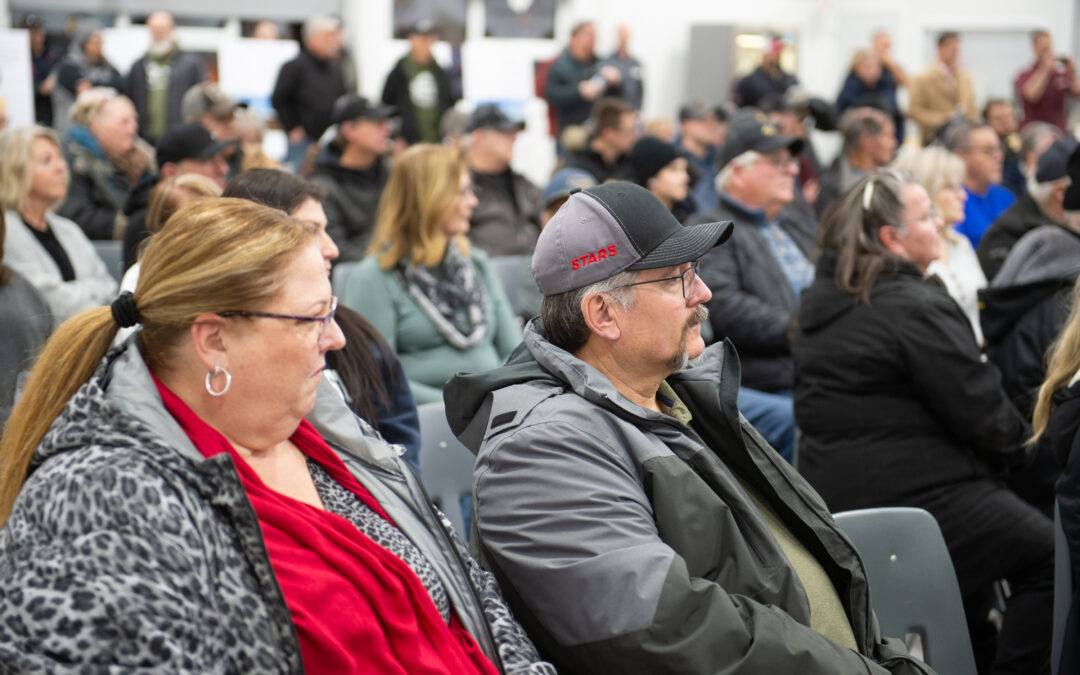
Enbridge’s Weyburn wind project open house, Part 3: Consultation, renewable energy, turbine size.
Also: Canadian carbon removal company scores US$40M grant from fund backed by Bill Gates

Enbridge’s Weyburn wind project open house, Part 1: Setting the stage
It was a contrite Enbridge which presented a second open house in Weyburn for its planned 200 megawatt wind project, to be located east of the community. The project has seen several revisions, and Enbridge representatives repeatedly spoke about correcting mistakes and working with people affected by the proposed project.
Note: This story ended up being so massive, it needed to be broken up into several parts just to make it manageable and yet still allow a great deal of depth on a topic very important to Weyburn.
On top of that, there is a LOT going on in the power space right now, with the Tuesday release of the revised Clean Electricity Regulations and on the same day as the grand opening of the Great Plains Power Station at Moose Jaw which Pipeline Online attended. There’s a lot of catching up to do, so please bear with me. Here’s Enbridge’s Weyburn wind project open house, Part 1: Setting the stage.
I’ve never seen a multi-billion behemoth like Enbridge be so apologetic for wanting to spend around a third of a billion around a community.
Enbridge folks said “apology” or “apologize” five times, and “sorry” twice. I checked my transcript.
I expect they still feel sore about losing Northern Gateway, where First Nations claimed Enbridge spoke to them like they owned the place. It was clear this was an entirely different approach.
Seriously, I was working on yet another wind story when this came up.
For 12 hours again this past weekend, power in Alberta was “free,” with BC and Montana benefitting greatly.
Zero dollar price is “free,” is it not?

I worked on this story for many days with one of the proponents whose family will account for around half of the land assembly for the project. The number was initially a lot higher but the project has been changed and adapted. He has some strong points in favour of wind development, and they should be heard.
This is what they call “journalism,” as in telling multiple sides of a story. And no one else is writing in depth stories like this in Saskatchewan.

That being said, I have another wind story about a great day of wind production in Alberta on Sunday – 74 per cent output. That’s four orders of magnitude better than it was at noon precisely seven days before. But that also caused pool prices to hit zero for 12 hours.
Again, I point out the problem with no one making money is no one is making money. That’s unsustainable. And the proposed reforms in Alberta will make it much worse, by introducing negative pricing. Ridiculous! Nothing with intrinsic value should ever be zero. Ever.

This is huge – Alberta wind and solar projects will have to put up the reclamation costs up front before going ahead. Should Saskatchewan do the same? Alberta releases new rules and no-go zones on wind and solar projects.
And the new rules mean when these turbines you see come down at end of life, they likely will not be replaced.
Also:

In Pipeline Online’s continuing mission to ensure we all know exactly what the federal government is telling us on climate change initiatives, this is the verbatim press release from the Government of Canada issued at 18:10 hrs on Dec. 5. Notably, it was not sent out via provincial media releases nor SaskPower’s media releases. And apparently according to the feds, Jansen is a company, not the place the largest mining company in the world, BHP, is building the world’s largest potash mind. Check that out in the opening paragraph.
(You’d think the natural resources minister, and ministry, might be aware of the largest potash mine in the world being built in their country)
The announcement was made by Minister of Energy and Natural Resources Jonathan Wilkinson. He and Minister of Environment and Climate Change Steven Guilbeault are the federal Liberal government’s lead ministers on their numerous and various climate change initiatives. For good measure, we’ve interspersed a healthy dosage of oil and gas ads, that industry that this government’s Bill C-59 is trying to muzzle.
Highlights include money for a number of solar projects, advancing SMR development, the intertie to the United States, grid-scale batteries, and a “forecast that there will be over 130,000 clean energy jobs added in Saskatchewan between 2025 and 2050.”
Oh, and I am willing to bet a Christmas cheesecake the $265 million number was set so they could say it was more than Harper gave carbon capture in 2008 ($240 million). Never mind 9 years of inflation meaning my kid cries after buying groceries.
And on the topic of Guilbeault, Pipeline Online columnist Jim Warren, knocks another one out of the park talking about his involvement with the green slush fund.

What did 1722 Alberta wind turbines have in common? 0.007 per cent output at noon on Sunday
But hey! At that very moment, at noon, solar’s output was less than 10 per cent!
The number was so low that if you enter those numbers into your Windows calculator app (0.39 megawatts / 5476 megawatts), it will give you the scientific notation of 7.121986851716581e-5.
That’s right – the percentage was in scientific notation, because normal numbers don’t go that low. And this is after many, many billions spend on wind.
I keep asking: Why are we throwing away what we know works, for what we know absolutely does not work?
Electricity is the very oxygen of our economy. When you have lots of oxygen to breathe, no problem. The very second you run out – big problem. And we are entrusting our very lives with technology that continually completely collapses in a widespread basis. Fool me once, shame on you. Fool me 49 times (the number of Alberta wind farms) shame on me. And fool me 1722 times (the number of Alberta grid-scale wind turbines) … well, you get the idea.
Also:
Digging deep on the lithium and potash Crown land sale – a 97:1 ratio on land prices, just 30 miles apart
Bronwyn Eyre: Saskatchewan election post-mortem: Why the Sask Party lost the cities
A former Energy and Resources Minister for four years, Eyre is joining Pipeline Online as a regular contributor, both as a columnist and co-host in an upcoming regular podcast that is rapidly coming together. Watch for Eyre’s continuing contributions on Pipeline Online in the weeks and months ahead.
Also:
Alberta wind power generation falls to less than one per cent capacity, once again (Last Friday, it fell to zero. You read that right. Zero.)
TC Energy CEO sees opportunity in Trump win as company refocuses on natural gas
And, what’s this Bluesky Social all about? In the interest of staking territory, Pipeline Online is now on this new social media at @pipelineonline.bsky.social. If you’re on there, be the first to follow, I guess?