Jim Warren: The Canadian Deep Green State. Do you think current bureaucrats believe in BANANAs? (build absolutely nothing anywhere)
The shark gets swallowed: Whitecap closes Veren (formerly Crescent Point) strategic combination. The company that pretty much defined Saskatchewan’s Bakken Boom, gobbling up over 30 companies (most of them in southeast Saskatchewan) is no more.
Pipeline Online Podcast: Ep. 9 E. Craig Lothian, CEO of Lex Capital.
If SaskPower carries through with rejuvenating coal, it will save three power plants, two mines, ~1000 jobs and two communities.
The significance of the shift on coal cannot be understated. When SaskPower’s then-CEO Mike Marsh came to Estevan in 2018 to say they would not be installing carbon capture technology on Boundary Dam Units 4 and 5, it wasn’t the obituary for the community, but it sure felt like the cancer diagnosis. And with no talk of carbon capture for Coronach’s Poplar River Power station, it seemed all but certain that town would whither away once the coal plant and related mine shut down by the federally mandated 2030 deadline. The January, 2025, announcement of SaskPower looking to rebuild both Boundary Dam and Poplar River, if carried out, would be a decades-long reprieve for both communities.
To extend the metaphor, effectively Estevan and Coronach just went into chemotherapy, and the results may be positive.
The implications of this change in direction, from the impending death of coal, to its possible rejuvenation, have local, provincial, national and international aspects, detailed in the story.
Watch for the Pipeline Online Podcast, Episode 2, to be broadcast on LinkedIn, Facebook and X at 1 p.m. on Friday, Jan. 24.. Crown Investments Corp Minister Jeremy Harrison is the guest, where we will delve even further into this new direction on coal-fired power generation.
[Pinned to top of page by Kate, scroll down for new posts]
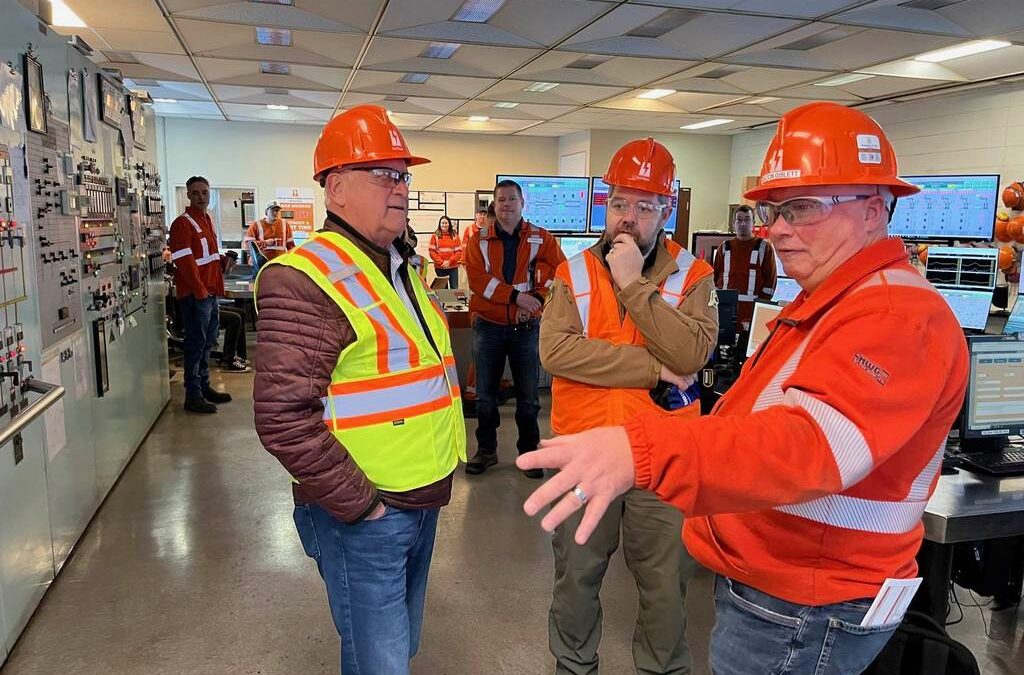
Government of Saskatchewan says coal has a future. SaskPower is to look at running Poplar River and Boundary Dam Units 4,5 and 6 for decades to come, considering rebuilding them and ignoring federal coal mandate to shut down by 2030. Minister Jeremy Harrison was in Coronach and Estevan telling coal workers that coal has a future.
This is an enormous turnaround that cannot be understated. Saskatchewan is not giving up on coal. Estevan and especially Coronach get a huge reprieve.
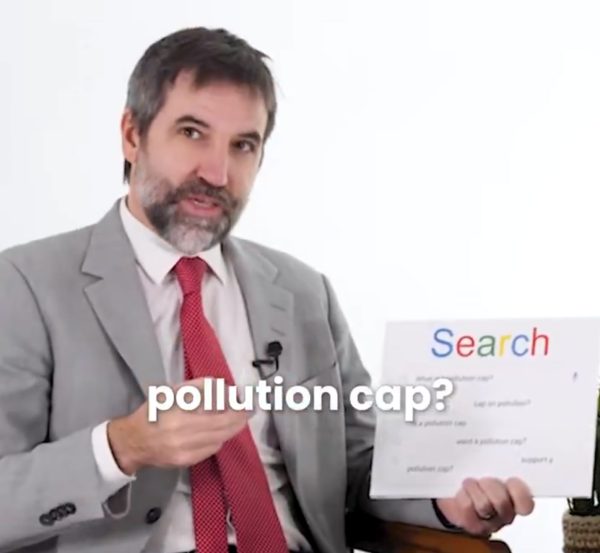
And it’s a giant up yours to the feds. I’m sure Guilbeault will have a canary, and a cow. But he won’t eat the cow because my get is he’s a vegan.
Hopefully my 100+ stories talking about the unreliability of wind and solar, and imploring we shouldn’t throw away what works for what we know absolutely doesn’t work had some impact on this.
I’ll have more to write about this in the coming days. There are lots of implications. For instance, since we own the coal, we charge ourselves basically nothing for it. We do pay for the mining, however. But for natural gas, since our domestic production has dropped like a stone, most of our gas comes from Alberta. So every dollar we spend on their gas is a dollar leaving the province, never to come back (sound like Trump?) And here’s the kicker – when LNG Canada goes online, what do you think is going to happen to gas prices? Does anyone think it’ll stay around $2/gigajoule another 10 years? Or will it go up – maybe to $4, or even $6? All of a sudden, gas won’t be so cheap anymore, nor will the electrical power derived from it. But our nearly free coal will be. And once the carbon tax is gone – smooth sailing!
Also, this just happened (gradually, then suddenly…)
Here’s the key thing: Other media are acting like this is a win – that the deadline has simply been punted to 2050. Well, I actually read through the regulations and realized it’s a bait and switch. In fact, the regulations include an impossible to meet emissions standard for anything that burns anything by 2035. Even if you put carbon capture on every single natural gas and coal power plant in Saskatchewan and Alberta, if the CCS behaves anything like Boundary Dam 3, you won’t get anywhere close to the new standard of 65 tonnes CO2 per gigawatt-hour. So the federal government slyly let people think they’ve punted, when really they haven’t punted at all. Like Lucy, they’re pulling the football away in 10 years and 12 days. (That’s the amount of time we have to build carbon capture on everything. And even if we do, it won’t be good enough. Good luck with that.)
A former Energy and Resources Minister for four years, Eyre is joining Pipeline Online as a regular contributor, both as a columnist and co-host in an upcoming regular podcast that is rapidly coming together. Watch for Eyre’s continuing contributions on Pipeline Online in the weeks and months ahead.
Also:
Alberta wind power generation falls to less than one per cent capacity, once again (Last Friday, it fell to zero. You read that right. Zero.)
And, what’s this Bluesky Social all about? In the interest of staking territory, Pipeline Online is now on this new social media at @pipelineonline.bsky.social. If you’re on there, be the first to follow, I guess?
Oh, and here’s a bonus: the federal government wants to now subsidize radio news as well. Why do I hear the Emperor from the Return of the Jedi cackling in my head?
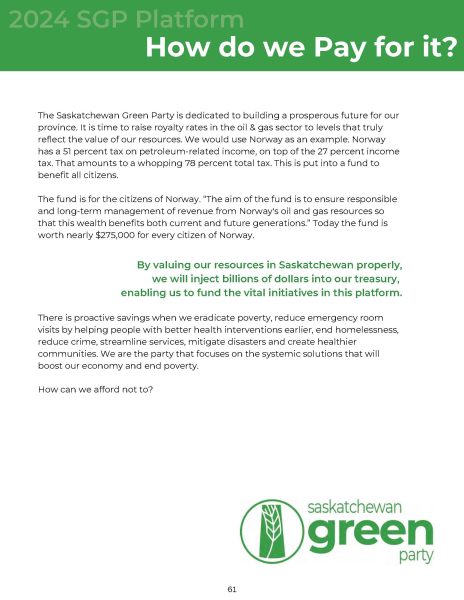
The Saskatchewan Green Party proposes to “Make Green Jobs the future of Saskatchewan’s economy by transitioning away from fossil fuels,” while financing its extensive socialist policy platform by modelling Norway which applies “a whopping 78 percent total tax” on oil and gas revenues.
Notably, it includes five pages discussing the Greens opposition to small modular reactors. And the policy document closes by saying on the last page, “How do we pay for it? The Saskatchewan Green Party is dedicated to building a prosperous future for our province. It is time to raise royalty rates in the oil & gas sector to levels that truly reflect the value of our resources. We would use Norway as an example. Norway has a 51 percent tax on petroleum-related income, on top of the 27 percent income tax. That amounts to a whopping 78 percent total tax. This is put into a fund to benefit all citizens.”
That page does not list any other major revenue source, or indeed any revenue source at all, other than heavily taxing oil and gas, the same oil and gas earlier in the document the party promises to transition away from. If the party does succeed in “transitioning away from fossil fuels,” (Page 17) it offers no other source of revenue on the “How do we pay for it?” page (Page 61).
In Pipeline Online’s quest to ensure we all know EXACTLY what the feds are telling us on energy, I have a series of press releases from this week, which I’ll post over the weekend.
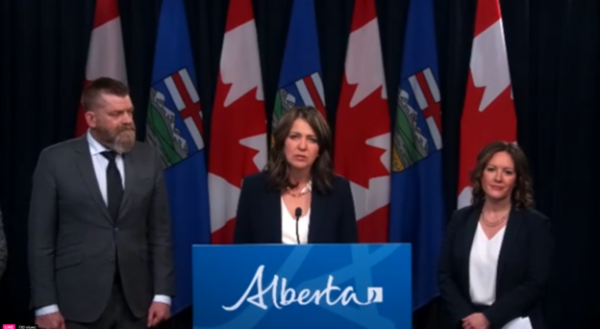
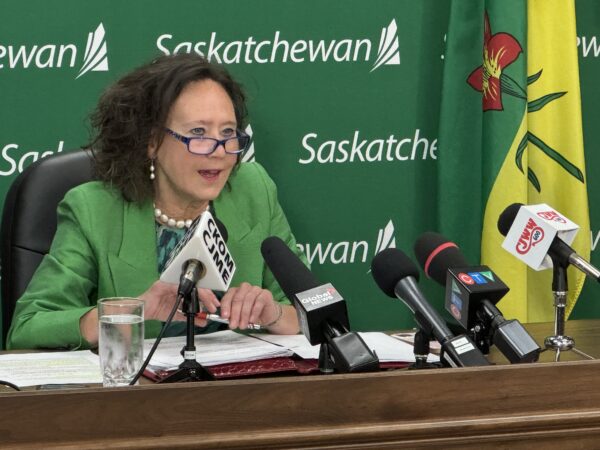
So yesterday I put over 800 km on my truck to attend a press conference in Saskatoon regarding the report of Saskatchewan’s Economic Impact Assessment Tribunal on the planned greenhouse gas emissions cap on oil and gas production, as well as “Methane 75.” That proposes cutting methane emissions by 75% by 2030.
This is the opening story in what will literally be dozens of pieces on this, as I will be publishing most of the submissions to the tribunal.
The key thing is the Saskatchewan government says an emissions cap is a de facto production cap, and this report bears that out. And for the record, oil and gas, principally oil, is the largest portion of Saskatchewan’s GDP, exceeding even agriculture and potash.
mud
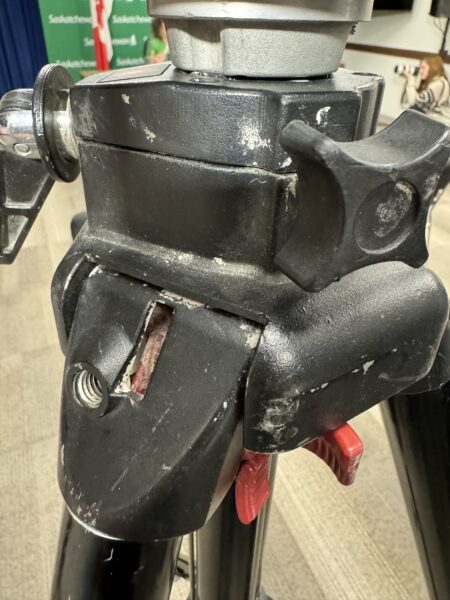
Also, I looked down at my tripod while at the press conference and noticed it’s covered with grey specs of drilling mud from visiting various rigs over the summer. And then I looked around at the other media’s tripods – CTV, Global, CBC, CBC French, some I don’t know. No mud. I wonder why? Go figure.
Here’s my attempt at a reel from the Lloydminster Heavy Oil Show. Hopefully more to come.
Oh, and it looks like Muskrat Falls wasn’t just going to bankrupt the Newfies, who quietly got a $5 billion bailout during COVID, but it looks like Nova Scotia, too, is getting bailed out.
The Houthis have, on multiple occasions now, set explosives on a fully loaded oil supertanker in the Red Sea. Their initial attack had the crew abandon ship, and since then they’ve repeatedly boarded it, set explosives, blew it up, while they filmed the whole thing and posted it online! And the production quality is really good – drone footage, onboard. You’d think it was a professional production!
For reference, the Exxon Valdez spilled 240,000 barrels of crude. The Sounion is carrying a million barrels.
Irina Slav, Tammy Nemeth, and Stu Turley will be live talking about the most critical threat to our world, democracy, and our finances, “Climate Alarm.” or “Claptrapping”. Apparently if you question climate change, you’re no longer a denier, but producing climate claptrap.
Dr. Tammy Nemeth interviewed Dr. Brad Hayes, a sedimentary geologist, on energy literacy. I signed up for his course last year but simply didn’t have time to follow through on it. I will get to it one of these days.