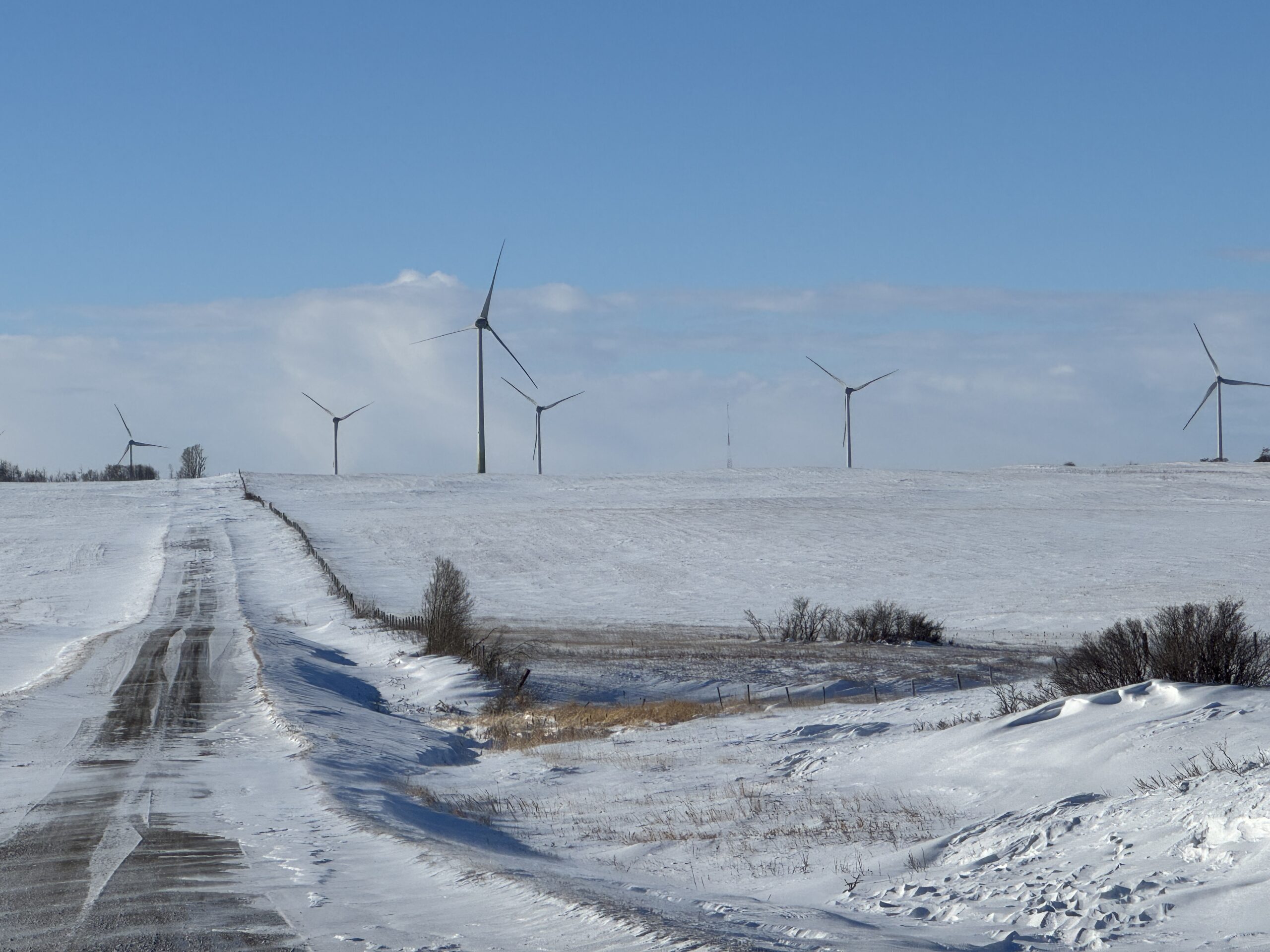
High wind output in Saskatchewan and Alberta, with zero dollar pricing in Wild Rose Country

High wind output in Saskatchewan and Alberta, with zero dollar pricing in Wild Rose Country

Brian Zinchuk: All out of CN towers to climb and economies to ruin, Guilbeault walks the plank
If he had continued down his radical path, and was given the power to do it, as Trudeau had done, we could have lost the country. We still might.

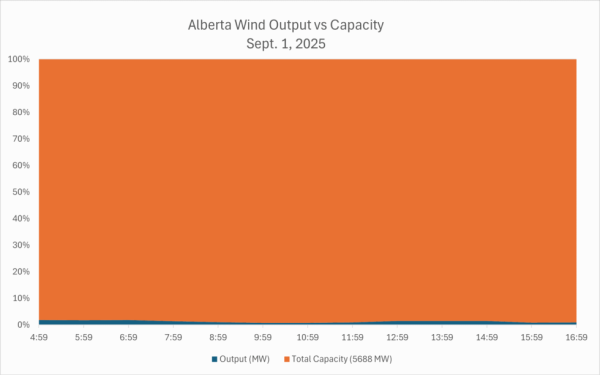
Alberta wind power generation took a holiday on Labour Day
Throughout the day, wind output from the 1722 wind turbines (at last count) totalling 5,688 megawatts of total generation capacity hovered around the 1 per cent output mark, ranging from 1.9 to 0.8 per cent.
A “Dialectic on Energy Policy” with a former pipeline CEO vs. sustainable development exec
On July 27, the Midwest Legislators Conference in Saskatoon held a “Dialectic on Energy Policy,” essentially a debate on energy choices in a world focused on climate change. Hal Kvisle, former CEO of TransCanada Pipeline/TC Energy was on the right side of the debate and Louise Miltich came from the left.
Brian Zinchuk on Evan Bray Show: Multilaterals, coal revival, major projects and more
On Sept. 3, Evan Bray and Brian Zinchuk go over the growing impact of large multilateral wells, LNG, the new major projects office, Alberta electrical grid updates, coal revival and more.
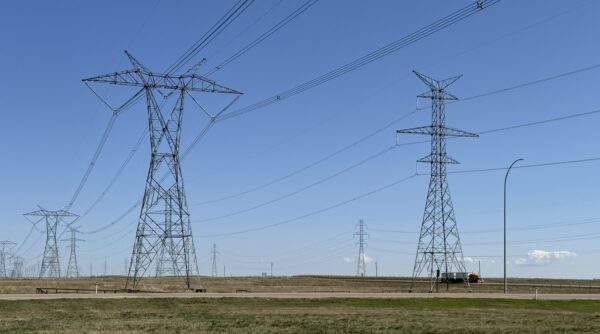
Alberta wind output falls to 0.05 per cent of capacity days before energy election. And the Clean Electricity Regulations, brought into force the last day Parliament sat, do not appear to be up for change according to the Liberal election platform. Read for yourself.

Saskatchewan is looking to rejuvenate coal, not abandon it: in-depth with Minister Jeremy Harrison.
If SaskPower carries through with rejuvenating coal, it will save three power plants, two mines, ~1000 jobs and two communities.
The significance of the shift on coal cannot be understated. When SaskPower’s then-CEO Mike Marsh came to Estevan in 2018 to say they would not be installing carbon capture technology on Boundary Dam Units 4 and 5, it wasn’t the obituary for the community, but it sure felt like the cancer diagnosis. And with no talk of carbon capture for Coronach’s Poplar River Power station, it seemed all but certain that town would whither away once the coal plant and related mine shut down by the federally mandated 2030 deadline. The January, 2025, announcement of SaskPower looking to rebuild both Boundary Dam and Poplar River, if carried out, would be a decades-long reprieve for both communities.
To extend the metaphor, effectively Estevan and Coronach just went into chemotherapy, and the results may be positive.
The implications of this change in direction, from the impending death of coal, to its possible rejuvenation, have local, provincial, national and international aspects, detailed in the story.
Watch for the Pipeline Online Podcast, Episode 2, to be broadcast on LinkedIn, Facebook and X at 1 p.m. on Friday, Jan. 24.. Crown Investments Corp Minister Jeremy Harrison is the guest, where we will delve even further into this new direction on coal-fired power generation.
X (works best): https://x.com/Pipeline_Online
LinkedIn: https://www.linkedin.com/in/brianzinchuk/
Facebook: https://www.facebook.com/pipelineonlineca/
It will eventually be posted to YouTube, Apple Podcasts and Spotify
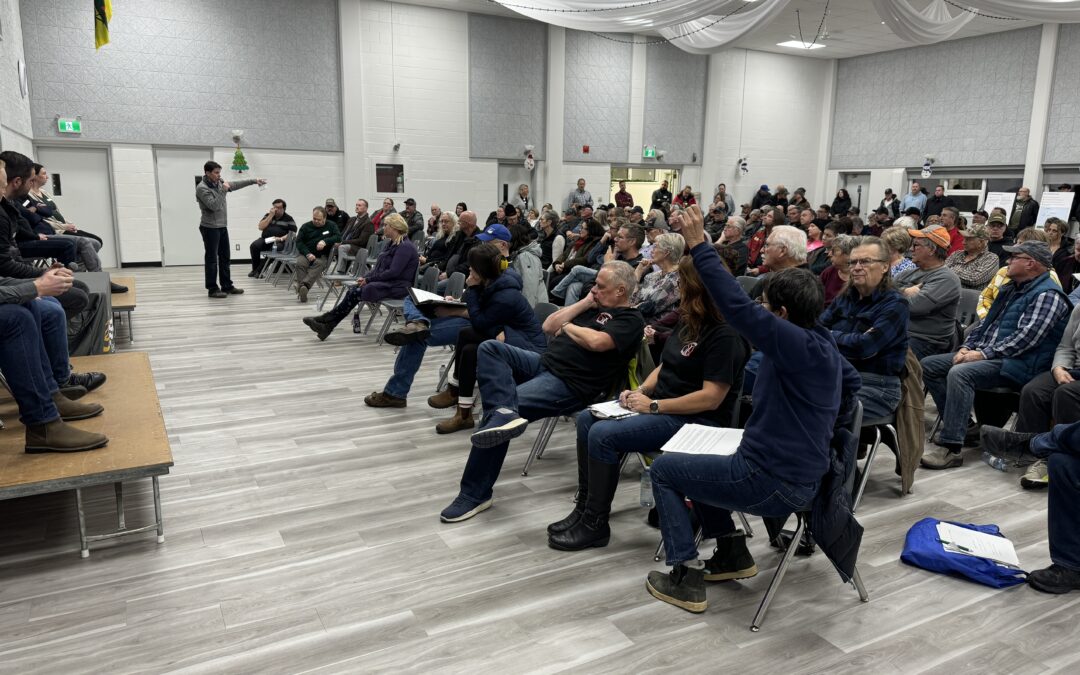
It was right around the time a man walked up to me, leaned close to my face and asked how much I had been paid to write a story talking about the benefits of the Weyburn wind project that I had an epiphany…
Brian Zinchuk: In opposing a wind project, Weyburn might want to be careful what they wish for
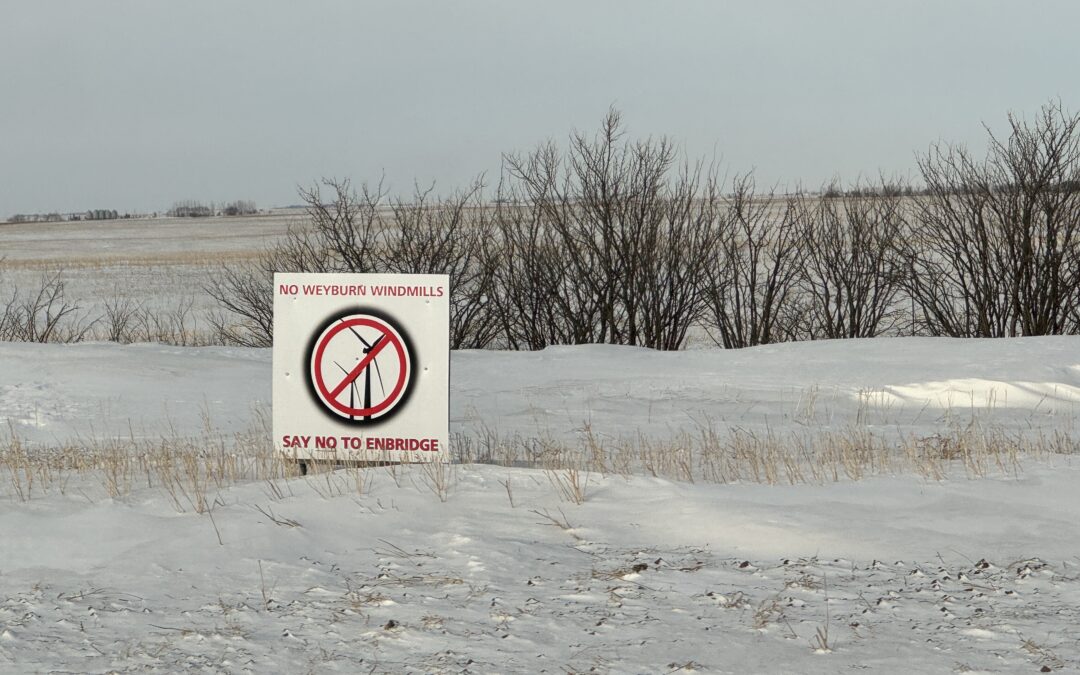
This is the column I referenced in those Weyburn wind stories. While I still very much question wind generation in a macro sense, I definitely had an epiphany when it came to NIMBY and the Weyburn wind project being presented by Enbridge. If an energy project can’t get built by an oil town, what’s going to happen when we want to start building reactors? Or a major pipeline is proposed?
And on Sunday, I stopped at the Bekevar Wind Facility. I posted a few videos from there, which I will eventually post as stories on the site. For the second time in a row, there was zero power being produced as not one turbine turned in the hour or so I was there. The wind was around 2-4 knots, according to weather reports.
Santa gave Alberta free power again on Christmas and Boxing Day.
Here’s part five, which includes discussion on health impacts, setback distances, and speaking with Premier Scott Moe about provincial loan guarantees.
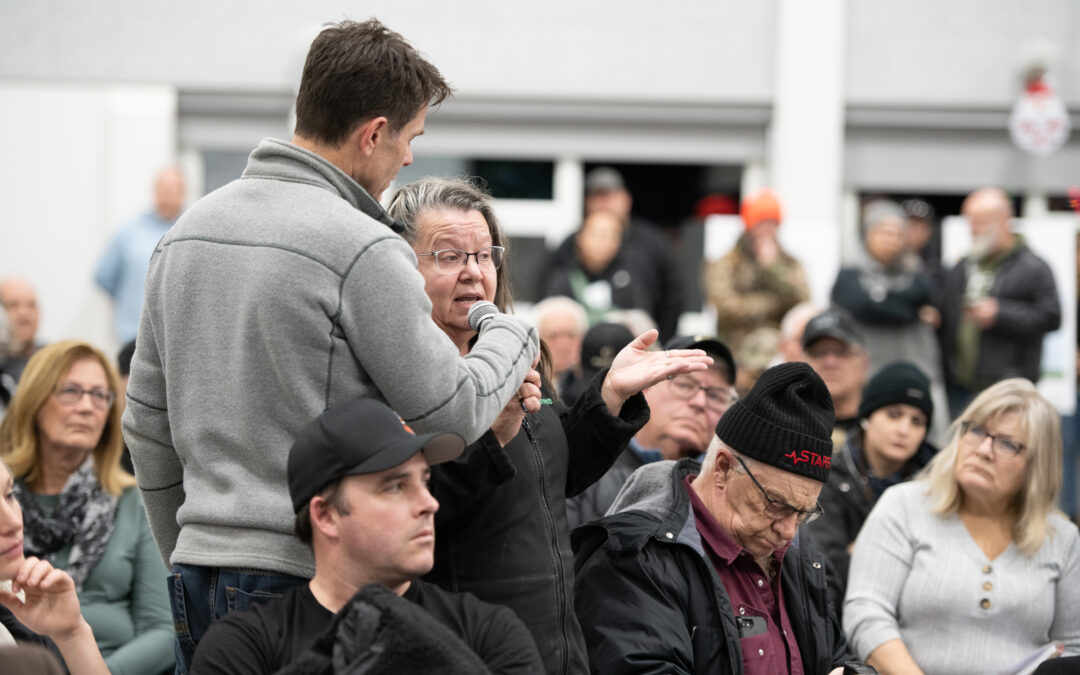
Here’s Part 4 of the Weyburn Wind saga, focusing on acreages, wildlife and referendum
You might be wondering why I’ve gone so deep into this open house. Here’s the thing – this has been the first opportunity I’ve had to really get into the development of one of these projects, and see and hear the arguments from both sides. Alberta just put its 50th online. Saskatchewan has nine. This would be the 10th. So it’s a chance to really get into the weeds.
The numerous stories I’ve written about wind power to date have almost been exclusively about their reliability or lack thereof, and their impact on a macro scale on grids, power pricing and the like. This development side is a totally different aspect.
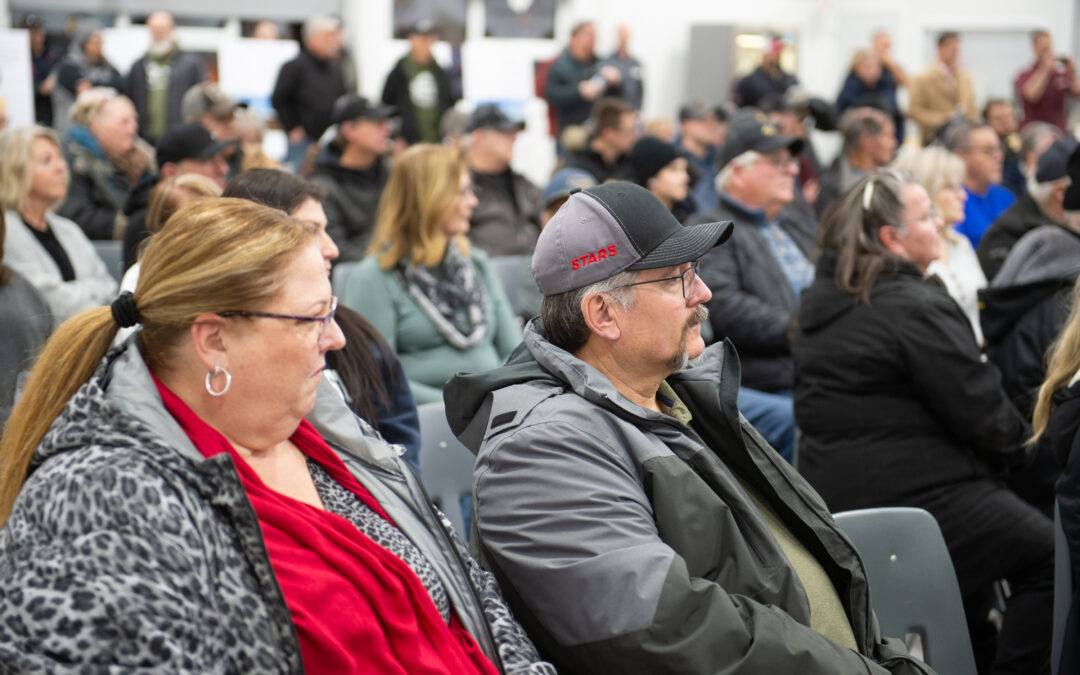
Enbridge’s Weyburn wind project open house, Part 3: Consultation, renewable energy, turbine size.
Also: Canadian carbon removal company scores US$40M grant from fund backed by Bill Gates

Enbridge’s Weyburn wind project open house, Part 1: Setting the stage
It was a contrite Enbridge which presented a second open house in Weyburn for its planned 200 megawatt wind project, to be located east of the community. The project has seen several revisions, and Enbridge representatives repeatedly spoke about correcting mistakes and working with people affected by the proposed project.
Note: This story ended up being so massive, it needed to be broken up into several parts just to make it manageable and yet still allow a great deal of depth on a topic very important to Weyburn.
On top of that, there is a LOT going on in the power space right now, with the Tuesday release of the revised Clean Electricity Regulations and on the same day as the grand opening of the Great Plains Power Station at Moose Jaw which Pipeline Online attended. There’s a lot of catching up to do, so please bear with me. Here’s Enbridge’s Weyburn wind project open house, Part 1: Setting the stage.
I’ve never seen a multi-billion behemoth like Enbridge be so apologetic for wanting to spend around a third of a billion around a community.
Enbridge folks said “apology” or “apologize” five times, and “sorry” twice. I checked my transcript.
I expect they still feel sore about losing Northern Gateway, where First Nations claimed Enbridge spoke to them like they owned the place. It was clear this was an entirely different approach.
Seriously, I was working on yet another wind story when this came up.
For 12 hours again this past weekend, power in Alberta was “free,” with BC and Montana benefitting greatly.
Zero dollar price is “free,” is it not?
Holy mackerel! This story is well worth reading. The Churchill Falls deal between Quebec and Newfoundland was the most atrocious you could possibly imagine. On Thursday, a deal fixing that was signed.
Quebec and Newfoundland end one of the most bitter energy disputes in Canadian history over the horribly lopsided Churchill Falls deal. Quebec was getting power nearly free, and making billions off it while Newfoundland starved. No more.
FYI, Churchill Falls can produce more power than all of Saskatchewan, if every dam was full, every coal plant running full out, every wind turbine cranking and every natural gas plant humming. The deal that had been in place until 2041 would have had Quebec pay 0.2 cents per kilowatt hour until then. That’s effectively free. This changes all of that.
If Quebec and Newfoundland can make peace on this, maybe some day they’ll allow a pipeline through la belle province? Don’t bet your kids’ college fund on it.
Also:
Ontario mulls U.S. booze ban as Trump brushes off Ford’s threat to cut electricity
That’ll go over well. The 10th Mountain Division will be invading the next day. Their home base is at Fort Drum, New York State. It’s within spitting distance of Kingston, Ont. So, good luck with that.

And not even all of it, according to SaskPower Minister Jeremy Harrison, whom the other media are apparently ghosting by not actually quoting him as minister.

In Pipeline Online’s continuing mission to ensure we all know exactly what the federal government is telling us on climate change initiatives, this is the verbatim press release from the Government of Canada issued at 18:10 hrs on Dec. 5. Notably, it was not sent out via provincial media releases nor SaskPower’s media releases. And apparently according to the feds, Jansen is a company, not the place the largest mining company in the world, BHP, is building the world’s largest potash mind. Check that out in the opening paragraph.
(You’d think the natural resources minister, and ministry, might be aware of the largest potash mine in the world being built in their country)
The announcement was made by Minister of Energy and Natural Resources Jonathan Wilkinson. He and Minister of Environment and Climate Change Steven Guilbeault are the federal Liberal government’s lead ministers on their numerous and various climate change initiatives. For good measure, we’ve interspersed a healthy dosage of oil and gas ads, that industry that this government’s Bill C-59 is trying to muzzle.
Highlights include money for a number of solar projects, advancing SMR development, the intertie to the United States, grid-scale batteries, and a “forecast that there will be over 130,000 clean energy jobs added in Saskatchewan between 2025 and 2050.”
Oh, and I am willing to bet a Christmas cheesecake the $265 million number was set so they could say it was more than Harper gave carbon capture in 2008 ($240 million). Never mind 9 years of inflation meaning my kid cries after buying groceries.
And on the topic of Guilbeault, Pipeline Online columnist Jim Warren, knocks another one out of the park talking about his involvement with the green slush fund.
Bronwyn Eyre: Saskatchewan election post-mortem: Why the Sask Party lost the cities
A former Energy and Resources Minister for four years, Eyre is joining Pipeline Online as a regular contributor, both as a columnist and co-host in an upcoming regular podcast that is rapidly coming together. Watch for Eyre’s continuing contributions on Pipeline Online in the weeks and months ahead.
Also:
Alberta wind power generation falls to less than one per cent capacity, once again (Last Friday, it fell to zero. You read that right. Zero.)
TC Energy CEO sees opportunity in Trump win as company refocuses on natural gas
And, what’s this Bluesky Social all about? In the interest of staking territory, Pipeline Online is now on this new social media at @pipelineonline.bsky.social. If you’re on there, be the first to follow, I guess?
No gas for you, Quebec tells builders. This despite the fact Quebec, itself, has piles of gas under its feet it refuses to allow development of.
Will Danielle Smith be in Washington to perhaps witness the signing of another pipeline permit? Stranger things have happened, eight years ago…
Sunshine Oilsands ordered to shut down by Alberta Energy Regulator.
Toronto takes step toward ban on misleading fossil fuel ads, following TTC move
Because of course they are. From the Canadian Press
Also:
Alberta government proposing additional restrictions on wind and solar energy
Brian Zinchuk: Too much wind, not enough wind? What’s going on in Alberta?
Weird things have been happening in Alberta’s electrical grid over the last week. Interties to BC and Montana are down due to maintenance. Many hours have seen zero dollars paid for power. Wind and solar have been in such surplus numerous facilities have shut down at times to clear the glut. The grid frequency has had numerous variances, including “due to sudden variability of renewables.” Is the Alberta grid pushing the limits of how much wind and solar it can take?