It turns out, quite a long time.
One (megawatt) is the loneliest number, but hundreds of batteries are absurd. (Actually, thousands)

It turns out, quite a long time.
One (megawatt) is the loneliest number, but hundreds of batteries are absurd. (Actually, thousands)
NDP MP Charlie Angus wants to shut down all oil and gas advertising.
In a move that would effectively destroy media like Pipeline Online, EnergyNow.ca, BOE Report, Daily Oil Bulletin and more, Timmins-James Bay NDP MP Charlie Angus on Feb. 6 proposed eliminating all advertising from oil and gas firms. “It is prohibited for a person to promote a fossil fuel, a fossil fuel-related brand element or the production of a fossil fuel except as authorized by the provisions of this Act or of the regulations,” the private members bill, which was just introduced and is not law, says.
Note, this was clearly endorsed by the national party and leader. There’s even a donation collection at the bottom of the press release.
Fines in the million dollar range, jail up to two years. This is what the NDP want of Canada. And I would be going to jail.
To quote Andor, “Fight the Empire!”
Second day in a row, Alberta’s wind power utterly collapes. Had to relearn how to interpret scientific notation for this one. What does 6.694934166480696e-4 mean? Something like 0.07 per cent of nameplate output? Fool me once, shame on you. Fool me 42 times, shame on me, as only 3 of Alberta’s 45 wind farms produced power at points of Monday night
Brian Zinchuk: Alberta won the energy lottery, yet it had to beg its neighbours if they could spare a megawatt.
Also:
Quick Dick McDick goes cooking with The Dam Smokehouse

Also: Brian Crossman: Magic Eight Ball prediction edition for 2024. “Will the current Prime Minister continue to be a dumpster fire?” “SIGNS POINT TO YES.”
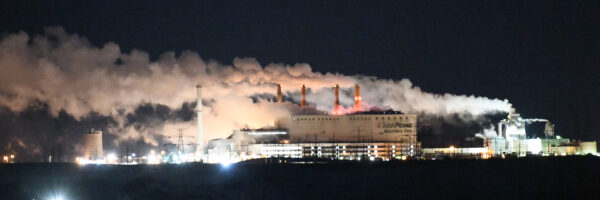
The past weekend proved to be a close-run thing for the Alberta electrical grid, and Saskatchewan Premier Scott Moe is making statements resolving he won’t allow that to happen here.
Specifically, after having nearly completely divested itself of coal-fired power production, Alberta’s dramatic buildout of wind and solar proved impossible to keep the lights on in that province when the chips were down and temperatures hit -35 C, or worse.
Alberta’s close brush with possible rolling blackouts stiffens Moe’s resolve to keep the lights on. On Monday, he announced that SaskPower has relit a shuttered coal unit near Estevan, one the feds had supposedly forced to retire Dec. 31, 2021.
Also note: Saskatchewan has about a million cars registered. So a good bet is Alberta probably has four million. What would have happened if four million EVs were all plugged in last weekend?
If you missed them, these five stories, in order, chronicle what happened in Alberta.
Most of Alberta’s wind fleet slowly shut down Thursday night, but not for lack of wind
Grid Alert 1:
Alberta goes under grid alert for just under 5 hours on Jan. 12
Grid Alert 2:
Grid Alert 3:
Alberta goes into Round 3, with its third electrical grid alert in three days
Grid Alert 4:
Round 4: Alberta declares fourth electrical grid alert in 4 days, second in 17 hours


For the third day in a row, Alberta went into an electrical grid alert on Sunday. At one point it had no contingency reserve left at all, but imports from BC appeared to save the day. While it looked a little hairy there for a bit, there was no emergency alert declared, unlike Saturday.
Did I mention before that Alberta has more coal, oil and natural gas than God? Because guess what? It still does.

Alberta’s electrical grid stood at the brink of blackouts Jan. 13, before pulling back in the nick of time.
It was the second evening in a row Alberta saw “grid alert” issued, but this time, it was a much closer-run thing.
Alberta’s electrical grid was in such peril of falling into rotating blackouts on Saturday night, the provincial government urged people to even turn off their bathroom fans, among other things.
Also, from Western Standard:
STIRLING: When magical thinking meets a polar vortex cold, hard reality follows

Alberta went under grid alert for just under 5 hours on Jan. 12. And yes, the AESO suggested people shouldn’t run their dishwashers. Alberta has more coal, oil and gas than God, because God gave all his to Alberta, and people there shouldn’t have washed their dishes lest the lights go out. That is no word of a lie. I was up all evening monitoring it, as you’ll see in the story.
And all of this is before four million Albertans are forced to buy electric cars and pickups.
Also:
It looks like Trans Mountain might, indeed be allowed to finish the darn pipeline in weeks instead of years. That is, unless they find another hummingbird on the right of way. The Canada Energy Regulator apparently removed its head from its posterior.
Canadian Press story on record cold in BC, AB.

Did you read that in the voice of “Mortal Kombat?”

Steven Guilbeault accuses Danielle Smith of “trying to tear Canada down”
Ask Pipeline Online readers are aware, whenever this minister speaks of such issues, it is useful to provide his entire discourse, verbatim and unedited. Especially the part about the evils of methane from cows. So here it is, as posted on X the evening of Jan. 11, in all 10 parts.

And on a different note, people in the Saskatchewan oilpatch might recognize some names here: Del Mondor, Brad Wall and Myron Stadnyk to be honored at Saskatchewan Oil and Gas Show in June.

UPDATED: For seven days in a row, SaskPower saw wind generation hit zero for part of the day
The story originally said five days. SaskPower got back to me and noted the streak continued Jan. 7 and 8 as well. So that’s a whole week with wind flatlining. Total, complete flatline for part of the day, each day. How do you power the hospital my wife is an ER nurse at with zero power? Inquiring minds would like to know?
Also:
Weaker oil prices should bring some relief to consumers in 2024: Analysts
and
Quick Dick McDick: Saskatchewan Winterfront Regulation
Bonus points for Quick Dick’s instruction on how to use the box from a Pilsner 2-4 for a winterfront. Nothing says Saskatchewan like a Pil box on your pickup
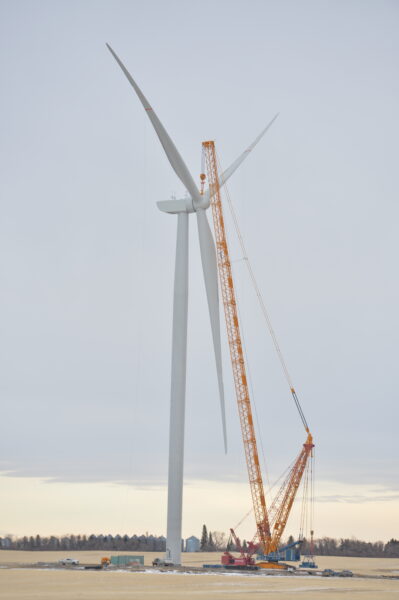
Wind power flatlined in Saskatchewan on Jan. 2, after days of strong winds. Flatlined, as in zero power, at night, so no solar, either.
Zero reliability, this wind thing. And I had to start wearing my parka this week, too.
Put our trust in wind, and we’ll all freeze. In the dark.
Also, switching to third person:
Pipeline Online editor and owner Brian Zinchuk is back on the air with CJME/CKOM’s Evan Bray Show. He was on the air for a full hour on Wednesday, Jan. 3. Here’s the podcast of that appearance, including responses to several calls. One was on whether or not the Trans Mountain Expansion will ever be finished. (With the ads and news breaks removed, it’s only 35 minutes).
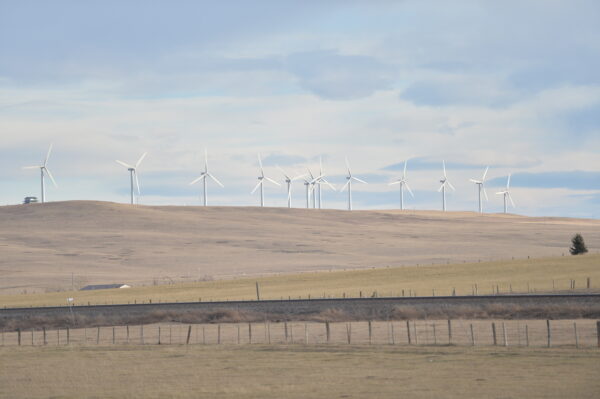
The problem with no one making money is that no one is making money.
Wind bottoms out across 14 states in Southwest Power Pool SPP on Dec. 22
That also meant that of any electrons coming across the border at that time, if SaskPower was buying any power from SPP, 83.4 per cent of that power would have been coming from coal and natural gas, and would not have had a carbon tax applied to it.

“We reached a historic consensus to move away from fossil fuels in energy systems,” Guilbeault’s statement on the conclusion of COP28, verbatim.
And the Canadian Press version:
Guilbeault hails ‘monumental’ COP28 deal, others warn of ‘dangerous distractions’
Also:
COP28 Agreement Signals “Beginning of the End” of the Fossil Fuel Era: the verbatim press release
And the conclusion from yesterday’s op-ed:
Op-Ed: Deidra Garyk: The Impact of ESG on the Energy Sector, Part 2
And since it’s the Christmas season, and Die Hard IS a Christmas movie, here’s a little Hans Gruber. Notice any resemblance to anyone? And if you don’t think Die Hard is a Christmas movie, fight me! Yippee Kai Yay, …
My thoughts on the current situation at #COP28, and why we must deliver on a solid agreement. pic.twitter.com/Uq0U4mfabA
— Steven Guilbeault (@s_guilbeault) December 12, 2023

Pipeline Online columnist Brian Crossman hits it out of the park again:
Brian Crossman: Climate hysteria, teachers, kids and the end of the world
Also, you think anyone noticed prices going up? Wonder why? From Canadian Press:
Tories have ‘successfully’ scapegoated carbon price in affordability crisis: Trudeau

Federal and Nova Scotia governments kill offshore petroleum project in name of “clean energy”. No more gas development. Don’t even try. But wind? You betcha.
And here’s an analysis of why. It has a lot to do with the fact Nova Scotia can still pay for its hospitals with natural gas money, just natural gas produced in Alberta and Saskatchewan. And it has more to do with Guilbeault announcing a defacto production cap by banning venting and flaring.
And along the topic of the undead, the federal regulator still isn’t done with stretching out the Trans Mountain Expansion pipeline. What’s another $200 million per month delay?
As a side note, two years ago I ran into the consultant whose job it was to shut down, abandon and clean up this project. He was the company man looking after the drilling of the first lithium well in Canada, near Torquay, Saskatchewan. I never got around to writing a story about it, dammit. Not enough hours in the day.
And if anyone feels like asking CJME/CKOM why Zinchuk isn’t scheduled to do his regular energy spot the first Wednesday of the month, as he did with Gormley:
Text

COP28: Saskatchewan, and over 50 companies and organizations, will be in the room where it happens
No carbon tax on electrical home heat from SaskPower, says Moe
Wind drops to 0.9% output in Alberta on Thursday. Again.
Shipper costs to rise as regulator approves preliminary interim Trans Mountain tolls
