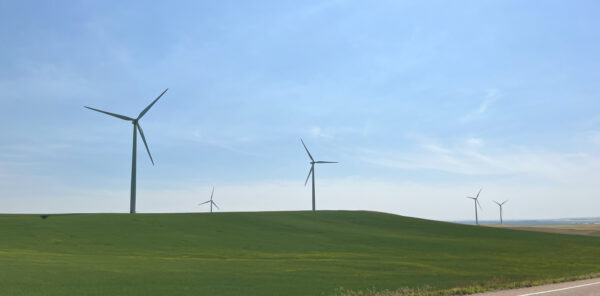
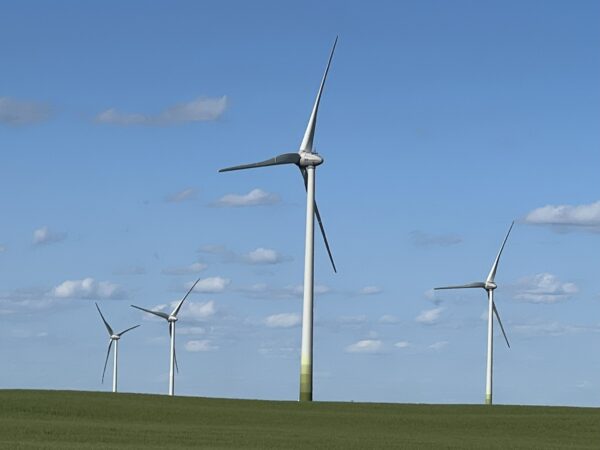
Weird things have been happening in Alberta’s electrical grid over the last week. Interties to BC and Montana are down due to maintenance. Many hours have seen zero dollars paid for power. Wind and solar have been in such surplus numerous facilities have shut down at times to clear the glut. The grid frequency has had numerous variances, including “due to sudden variability of renewables.” Is the Alberta grid pushing the limits of how much wind and solar it can take?
About a month ago I did some serious digging into Alberta’s electrical grid going into zero dollar hours for pricing. As in all the power on the grid, for the generators anyway, was free, for a few hours. I thought I had published it, but apparently not, as I was reminded by @ReliableAB. And funny thing is, it happened again this past weekend.
The problem with no one getting paid is no one is getting paid. No business model is sustainable like that. I don’t care about averaging things out. No one wants to give away product for free, especially if they are paying for inputs like natural gas for fuel and staffing.
Wind and hydro actually pair very well together, as hydro can ramp up and down very quickly. Building wind in Manitoba will allow them to build up their reservoirs and maintain more capacity overall, especially in low water conditions like the prairies have seen in recent years. So, believe it or not, I’m not wholly against that idea, for Manitoba, at least. I’m surprised they haven’t built more until now.
Also, this was from the Canadian Press. Take that for what you will.
You’d have thought they were proposing a pipeline in Nebraska.
This was a very hostile crowd. I’m surprised no one brought out a pitchfork or torch. I’m sure the Enbridge folks figured they were now working for TransCanada, running a Keystone XL open house in the States.
Oh, and that new grid-scale battery that SaskPower just went $10 million over the initial announced price on – Alberta has 10 (albeit a different manufacturer). Three haven’t lit a light bulb since March, and they were no shows on Monday.
But that’s okay, the Pembina Institute wrote a piece celebrating the end of coal, which they strongly advocated for over many years. They published it two days before the grid alert.
And it’s going to be hot two more days in Alberta. Anyone want to make a bet there will be more grid alerts?
Again, Alberta has more coal, oil and gas than God, because God gave all of his to Alberta. For that province to ever be running short of energy is a result of sheer incompetence at the top. And Saskatchewan is following that path – shutting down coal, building more wind, solar, and now batteries. SaskPower has had announcements for all three in recent weeks. Will I be writing about Saskatchewan grid alerts, because we failed to heed what is happening west of us?
The proposed Clean Electricity Regulations are among the most significant policy moves in recent Canadian history. The fundamental thrust is to all but eliminate fossil fuel combustion from the Canadian electrical grid. On any given day, up to 88 per cent of Saskatchewan’s power comes from natural gas and coal.
If implemented in their current form, they will utterly remake Canada, its economy and society. The Government of Saskatchewan, on June 25, rejected these regulations, based on a report by the Economic Impact Assessment Tribunal, convened under the Saskatchewan First Act. That act, in turn, was brought into law to counter numerous onerous federal climate change initiatives.
Within the tribunals report are all the submissions made by numerous companies and agencies, several of which Pipeline Online is publishing verbatim in the coming days and weeks. But perhaps the most significant was the Feb. 15 submission by Minister of Environment and Climate Change Steven Guilbeault, who, with Minister of Energy and Natural Resources Jonathan Wilkinson, is one of the leading figures from the federal government on this front. As such, his submission is the stance of the federal government. Notably, he does not explain how Saskatchewan is to replace all of its fossil fuel-based power in the 10 years, five months and 30 days remaining from today. Here it is, verbatim
Jim Reiter, Bronwyn Eyre, Michael Milani. Photo by Brian Zinchuk
For a long time, Premier Scott Moe has been saying it’s impossible to comply with federal regulations regarding getting rid of our fossil-fueled power generation, in the timeline the federal Liberal government wants.
It’s coming to a head.
This is the first action of this type thus far under the Saskatchewan First Act. This is what it was meant for.
If implemented in their current form, the Clean Electricity Regulations mean to all but eliminate the burning of fossil fuels for power generation in 10 years, six months and three days from now. Saskatchewan relies on natural gas and coal to produce the vast majority of its power, up to 88 per cent on some days. And if implemented, these regulations will fundamentally alter Canada and its economy, and affect all of its people in one form or another. It’s one of the most important policy pieces in generations, seeking to remake Canada.
The government released all the submissions to the tribunal. I will be reprinting many of them over the coming days, maybe weeks. There’s a lot. And there’s a lot to be said.
I’ve been saying for a while now, this whole “energy transition” is the biggest story of our times. And the biggest part of that is implementation of the Clean Electricity Regulations, which will affect every person, business and industry in this country. On Tuesday, Saskatchewan said it’s not going to follow them, because they’re impossible to follow.
I will have numerous stories on this over the coming days and weeks, deep dives into what this is all about. I just got off the phone with one cabinet minister and will be talking to another in a few minutes. Watch for that in a bit. In the meantime, this is the executive summary of the report prepared for the Saskatchewan government, a report whose purpose is to give backing to our saying “F off” to the feds. That’s basically what Saskatchewan is doing.
Brian Zinchuk on Evan Bray Show: Coal, CO2 and what it means for oil production, wind in Alberta, Trans Mountain Pipeline Expansion, and a pile of listener calls. (Link is fixed)
Wind turbines won’t be allowed near mountains anymore. And when these reach end of life, those sites won’t be rebuilt with new, larger ones, if these rules stick.
Don’t block our mountains or mess with good farmland: #Alberta releases renewable power rules. And reclamation is going to be paid up front. This story is the full meat, potatoes, gravy and carrots on Wednesday’s wind and solar announcement.
And what’s the pool at for Trudeau resigning today? It’s 40 years to the day since daddy took his “walk in the snow.”
Remember what I said the previous week about taking out the trash day? Guilbeault did exactly that. Interesting, that.
And for something a little different, yesterday was Family Day. Not everyone gets to go sledding. While I took these photos three weeks ago, they’re pretty representative of what Family Day is to a lot of people in the oil sector – just another day.
In a move that would effectively destroy media like Pipeline Online, EnergyNow.ca, BOE Report, Daily Oil Bulletin and more, Timmins-James Bay NDP MP Charlie Angus on Feb. 6 proposed eliminating all advertising from oil and gas firms. “It is prohibited for a person to promote a fossil fuel, a fossil fuel-related brand element or the production of a fossil fuel except as authorized by the provisions of this Act or of the regulations,” the private members bill, which was just introduced and is not law, says.
Second day in a row, Alberta’s wind power utterly collapes. Had to relearn how to interpret scientific notation for this one. What does 6.694934166480696e-4 mean? Something like 0.07 per cent of nameplate output? Fool me once, shame on you. Fool me 42 times, shame on me, as only 3 of Alberta’s 45 wind farms produced power at points of Monday night