Category: Ethical Energy

Alberta Appeals Redwater Decision

Via Oilprice;

The bankruptcy of a small Canadian oil and gas company in 2015 and the following creditor claims have created a legal dispute over who should pay for abandoned wells and whether creditors should have priority over environmental cleanup in case of energy bankruptcies. The oil and gas industry is closely watching the lawsuit–which ended up at Canada’s Supreme Court last month–because it could set precedents for orphan wells remediation and who will pick up the tab.
The Supreme Court is likely to hear the case because a small company bankruptcy has become a major issue of federal insolvency laws and provincial energy regulations, according to legal experts.
[…]
If the Supreme Court hears the case, and if it sides with the previous court rulings, the AER may have to increase the orphan levy it charges from well licensees. But if Canada’s top court reverts the decision and potentially saddles lenders with liabilities of bankrupt companies, banks may start to price in that risk and charge more for extending loans to the oil industry.

It’s Probably Nothing

Looks like we picked a bad time to fall behind the export curve.

Commercial development of the globe’s huge reserves of a frozen fossil fuel known as “combustible ice” has moved closer to reality after Japan and China successfully extracted the material from the seafloor off their coastlines.
[…] Commercial-scale production could be “transformative for northeast Asia, particularly for Japan, which imports nearly all its hydrocarbon needs,” said James Taverner, a senior energy industry researcher at IHS Market, a London-based consulting firm.

h/t Sask Watch

Renegade Regulator

“Nice energy company you’ve got, and a winner of a project too, you’ve invested a lot of money here.” And so, it begins. “The regulations you need to comply with are our property now, we own them, but we want to help you succeed, we’re in your corner. We’ll grant you access to our laws, we’ll allow government regulatory, we’ll even certify your compliance, and all for a small charge taken off your revenues.” Of course, a “small charge” is relative. But, you’re assured, you’ll get used to tighter margins and bigger charges, you’ll “think of it as a vig, or a royalty.”
Does that seem absurd? It should, but it’s also happening. The reality of private law is already here and it’s gaining ground.

I trust the Wall government is paying attention?

Drill Dakota, Drill

NBC News;

The controversial Dakota Access pipeline will receive a permit from the U.S. Army Corps of Engineers to allow construction of the $3.7 billion project to be completed, according to North Dakota Senator Heidi Heitkamp.

Related;

After spending more than $22 million on the Dakota Access pipeline protest, North Dakota wants to make sure any paid activists remember to submit their state income taxes.
Tax Commissioner Ryan Rauschenberger said his office is keeping an eye out for tax forms from environmental groups that may have hired protesters to agitate against the 1,172-mile, four-state pipeline project.
[…] It’s no secret that millions have been funneled into the six-month-old demonstration via crowdfunding websites, and that more than 30 environmental organizations, including the Sierra Club, Indigenous Environmental Network, Food and Water Watch, 350.org and Greenpeace, have backed the protest.
If national environmental organizations are paying protest personnel, they’re not saying so publicly. Still, Mr. Rauschenberger said red flags will be raised if he doesn’t start seeing W2 or 1099 tax forms from those affiliated with the protest arriving at his office.
“It’s something we could possibly pursue if we don’t see 1099s coming in for the activity,” Mr. Rauschenberger said.

Send them a bill for this, too.

The Sound of Settled Science

Fukushima residents exposed to far less radiation than thought:

Citizen science usually isn’t this personal. In 2011, roughly 65,000 Japanese citizens living near the crippled Fukushima Daiichi Nuclear Power Plant started measuring their own radiation exposure in the wake of the Tōhoku earthquake and tsunami. That’s because no one, not even experts, knew how accurate the traditional method of estimating dosage–taking readings from aircraft hundreds of meters above the ground–really was…
The scientists concluded that actual radiation doses were roughly 15% of what the helicopters were measuring, scaled to ground level, they reported last month in the Journal of Radiological Protection. That’s four times less radiation than what the Japanese government was previously assuming.

Anti-nuclear activists are reportedly devastated at the results.

“India knows. China knows. Russia knows. The US knows.”

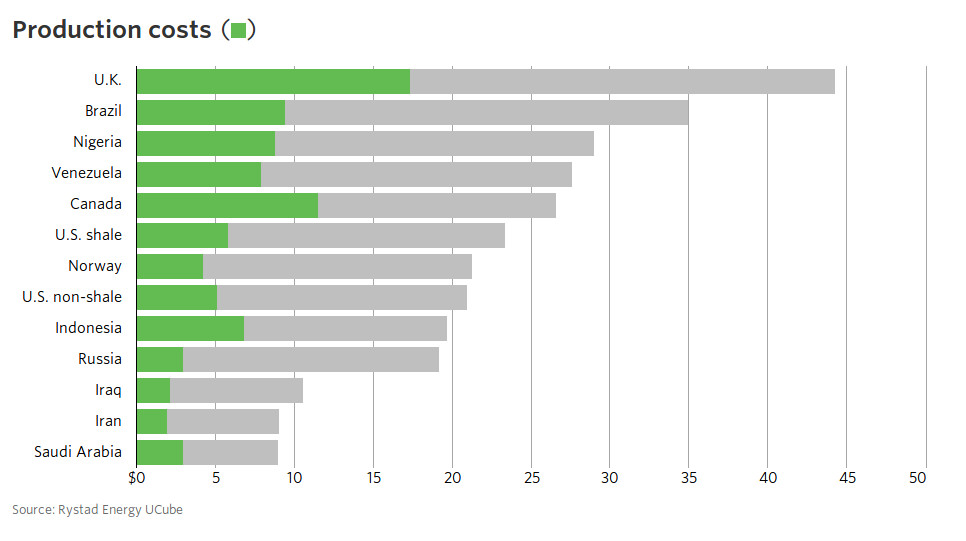
The world’s media treats new energy supplies like an infinite number of $100,000 prizes landing in your lap. We will never be short of energy, because there is always a new major discovery – Angola, Kazakhstan, Brazil, shale this and that, etc. – to meet rising demand. And they have been sorely needed, because oil demand has grown by 10 million b/d in the past decade alone.
These big discoveries are getting rarer and smaller, while the world continues to rely more and more on fossil fuels. All the major discoveries listed in the last paragraph combined don’t offset demand growth over the past decade, never mind offsetting natural declines. This fact remains true despite the ungodly furor made over renewable energy and electric vehicles, which are hardly gaining traction despite massive incentives and media hype. This fact also is not lost on hugely populous countries, particularly China and India, which are nervously eyeing the world’s oil supplies and buying up whatever crap comes on the market (apologies, Spyglass).

Which brings us to Canada…
h/t Ken (Kulak)

Oh, Shiny Prime Minister!

Trudeau likes the idea of Canada. It’s just aboriginal Canadians that he largely hates:

A federal decision to stop issuing offshore oil and gas licences in the Arctic was made without consultation with the people whose economy stands to pay the price, Northwest Territories Premier Bob McLeod said Wednesday.
The leader of the territory south of the oil-rich Beaufort Sea said he heard about the new policy just two hours before it was made public Tuesday in a joint statement by Prime Minister Justin Trudeau and U.S. President Barack Obama.
McLeod said he is disappointed by Ottawa’s “unilateral” move, which he said has set back recent initiatives by Ottawa to give Canada’s territories more autonomy.
“We need to have northerners making decisions about the North that affect them,” McLeod said in an interview.

The New Fracking

Microwave technology;

Developed by Qmast LLC, microwave technology is used for the extraction of oil shale, which is different from shale oil. Oil shale is found in rock formations that contain kerogen. One of the current extraction methods of kerogen has been strip mining because these are shallow formations. The extracted rock is then crushed and heated to high temperatures to liquefy the oil.
Qmast’s method concentrates a microwave beam equivalent to about 500 household microwaves to heat up an area that reaches approximately 80 feet from the wellbore. The crude oil then flows freely to the wellbore.

h/t Gagnon

Tears Of McKenna

NYT;

America’s uncertain stance toward global warming under the coming administration of Donald J. Trump has given China a leading role in the fight against climate change. It has called on the United States to recognize established science and to work with other countries to reduce dependence on dirty fuels like coal and oil.
But there is a problem: Even as it does so, China is scrambling to mine and burn more coal.
A lack of stockpiles and worries about electricity blackouts are spurring Chinese officials to reverse curbs that once helped reduce coal production. Mines are reopening. Miners are being lured back with fatter paychecks.
China’s response to coal scarcity shows how hard it will be to wean the country off coal. That makes it harder for China and the world to meet emissions targets, as Chinese coal is the world’s largest single source of carbon emissions from human activities.
Among China watchers, the turnabout also has contributed to questions about the fate of China’s current crop of economic planners.
Here in Jincheng, a smoggy city in China’s coal country, the about-face has led to a steady hum of activity. On a recent afternoon, other trains stopped to make way for two electric locomotives, their horns blowing, pulling more than 50 empty coal hopper cars ready to be filled. Large coal-carrying trucks now form half-mile lines.
[…] Coal still produces almost three-quarters of China’s electricity, despite ambitious hydroelectric dam projects and the world’s largest program to install solar panels and build wind turbines. Coal use in China also produces more emissions than all the oil, coal and gas consumed in the United States.
“I get a kick out of people in the West who think China is decarbonizing, because I see no sign of it whatsoever,” said Brock Silvers, a Shanghai banker who has previously served on the boards of two Chinese coal companies.

HAHAHAHAHAHAHA….
h/t Ottawa MJ

NEP II: Resurrection

BNN:

Saskatchewan Premier Brad Wall is warning of dire consequences if Canada fails to properly conduct its pipeline review process. In an interview on BNN, Wall said the debate over TransCanada’s (TRP.TO) proposed Energy East oil pipeline threatens to divide the nation regionally, as western provinces feel their needs are an afterthought to decision-makers in Central Canada.

Related.
h/t Ken (Kulak)

Navigation