
“In 2017 and 2018 seven projects were funded for which researchers did not provide reports. Hence, their status is unknown,” said an Evaluation Of The Aquatic Climate Change Adaptation Services Program. “Under the current funding requirements there are no consequences if funded researchers do not submit reports, or reports are delayed.”
According to Blacklock’s, since 2017, the program, which is “the only federal program that advances research in the areas of aquatic climate change science,” cost $10.5 million, along with an extra $3.5 million in ongoing yearly spending.
The program has eight staff members, but “a federal website archiving the studies drew as few as fifty visits a month and was ‘hard to find and not easily navigable for users.’”
The Green Gestapo
Are coming for us.
The authors, who are all University of Exeter professors, advocate fines and imprisonment for people publishing “climate misinformation” online. They justify their call for imprisonment by claiming tremendous harm from “misleading information that is created and spread with intent to deceive.”
h/t PaulHarveyPage2
The Sound Of Settled Science
On behalf of environmentalists everywhere, I would like to formally apologize for the climate scare we created over the last 30 years. Climate change is happening. It’s just not the end of the world. It’s not even our most serious environmental problem.
I may seem like a strange person to be saying all of this. I have been a climate activist for 20 years and an environmentalist for 30.
But as an energy expert asked by Congress to provide objective expert testimony, and invited by the Intergovernmental Panel on Climate Change (IPCC) to serve as Expert Reviewer of its next Assessment Report, I feel an obligation to apologize for how badly we environmentalists have misled the public.
Update: Forbes has pulled the link (or put it behind a firewall of sorts). Here’s a new link.
Y2Kyoto: Mann Down
Michael Mann has lost a motion in the DC Superior Court. He will now be responsible for the majority of legal costs for discovery in his perpetual libel suits against Steyn and the National Review.
The Sound Of Settled Science
Whenever you read a media story about how we’re heading toward catastrophe if we continue operating “business as usual” — i.e., if we don’t slash carbon emissions — the reports are almost always referring to a model simulation using RCP8.5. And you can bet that nowhere in the story will they explain that RCP8.5 is an implausible worst-case scenario that was never meant to represent a likely base case outcome, or that scientists have begun castigating its usage as a prediction of a doomed business-as-usual future.
The term RCP8.5 refers to a greenhouse gas emissions scenario often used by scientists for climate model projections. You might never have heard of RCP8.5 but you have definitely heard of forecasts based on it. Listening to the politicians who make the strongest pleas for radical climate action, it is clear that their fears for the future are driven by RCP8.5 scenarios, yet it is also clear that they have no idea what it is or what is wrong with it.
Y2Kyoto: Looking Back On Glacier National Park
What’s The Opposite Of Diversity?
Ridd’s case is a dramatic illustration of the free speech crisis in Australian universities, not least around matters as politically and emotionally charged as climate change. It will determine, in effect, whether universities have the ability to censor opinions that threaten their sources of funding. It is one of the most important cases for intellectual freedom in the history of Australian jurisprudence.
The Ridd case has resonated around Australia — and has attracted significant attention worldwide — for good reason. It confirms what many people have suspected for a long time: Australia’s universities are no longer institutions encouraging the rigorous exercise of intellectual freedom and the scientific method in pursuit of truth. Instead, they are now corporatist bureaucracies that rigidly enforce an unquestioning orthodoxy, and are capable of hounding out anyone who strays outside their rigid groupthink.
Y2Kyoto: Your Carbon Tax Dollars At Work
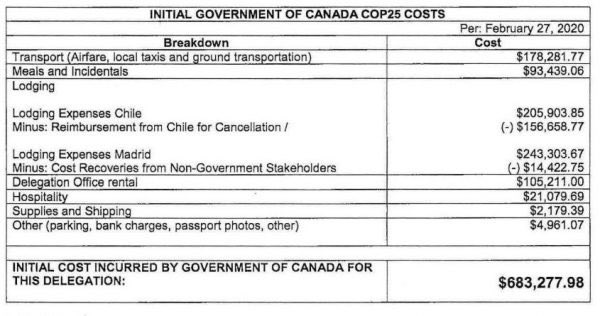
Holly Doan – Environment Minister [Jonathan Wilkinson] delegation to UN #climatechange #COP25 conference in Spain cost $680,000 including $178,000 in air fares and chauffeurs. “Could be higher,” writes @environmentca staff.
Mann Up
Mark Steyn; (link fixed)
Responding to a motion by my co-defendants the Competitive Enterprise Institute and Rand Simberg, the Court has now ordered Mann to cough up his income records from 2007 along with any evidence of reputational damage. If m’learned friends will forgive a zippy generalization, when you sue for defamation, there are various kinds of damages: “Defamation per se” commands damages in and of itself without evidence of actual losses; on the other hand, compensatory damages requires evidence that you lost 27 grand here and 49 bucks there. Mann had argued that, as he was claiming defamation per se, he didn’t need to show evidence of monetary loss. Judge Anderson has now reminded him that that’s not what his statement of claim actually says…
The Loathsome Elizabeth May
During a crisis that’s seen hundreds of thousands of deaths, it is really difficult to craft a sentence in which COVID-19 swims in the same lexical waters as ‘opportunity.’ But May has done it.
Y2Kyoto: “Hottest Year Ever”
Gets off to a roaring start.
Coldest Mother's Day in 35 years for the eastern US. Crop destroying freezes likely from Michigan to Tennessee. pic.twitter.com/3Mpkk9Sm3Y
— Temperature Global (@TempGlobal) May 4, 2020
Fear, Complexity, & Environmental Management in the 21st Century
On the anniversary of Chernobyl.
Some of you know I have written a book that many people find controversial. It is called State of Fear, and I want to tell you how I came to write it. Because up until five years ago, I had very conventional ideas about the environment and the success of the environmental movement.
The book really began in 1998, when I set out to write a novel about a global disaster. In the course of my preparation, I rather casually reviewed what had happened in Chernobyl, since that was the worst manmade disaster in recent times that I knew about.
What I discovered stunned me. Chernobyl was a tragic event, but nothing remotely close to the global catastrophe I imagined. About 50 people had died in Chernobyl, roughly the number of Americans that die every day in traffic accidents. I don’t mean to be gruesome, but it was a setback for me. You can’t write a novel about a global disaster in which only 50 people die.
Undaunted, I began to research other kinds of disasters that might fulfill my novelistic requirements. That’s when I began to realize how big our planet really is, and how resilient its systems seem to be. Even though I wanted to create a fictional catastrophe of global proportions, I found it hard to come up with a credible example. In the end, I set the book aside, and wrote Prey instead.
But the shock that I had experienced reverberated within me for a while. Because what I had been led to believe about Chernobyl was not merely wrong—it was astonishingly wrong. Let’s review the data.
Y2Kyoto: Green Shoots
It’s All Over For Europe’s Green Deal As Angela Merkel’s MEPs Say ‘It’s No Longer Viable’
Y2Kyoto: Not A Big Picture Guy


Y2Kyoto: Just Don’t Ask How It Got There
A team of researchers from the Innlandet County Council and NTNU University Museum in Norway and the University of Cambridge in the U.K. has found a large quantity of Viking-era artifacts in a long-lost mountain pass in Southern Norway. In their paper published in the journal Antiquity, the group describes the location of the pass, explains why it is suddenly revealing artifacts, and outlines what has been found thus far.
Greta, The Magical Retard
Warmist pitch to sane people: Hey, why not swallow $93 trillion in bad-weather-preventing advice from a kid who "let out an abysmal howl that lasts for over forty minutes" when offered a cinnamon bun and who took 53 minutes to eat 1/3 of a banana? #Science https://t.co/bVb0peWfvB pic.twitter.com/isDQt9GRQM
— Tom Nelson (@tan123) April 13, 2020
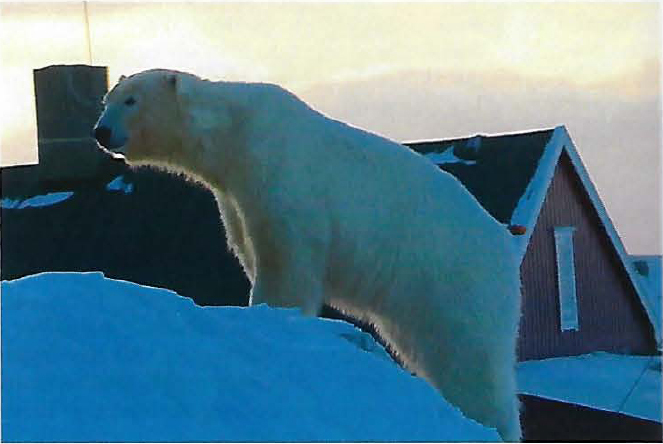
Y2Kyoto: Polar Bear Death Watch
Y2Kyoto: Still On Flood Watch
Antarctic sea ice extent bang on 1981-2010 avg. pic.twitter.com/ovWkrmNySH
— DavidIBirch 🇬🇧 (@dbirch214) April 7, 2020
Finally, Good News In These Hard Times
Y2Kyoto: Contagion
Public Health Agency did not stock masks but spent $5.6M on #ClimateChange, incl studies of mosquitoes, rats, and programs on “storytelling regarding climate change”. https://t.co/VSOWKoKlyg @CPHO_Canada #covid19Canada #cdnpoli pic.twitter.com/7WwPQKwq4m
— Holly Doan (@hollyanndoan) April 1, 2020
From the comments;
The federal government announced Tuesday that it “was in the process of finalizing an agreement” with the Montreal-based protective equipment manufacturer Medicom to start N95 and surgical mask production in Canada.
But the proposed Medicom manufacturing site won’t be up and running for months. According to the company, neither the location nor the number of facilities that will be producing masks has been decided. It is aiming to start production in early summer.
Trudeau is desperately trying to source N95 masks from other countries, who are struggling with their own needs.
Guess “studies of mosquitoes, rats, and programs on “storytelling regarding climate change” were more important.