Tag: solar power

Alberta’s wind power sputtered to next to nothing Sunday night, again

Wind turbines near Pincher Creek, Alberta. Photo by Brian Zinchuk

It’s starting to get cold out. The sun was down and Alberta’s wind power generation fell to next to nothing last night – less than half a per cent capacity.

Meanwhile in Saskatchewan, we’ve had several days of minimal wind power generation.

In other news, they’ve started to bring in floating accommodations for the staff to build the Woodfibre LNG facility.

And Precision Drilling meets debt reduction goal, on track to repay $500 million by 2025. 

Clean Electricity Regulations and nuclear power: Moe

Scott Moe.

Saskatchewan’s Year in Energy: Premier Scott Moe, 2023: Part 3: Clean Electricity Regulations and Nuclear Power

Clean Electricity Regulations proposed by the federal government mean to totally change our nation and its economy. And nuclear power is really the only option Saskatchewan has for large-scale, baseload power that does not emit greenhouse gasses.

Part 3 discusses the Clean Electricity Regulations and their impact, and widespread adoption of nuclear power

The failure of wind, then solar, and also batteries, in three stories

Alberta now has 44 wind farms, and Wednesday night they collectively produced next to no power (posted yesterday, but leads into the next two for context)

On Thursday, Alberta wind power had a hangover and the sun didn’t come out to play

What the Globe and Mail left out in its story on grid-scale batteries in Alberta

Key points:

The last day saw not only wind utterly collapse in Alberta, but solar AT THE SAME TIME, even at noon. And the narrative that we’ll simply build a lot of batteries for when that happens is disproven, as Alberta’s seven batteries only produced a 62 minutes of a wee bit of power all day on Thursday. And over the last 30 days, those seven batteries only produced 265 minutes out of over 300,000 minutes available to them. Yes, you read that right. And SaskPower is spending $26 million to buy one of these batteries. Seriously. It should be online any day.

So why, again, are we throwing away what we know works, natural gas and coal, for wind, solar and batteries? And it’s not even all that cold yet!

Bonus reading:

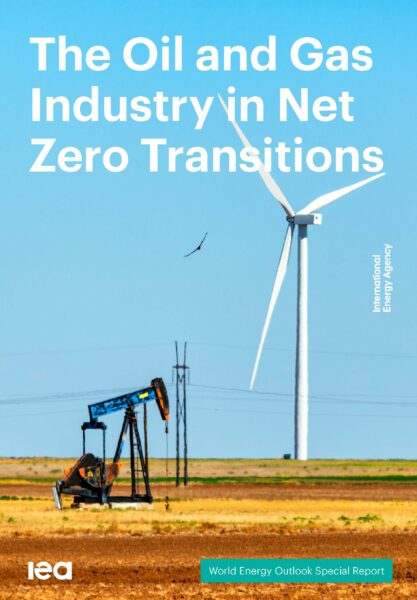
Steven Guilbeault cheers IEA report which says “no new long-lead-time conventional oil and gas projects are needed”


Saskatchewan says following the Net Zero by 2035 Clean Electricity Regulations are not possible, unaffordable, unconstitutional and unobtainable

Dustin Duncan

In August, Steven Guilbeault released the draft Clean Electricity Regulations which mean to remake our entire country in just 11 years.

On Nov. 2, Saskatchewan told them where to go. Today, they said publicly how to get there.

Three stories:

It just isn’t possible’ – SaskPower Minister in-depth response to Clean Electricity Regulations.

SaskPower response to the Clean Electricity Regulations: ‘Not possible from technological, financial and logistical perspectives

Saskatchewan response to the Clean Electricity Regulations: Unaffordable, unconstitutional and unobtainable.

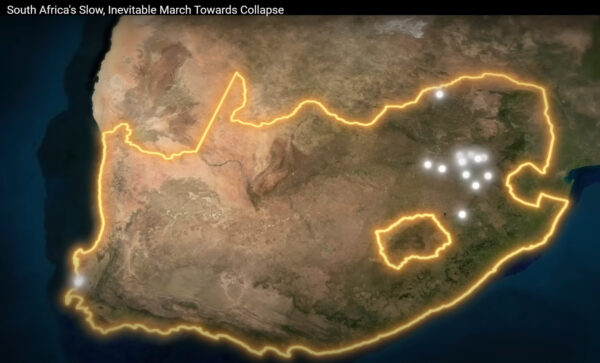
Unreliable power a leading factor in South Africa’s demise

If you haven’t been paying attention, South Africa is falling apart. The reasons are many and various. But a principal factor is an increasingly unreliable power grid leading to up to a third of the grid being in the dark at any one time.

This is why Pipeline Online has been covering the reliability of the Canadian electrical grid with such intensity. Politicians talk about “reliability, sustainability and affordability of the electrical grid.” As these videos outline in great detail, when reliability collapses, nothing else matters. South Africa has at times one third of its grid in rolling blackout. Everything from food preservation to industrial factories to medical operations ends up in peril.

The minute any grid operator, power generator, or government starts talking about “load shedding,” things are going to hell in a handbasket in a hurry.

And as a reminder, the Alberta grid had eight “grid alerts” in the last year, each time when wind and or solar power generation failed. Alberta is a jurisdiction that has more coal, oil, and gas than God, because God gave all of his to Alberta. The only way this could happen is sheer and utter incompetence. You might consider that getting rid of reliable and cheap coal-fired power generation in favour of more and more wind and solar power might be indicative of this. And in the last few days, Alberta brought on another 297 megawatt wind farm, bringing their total wind generation to 4,150 megawatts. Two years ago, it was closer to 2700 megawatts.

Here’s a couple recent videos on YouTube discussing the ever-worsening plight of South Africa.

Can solar flatline for a whole day? Yep.

Can solar power essentially flatline for a whole day? It did in Alberta on Monday

How is it some people are arguing a pipeline treaty is “dormant?” Would that make other treaties, say those with First Nations, also dormant?

I’ve been writing about the phenomenal growth of the North Dakota Bakken for the better part of 15 years. In 2008, the state produced around 90,000 barrels per day. By 2014, it was something like 1.2 million. Currently it’s around a million or so. A major player was Hess Corporation, which currently produces about 175,000 barrels of oil equivalent in North Dakota. But curiously, none of the supermajor oil companies were involved in North Dakota. Well, that changed, as Hess is being bought by Chevron.


High praise, indeed

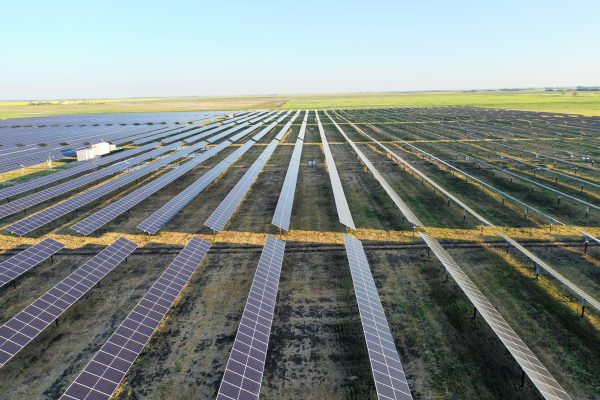
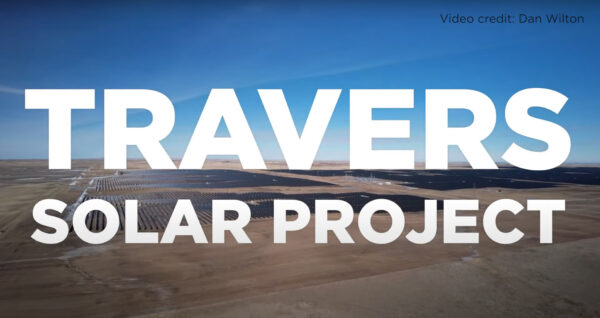
On Friday, Alberta Energy Minister Brian Jean praised the Travers Solar Project in a LinkedIn post. At noon on Sunday, when the sun was highest in the sky, it was producing 10.9 per cent of nameplate capacity.

And at the very same time, wind was producing less than 2 per cent capacity, and was around that level all afternoon long.

The Canadian Energy Regulator provided reasons for its TMX pipeline route change ruling.

In an unrelated note, if you’ve worked in the southeast Saskatchewan oilpatch, you probably know, or know of, Larry Day, who was awarded dispatcher of the year.

And while we’re tooting horns, Pipeline Online received an Estevan Business Excellence award for New Business Venture.

Rolling blackouts again threaten Alberta and Texas on Tuesday

The energy transition continues: Alberta issues second electrical grid alert in two days. Texas also issued a grid alert on the same day. Funny, that. The two most energy-rich jurisdictions in the hemisphere, and perhaps the planet, are struggling to keep the lights on. Again.

Oh, and Texans have been warned: expect the same on Wednesday.

Why do I keep writing about this? Because people need it beat into their heads “The emperor has no clothes!”

The energy transition in real time: brownouts threaten at suppertime

With brownouts a possibility, Texas issues another electrical grid alert on Tuesday, its second in three days. Alberta issued one yesterday. These are the most energy-rich places on earth. What is going on?

UPDATE: 3:08 p.m. Aug. 29.

At 2:25 p.m, the Alberta Electric System Operator has not yet issued a grid alert on this date, but put out a tweet alluding to one, imploring Alberta citizens to reduce power consumption.

A small drop in a very large nuclear bucket

Jonathan Wilkinson. Photo by Brian Zinchuk


Four reactors could cost Saskatchewan $12 to $20 billion. The feds just gave us $74 million. But don’t worry, the money came from Guilbeault and Wilkinson. At least, those were the ministers quoted.

In the above, you will see that in 26 years, four months and 10 days, Saskatchewan could need as many as 27.5 nuclear reactors. At $3 to $5 billion a crack. Good luck, with that.

Also, Yukon might connect to the BC, and thereby national, electrical grid.

And Ford just milked the federal and Quebec EV cow for $1.2 billion

Grand sweeping fairytales – Smith calls a spade a spade on renewables

Danielle Smith: Grand sweeping fairytales that threaten Canadians ability to keep the lights on are no way to speed things up.

I’ll have more on that pretty impressive press conference as I have time.

As well, some oil companies aren’t doing too badly, as Saturn Oil & Gas reports it has tripled its production in a year.

Also, in last week’s Crown mineral rights land sale in Saskatchewan, one, singular exploration permit went for over $6 million. The last time I saw numbers like that for one piece of land was like during the Bakken boom of 2008. It’s simply unheard of in the last 15 years to see a single parcel, even an exploratory permit, go for that much. In recent years, we’d be lucky if a few dozen leases, combined, would make up a total of $6 million. So this is verrrrry interesting. It was near Kindersley, by the way.

Bloc doesn’t think “just transition” report went far enough

There’s no pleasing the Bloc, except to break up the country. But they had some interesting things to say about the Natural Resources Committee’s “just transition” report.

Also, on the longest day of the year, Saskatchewan’s grid scale solar averaged just 26.7 per cent capacity. But that’s okay. Texas knows what they’re doing. They built all sorts of solar and wind power. How’s that working out for them with a heat wave?

And with NATO arming Ukraine to fight a war with Russia before Russia crosses Ukraine and takes on NATO, the top dogs at NATO still have time to fight climate change. Shouldn’t they be more concerned about the Ruskies?

One more thing, folks. Facebook will start blocking media, including Pipeline Online, on Sunday. Say what you want about Facebook, but this is a huge issue. Social media is crucial to the business plans of all news media, mine included. Thanks for all the support from SDA, because it means a lot. This is going to be a tough row to hoe. And glib comments about Facebook not mattering simply aren’t true. It matters to people like me. Where else can you find 3 billion people to tick off?

Navigation