Don’t slow walk critical minerals development, says NDP finance critic, regarding 2023 provincial budget

Don’t slow walk critical minerals development, says NDP finance critic, regarding 2023 provincial budget
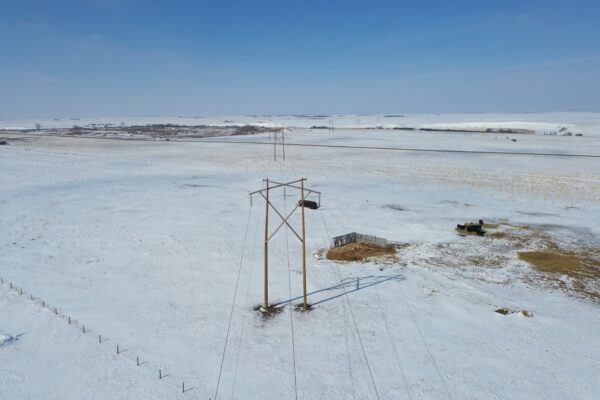
‘Why don’t you fight for what we have, and what works?‘ SaskPower holds open house in Estevan on $1 billion interconnect with US, solar and nuclear. The crowd was not at all happy.
This is real in-depth on what’s going on. Among the gems- we’re going to build up to 3,000 megawatts of wind and solar in Saskatchewan, stuff that totally fails on a irregular but frequent basis, and NOT build an accompanying 3,000 megawatts of natural gas generation to back it up for days (nights) the sun doesn’t shine and the wind doesn’t blow.
And a related story – did you know that the 650 megawatt power interconnect, the one that’s the same size as coal-fired Boundary Dam Power Station, and will carry carbon tax-free power from the US, will cost us a billion dollars? It turns out the NDP SaskPower critic did the math, and she was correct.
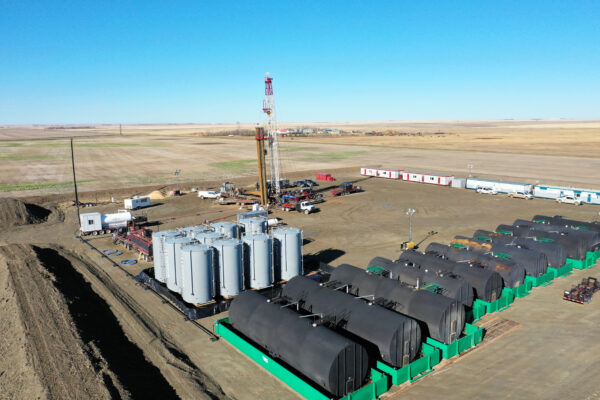
Prairie Lithium has been the undisputed leader in lithium development in Saskatchewan. On Monday, Arizona Lithium closed the deal to purchase Prairie Lithium. This is part 16 in Pipeline Online’s ongoing series on Lithium in Saskatchewan.

To provide the building blocks of 21st century technology, #Saskatchewan releases Critical Mineral Strategy. That includes helium, lithium, potash, copper, nickel, uranium, and a whole pile of rare earth elements. Saskatchewan wants to double its share of the mineral exploration pie in Canada.
In a related story, flow through shares would be great, if only they applied to helium exploration, says Royal Helium CEO.
But Saskatchewan’s Critical Mineral Strategy’s flow through shares are a big deal for junior mining company Buffalo Potash.
Pipeline Online poured through the 2023 provincial budget to dig up everything possibly applicable to the energy sector.
On Tuesday, hearings began before the Supreme Court of Canada on the “No More Pipelines Act”.
And for something totally not political, an Oxbow couple saw a need for a Saskatchewan-focused oilfield services directory app, so they made one.
The cost of the Trans Mountain Expansion pipeline has shot up another 44%, to $30.9 billion. Project managers say it’ll be finished this year (from what I hear, not so much). And yet Indigenous groups are seeking a 30% stake in the project. Where’s that money coming from?
And on the topic of pipelines, it turns out Repsol said it would be too much money to pipeline natural gas from Western Canada to Saint John, New Brunswick, modify an existing LNG import terminal to export, and ship LNG to Europe. Would that be because the pipeline would have to go through Quebec, by chance? So there really wasn’t a business case, or there wasn’t a business case because of a.) Quebec and b.) the federal government? Would this have worked under a Harper or Poilievre government?
Grounded Lithium drilled the second targeted lithium well in Saskatchewan last summer. Now, it has released its development plans for the Coleville area in west central Saskatchewan, and picked up more land as well. This includes a drilling plan for a number of production and disposal wells.
Wait, didn’t First Nations protests dramatically hold up the Coastal GasLink pipeline? And yet another BC First Nation wants to use that very same pipeline to supply its own liquefied natural gas terminal at Kitimat? How can this be? And the BC government just gave that LNG terminal the environmental go ahead?
Did you know that Lampman and the Kerrobert area are neck-and-neck when it comes to the top producing conventional oil wells in Saskatchewan? And it’s really close, despite being over 500 km apart.
Whitecap Resources is moving along with its plans for a “carbon hub” connecting five Regina and Moose Jaw industrial CO2 emitting companies to the Weyburn Unit. This will entail a substantial CO2 pipeline from that area to Weyburn. An engineering firm has been chosen to do the front-end engineering and design.

The fraction of Alberta’s wind power generation capacity put out on Saturday, March 11.

Uncertainty about the regulation of downstream emissions was one of the things that ultimately killed the Energy East Pipeline project. This was one of the clearest cases of the federal Liberal government “moving the goalposts.” If legal ecowarriors Ecojustice are successful in this case, it could have profound implications for all oil production in Canada. That’s especially is we are to be “net zero” by any particular date.
Note in the story how the Bay du Nord offshore project was approved by CN-tower climber himself, Steven Guilbeault. The story notes how it was one of the hardest choices in his life. Interesting, how a Newfoundland offshore project could get approval from none other that Guilbeault, and yet the rest of the oil industry feels it has no hope with him. Would that have anything to do with Newfoundland’s consistent election results of nearly every seat going Liberal red for decades? And that this project will be enormously profitably for Newfoundland? Yet when it came to the $20 billion Teck Frontier oilsands project in Alberta, the company walked away because it didn’t feel it could get any regulatory confidence from the feds?

Year end numbers are now available for Saskatchewan oil production. Also known are the top 10 oil producers in Saskatchewan, and their total and average production for the year.
In other words, these are the people who are paying the bills for a large part of our roads, hospitals and schools.

Back in the lofty, pre-Trudeau government days of 2014, back when oil was booming, pipelines were planned to east and west coasts, and Alberta and Saskatchewan were swimming in money, around $81 billion was spent in capital expenditures (CAPEX) in the Canadian petroleum industry. On Wednesday, the Canadian Association of Petroleum Producers (CAPP) forecast CAPEX of $40 billion, which is just about double the disaster year of 2020, but half of 2014. And that’s before #justinflation. What would it be if we had a federal government supportive of the industry, instead of trying to make it disappear?
Curiously, Enbridge announced on the same day its spending a lot of money in Texas, including a port facility for Houston. Funny how it’s not talking about Northern Gateway to Kitimat, or Churchill, or even Valdez, Alaska? Wonder why?
And here’s Brian Zinchuk’s column analyzing all this.
“Dark fleet,” anyone? U of R professor Jim Warren writes about how Russia’s doing an end run around oil sanctions. Too bad we never built Energy East and were able to replace some of those barrels.
Speaking of oil – it’s expected to have a big impact on Alberta’s budget on Tuesday.
Alberta wind generation fell to 0.3 per cent capacity at supper last night. And the batteries that are supposed to back them up? Yeah, in the last 30 days, they output power a cumulative 0.09 per cent. That’s not 9 out of 100. That’s 9 out of 10,000. But the public thinks they will be used every night when the sun goes down or the wind doesn’t blow.
Wonder how SaskPower’s doing? We won’t be told for another two days.
Some tough negotiations between Quebec and Newfoundland on Thursday, as the wholly lopsided Churchill Falls hydroelectricity deal may be reopened. Currently Newfoundland is getting paid 0.2 cents per kilowatt hour, and Quebec sells it for 41x that same power. And it will do so until 2041, unless something comes of these negotiations.
Story: Ahead of Quebec premier’s visit, provincial panel recommends new Churchill Falls deal
The notion that Quebec will change this deal one minute before 2041 is laughable. Quebec locked in a fixed price, with no escalator clause for inflation, in the early 1970s. And then they were able to extend it until 2041, despite Newfoundland’s protests to the Supreme Court of Canada, which backed Quebec. It is perhaps the most lopsided, unfair deal in Canadian history. Quebec gets rich, Newfoundland starves.
Churchill Falls Hydroelectric Generating Facility, with 5,428 megawatts capacity, has more power generating capacity than the entire province of Saskatchewan, combined, if every single coal and gas turbine, every wind turbine are running at 100%, and every solar panel is entirely lit at noon. If Newfoundland actually got a fair deal from its power sales over 50 years ago, it would not have been a have-not province for the last five decades. However, numerous court cases, up to the Supreme Court of Canada, have locked Newfoundland into the deal until 2041, selling power to Hydro Quebec for $2 per megawatt-hour. In New York (which buys power from Hydro Quebec), “Higher fuel costs have led to higher average wholesale electricity prices as well. In February 2022, the average year-to-date wholesale electricity cost was $118.36/Megawatt-hour (MWh), according to NYISO data.” Where do you think they buy wholesale power from?

This time of year is the peak of the drilling season, and the rig count is the leading indicator for the oil business. Here’s the rig report as of Valentine’s Day. While you were giving your sweetie flowers, these guys were turning to the right.
There’s one company coming into the lithium game in Saskatchewan from a slightly different perspective: It’s operated and partially owned by an oil company that already has revenue coming in. Also, it looks like there may be a lithium fairway running from east of Weyburn to Torquay. Here’s Part 12 and Part 13 in the series on Lithium in Saskatchewan.