Up until now, the coal-fired power refurbishment may have seemed like a lot of talk. On Wednesday, April 22, it became real. And that’s significant for a number of reasons.
Not the least of which is it is in total defiance of federal coal regulations. Saskatchewan is giving Ottawa the bird.
Two Westinghouse AP1000 reactors at Vogtle. Cameco photo
Saskatchewan is the battleground between the AtkinsRealis (SNC-Lavalin/former AECL) CANDU reactor and the Cameco/Brookfield-owned Westinghouse AP1000 reactor. I’d digging as deep as I can to provide context for Saskatchewan decision makers who will be making this decision. In recent weeks I had two podcasts on the CANDU. This is the first on the Westinghouse. What’s really significant here is the Westinghouse ownership is now fully Canadian companies, even though the design is American. And in November or so, Trump’s administration said they’d build 10 of them.
Pipeline Online Podcast Ep. 31: Dr. Grant Isaac, Pres. & COO of Cameco on SK buying Westinghouse reactors. There were technical difficulties which shortened our time, so we’re going to take another run at it in the near future.
It turns out Pipeline Online isn’t the only one to use a Timbit as a unit of monetary measure. Maybe they got the idea from Pipeline Online? Here’s the Canadian Press story:
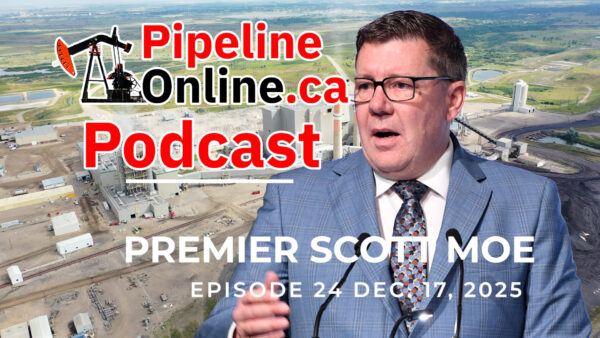
Saskatchewan Premier Scott Moe joins the Pipeline Online Podcast in his annual year-end interview. The discussion digs into the coal decision, Saskatchewan’s move into nuclear, carbon capture, interties to Alberta’s grid, and the Alberta-Canada MOU. The multilateral well program, oil production goals, Saskatchewan’s new energy and resources minister, lithium and hydrogen are also discussed.
The Pipeline Online Podcast will feature Andrew Scheer today, Monday, March 31 at 1 p.m. SK time. The carbon tax will surely be part of the discussion.
If SaskPower carries through with rejuvenating coal, it will save three power plants, two mines, ~1000 jobs and two communities.
The significance of the shift on coal cannot be understated. When SaskPower’s then-CEO Mike Marsh came to Estevan in 2018 to say they would not be installing carbon capture technology on Boundary Dam Units 4 and 5, it wasn’t the obituary for the community, but it sure felt like the cancer diagnosis. And with no talk of carbon capture for Coronach’s Poplar River Power station, it seemed all but certain that town would whither away once the coal plant and related mine shut down by the federally mandated 2030 deadline. The January, 2025, announcement of SaskPower looking to rebuild both Boundary Dam and Poplar River, if carried out, would be a decades-long reprieve for both communities.
To extend the metaphor, effectively Estevan and Coronach just went into chemotherapy, and the results may be positive.
The implications of this change in direction, from the impending death of coal, to its possible rejuvenation, have local, provincial, national and international aspects, detailed in the story.
Watch for the Pipeline Online Podcast, Episode 2, to be broadcast on LinkedIn, Facebook and X at 1 p.m. on Friday, Jan. 24.. Crown Investments Corp Minister Jeremy Harrison is the guest, where we will delve even further into this new direction on coal-fired power generation.
If carbon capture is supposed to be the future, why does it keep striking out? Last week, Capital Power in Alberta cancelled the $2.4 billion carbon capture project for the Genesee Power Station, which is currently being converted from coal to natural gas. It’s the last thermal coal power plant in Canada west of Coronach, Sask.
And, in an unrelated column, Brian Crossman talks about the significance of washing your work truck. It’s actually pretty important for a number of reasons. Call it “Work Truck Therapy.”
Sorry I didn’t have time to dig into this one myself. Not enough hours in the day. After all, I had to spend half an hour at Sobey’s on Wednesday pointing out to my 17-year-old son how prices of soup, meat, green onions and the like have gone up 40% in the last four years. In the end, a cart which wasn’t even full cost $300, whereas in 2020 it would have cost closer to $210 or so. I kept asking, “And who do we blame for this?”
What do you think the right answer was?
Also, for your reading pleasure:
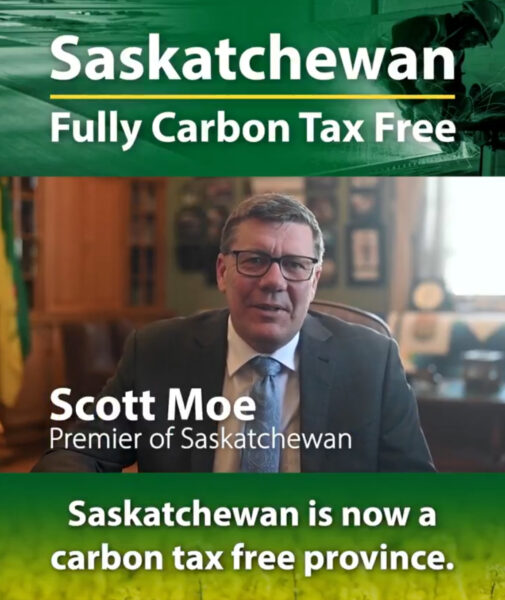
The Canada Carbon Rebate puts hundreds of dollars back in Canadians’ pockets every quarter. Oddly, some Premiers are against that – and they want to scrap your rebates.
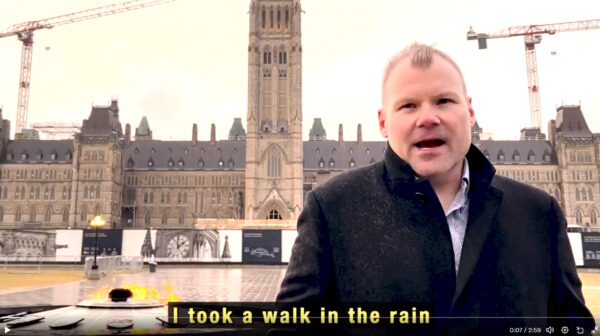
Carbon tax war heats up between Saskatchewan and feds. Duncan says Saskatchewan won’t remit carbon tax after his “walk in the rain.” Wilkinson says no carbon rebates for Saskatchewan after province says it won’t remit. Moe says no rebate = no carbon tax.
My response to the federal government threatening to take away the Carbon Tax Rebate for Saskatchewan families. pic.twitter.com/mcDbYQx1FZ
Justin Trudeau may not have taken a “walk in the snow,” like his father did 40 years ago on this day, but Dustin Duncan took a walk in rain in front of Parliament, and decides we’re not remitting carbon tax to the feds.
There’s a truism in politics: “All politics is local.” And there’s nothing more local than the road full of potholes in front of your house. But Minster of Environment and Climate Change Steven Guilbeault, supposedly speaking on behalf of the entire federal government, seems to think we don’t need any more roads. The reaction was fast and furious.
Shell is betting heavily on Canadian LNG. Not only is it the lead partner in LNG Canada, it just agreed to buy 1/6 of the offtake from its competitor up the coast.
And for a REAL deep dive into carbon tax analysis, a Prince Albert, SK, based economist allowed Pipeline Online to reprint this in-depth report on how the carbon tax affects his SaskPower and SaskEnergy power and natural gas bills. It was originally posted on LinkedIn.