In the 1970s, perhaps a few million illegals resided in the United States, and their unassimilated presence went largely unnoticed. Most Americans felt that the formidable powers of integration and popular culture would continue to incorporate any distinctive ethnic enclave, as they had so successfully done with the past generations that arrived en masse from Europe, Asia, and Latin America. But when more than 10 million fled Mexico in little over a decade—the great majority poor, without English, job skills, a high school education, and legality—entire apartheid communities in the American Southwest began springing up.
During the heyday of multiculturalism and political correctness in the 1980s, the response of us, the hosts, to this novel challenge was not to insist upon the traditional assimilation of the newcomer but rather to accommodate the illegal alien with official Spanish-language documents, bilingual education, and ethnic boosterism in our media, politics, and education. These responses only encouraged more illegals to come, on the guarantee that their material life could be better and yet their culture unchanged in the United States. We now see the results. Los Angeles is today the second-largest Mexican city in the world; one out of every ten Mexican nationals resides in the United States, the vast majority illegally.
[…]
In my own experience, the slow progress made in rural California since the 1950s of my youth—in which the county inspected our farm’s rural dwellings, eliminated the once-ubiquitous rural outhouse, shut down substandard housing, and fined violators in hopes of providing a uniform humane standard of residence for all rural residents—has been abandoned in just a few years of laissez-faire policy toward illegal aliens. My own neighborhood is reverting to conditions common about 1950, but with the insult of far higher tax rates added to the injury of nonexistent enforcement of once-comprehensive statutes. The government’s attitude at all levels is to punish the dutiful citizen’s misdemeanors while ignoring the alien’s felony, on the logic that the former will at least comply while the latter either cannot or will not.
Fairness about who is allowed into the United States is another issue that reflects class divides—especially when almost 70 percent of all immigrants, legal and illegal, arrive from Mexico alone. Asians, for example, are puzzled as to why their relatives wait years for official approval to enter the United States, while Mexican nationals come across the border illegally, counting on serial amnesties to obtain citizenship.
These class divisions cut both ways, and they help explain the anomaly of the Wall Street Journal op-ed page mandarins echoing the arguments of the elite Chicano studies professors. Both tend to ridicule the far less affluent Minutemen and English-only activists, in part because they do not experience firsthand the problems associated with illegal immigration but instead find millions of aliens grist for their own contrasting agendas. Indeed, every time an alien crosses the border legally, fluent in English and with a high school diploma, the La Raza industry and the corporate farm or construction company alike most likely lose a constituent.
[…]
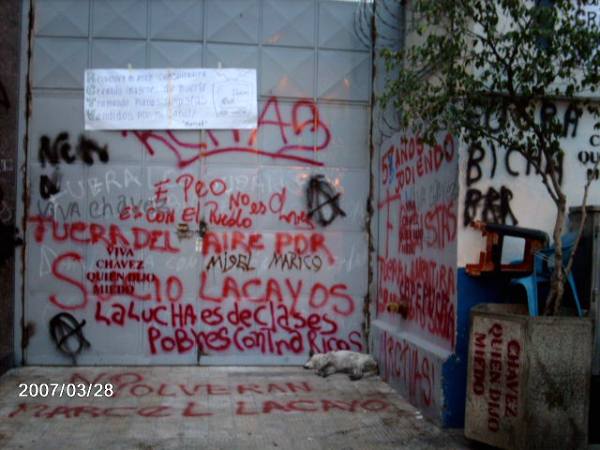
[T]his spring Americans witnessed millions of illegal aliens who not only were unapologetic about their illegal status but were demanding that their hosts accommodate their own political grievances, from providing driver’s licenses to full amnesty. The largest demonstrations—held on May Day, with thousands of protesters waving Mexican flags and bearing placards depicting the communist insurrectionist Che Guevara—only confirmed to most Americans that illegal immigration was out of control and beginning to become politicized along the lines of Latin American radicalism. I chronicled in Mexifornia the anomaly of angry protesters waving the flag of the country they vehemently did not wish to return to, but now the evening news beamed these images to millions. In short, the radical socialism of Latin America, seething in the angry millions who flocked to support Venezuela’s Hugo Chávez, Bolivia’s Evo Morales, and Mexico’s Andrés López Obrador, had now seemingly been imported into our own largest cities.
Read the whole thing.
Previous: : A Global Village fortifies.