Tag: energy transition

Who needed power on Labour Day, anyhow?

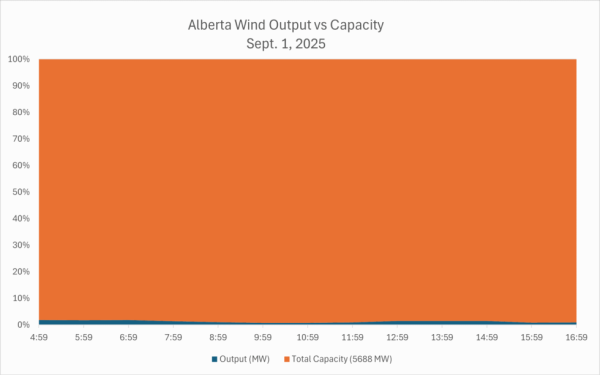
Alberta wind power generation took a holiday on Labour Day

Throughout the day, wind output from the 1722 wind turbines (at last count) totalling 5,688 megawatts of total generation capacity hovered around the 1 per cent output mark, ranging from 1.9 to 0.8 per cent.


A “Dialectic on Energy Policy” with a former pipeline CEO vs. sustainable development exec

On July 27, the Midwest Legislators Conference in Saskatoon held a “Dialectic on Energy Policy,” essentially a debate on energy choices in a world focused on climate change. Hal Kvisle, former CEO of TransCanada Pipeline/TC Energy was on the right side of the debate and Louise Miltich came from the left.


Brian Zinchuk on Evan Bray Show: Multilaterals, coal revival, major projects and more

On Sept. 3, Evan Bray and Brian Zinchuk go over the growing impact of large multilateral wells, LNG, the new major projects office, Alberta electrical grid updates, coal revival and more.

Lawfare engaged to kill Saskatchewan coal revival

Boundary Dam Power Station

Pipeline Online does one of its deepest dives yet into the injunction application meant to shut down Saskatchewan’s coal-fired generation fleet, just as this province begins its rebirth. At stake are 1100 jobs, billions of dollars, and keeping 44% of Saskatchewan’s lights on. And just who gets to govern around here, anyhow?

The Coal Injunction, Part 1: Do a 12 year old, a podcaster and someone who doesn’t even live here get to kill 1100 coal-related jobs?

I spent five days working on this five part series which starts Monday. The Saskatchewan Environmental Society and Citizens for Public Justice have put forward a 12-year-old non-binary child from Regina who has been in national headlines now three times in two years (attention seeking, perhaps?) as the Saskatchewan version of Greta Mark II as part of this. And be forewarned, the lawyer who did that said that if anyone said nasty things online about the child he put forward, there could be legal consequences. Is he using the child as bait? I dig into this in Part 3.

The other inviduals are a Saskatoon environmental podcaster who is taking a poli sci degree in her 50s. And the third is a Manitoba farmer who neither lives in Saskatchewan nor is a SaskPower customer.

And it was only at the end of this process I realized the lawyer filing the case has run unsuccessfully for office five times. Is he trying to accomplish through the courts what he failed at the ballot box?

This is lawfare, pure and simple.

I’ll have a piece each day. Watch for it and share if you’re willing.

Climate change warrior shovels quarter billion SaskPower’s way

Jonathan Wilkinson near Kipling, announcing $50 million for a wind project in June 2023. Photo by Brian Zinchuk

In Pipeline Online’s continuing mission to ensure we all know exactly what the federal government is telling us on climate change initiatives, this is the verbatim press release from the Government of Canada issued at 18:10 hrs on Dec. 5. Notably, it was not sent out via provincial media releases nor SaskPower’s media releases. And apparently according to the feds, Jansen is a company, not the place the largest mining company in the world, BHP, is building the world’s largest potash mind. Check that out in the opening paragraph.

(You’d think the natural resources minister, and ministry, might be aware of the largest potash mine in the world being built in their country)

The announcement was made by Minister of Energy and Natural Resources Jonathan Wilkinson. He and Minister of Environment and Climate Change Steven Guilbeault are the federal Liberal government’s lead ministers on their numerous and various climate change initiatives. For good measure, we’ve interspersed a healthy dosage of oil and gas ads, that industry that this government’s Bill C-59 is trying to muzzle.

Highlights include money for a number of solar projects, advancing SMR development, the intertie to the United States, grid-scale batteries, and a “forecast that there will be over 130,000 clean energy jobs added in Saskatchewan between 2025 and 2050.”

Oh, and I am willing to bet a Christmas cheesecake the $265 million number was set so they could say it was more than Harper gave carbon capture in 2008 ($240 million). Never mind 9 years of inflation meaning my kid cries after buying groceries.

And on the topic of Guilbeault, Pipeline Online columnist Jim Warren, knocks another one out of the park talking about his involvement with the green slush fund.


Pushed to the limit

They pushed us to the limit,” Danielle Smith says in fighting oil and gas emissions cap. Saskatchewan has already started on this path.

Expect similar action from Saskatchewan in the next 10 days. If you remember back in September, Saskatchewan issued its Economic Impact Assessment Tribunal take on this emissions cap, calling it a production cap.

Trent Wotherspoon

Sask NDP gas tax motion runs out of gas

We’ll triple the price, that’ll make it more affordable

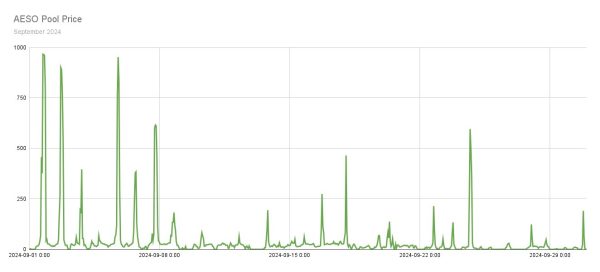
Brian Zinchuk: How will tripling maximum electrical pricing in Alberta help consumers?

Also:

Pamela Wallin and John Gormley discuss the Saskatchewan election results

Ottawa fires back at Alberta’s application for judicial review of carbon price

The loonie is trading at lows not seen in years. Here’s what it means for Canadians

Alberta Premier Smith says lower-than-forecast oil prices could mean budget deficit

Massive missed opportunity

Why aren’t the oilsands companies planning on using CO2 for enhanced oil recovery? This is a colossal missed opportunity. Massive. Yuge. Yes, with a Y, like Trump.

Here’s my attempt at a reel from the Lloydminster Heavy Oil Show. Hopefully more to come.

Oh, and it looks like Muskrat Falls wasn’t just going to bankrupt the Newfies, who quietly got a $5 billion bailout during COVID, but it looks like Nova Scotia, too, is getting bailed out.

Federal $500M bailout for Muskrat Falls power delays to keep N.S. rate hikes in check

But hey, Saskatchewan power rates can skyrocket as we have to get rid of our cheap coal – no problem!

And, since there’s plenty of public money for everything these days:

Energy minister says public money could help finance Alberta energy cleanup

And for something completely different – Quick Dick McDick harvests wheat.

Manitoba wind, Alberta taxes, Lloydminster heavy oil

It turns out developing more wind in Manitoba is a big deal for Manitoba Hydro – CEO sacking sorta big deal.

Alberta to relax rule on buying oil, gas wells if municipal taxes unpaid

The Lloydminster Heavy Oil Show is coming up in just under two months. I’ll be there if anyone would like to say hello. I’m identifiable by the fat guy with all the cameras sitting at the front.

And since everyone is talking about the Trump assimilation attempt, I have to say, Peter Zeihan’s video about it this morning is the worst I’ve ever seen from him – and I’m generally a huge fan of his work. His disappointment that it wasn’t successful shows through. Maybe it’s because he’s been saying Biden in a landslide – well, that’s not going to happen now.

First implementation of the Sask First Act – Saskatchewan won’t follow Clean Electricity Regulations

Jim Reiter, Bronwyn Eyre, Michael Milani. Photo by Brian Zinchuk

For a long time, Premier Scott Moe has been saying it’s impossible to comply with federal regulations regarding getting rid of our fossil-fueled power generation, in the timeline the federal Liberal government wants.

It’s coming to a head.

This is the first action of this type thus far under the Saskatchewan First Act. This is what it was meant for.

If implemented in their current form, the Clean Electricity Regulations mean to all but eliminate the burning of fossil fuels for power generation in 10 years, six months and three days from now. Saskatchewan relies on natural gas and coal to produce the vast majority of its power, up to 88 per cent on some days. And if implemented, these regulations will fundamentally alter Canada and its economy, and affect all of its people in one form or another. It’s one of the most important policy pieces in generations, seeking to remake Canada.

Saskatchewan won’t follow Clean Electricity Regulation, citing Economic Assessment Tribunal report.

Executive summary of the report

The government released all the submissions to the tribunal. I will be reprinting many of them over the coming days, maybe weeks. There’s a lot. And there’s a lot to be said.

Clean Electricity Regulations, LNG and fusion, oh my!

Steven Guilbeault. X/@s_guilbeault

Guilbeault’s proposed Clean Electricity Regulations have been slightly modified. This is the Canadian Press story. I’ll be working on this to have a lot more in depth next week.

In my editors note, I point out: Pipeline Online will have extensive coverage on this early next week, including reaction from the Saskatchewan government. The “Clean Electricity Regulations”, if implemented, will be one of the largest and furthest reaching policies in recent Canadian history, impacting almost every aspect of our society and economy.

I should point out the most important lesson I ever learned about government communications came from a first season episode of The West Wing, called Take out the Trash Day.

This announcement from Guilbeault came out early Friday afternoon. Imagine that.

https://twitter.com/s_guilbeault/status/1758547663958483250?s=20

Also:

Peter Zeihan makes some sense, kinda sorta, out of Biden’s LNG export approval pause.

And who needs small modular reactors when we can apparently just jump to fusion? Hasn’t fusion power been just 30 years away for something like 60 years?

We’re going to need a LOT of reactors in Saskatchewan…

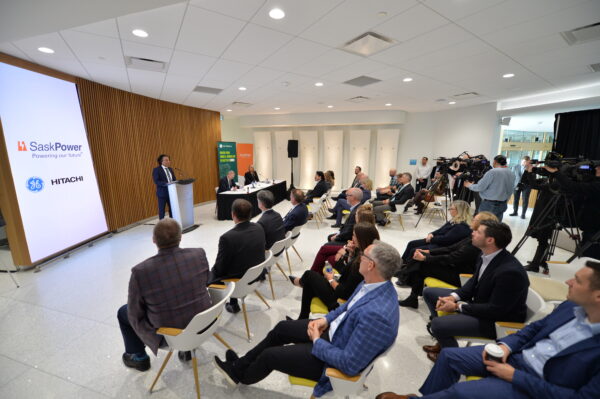
SaskPower and GE Hitachi advance small modular reactor plans, but won’t say how many, or how much they’ll cost just yet. Also, SaskPower looking at increasing grid by 2.5x in 25 years and 11 months. Didn’t I just write a column about that earlier this week? Oh yeah. What doubling the grid really means. Also, if you start doing the math, my earlier predictions Saskatchewan will need 15-20 small modular reactors (if not more) is looking pretty much on the money.

Clean Electricity Regulations and nuclear power: Moe

Scott Moe.

Saskatchewan’s Year in Energy: Premier Scott Moe, 2023: Part 3: Clean Electricity Regulations and Nuclear Power

Clean Electricity Regulations proposed by the federal government mean to totally change our nation and its economy. And nuclear power is really the only option Saskatchewan has for large-scale, baseload power that does not emit greenhouse gasses.

Part 3 discusses the Clean Electricity Regulations and their impact, and widespread adoption of nuclear power

Ministry of Truth (Environment) pronounces EVs work in the cold, so we all have to buy them

Editor’s Note: In Pipeline Online’s continuing mission to allow the people of Saskatchewan know precisely what their federal government is telling them on climate change initiatives, here’s Minister of Environment and Climate Change Steven Guilbeault’s press release of Dec. 19, explaining how the federal government will move to outlaw the sale of gas and diesel light vehicles in 11 years and 13 days. This press release has quotes from no less than five federal ministers and one parliamentary secretary.

New Electric Vehicle Availability Standard will give Canadians better access to more affordable cars and cleaner air, says Guilbeault

And here’s the verbatim backgrounder:

Canada’s Electric Vehicle Availability Standard (regulated targets for zero-emission vehicles) backgrounder, verbatim. Did you know EVs now work when it’s really cold? That’s what the feds say! Must be true!

The “Energy Trilemma” – a super wicked problem

Recently retired SaskEnergy CEO Ken From writes in Pipeline Online about the “Energy Trilemma” – energy security, affordability, and transition; Germany’s folly and practical realities.

There’s a whole lot of cold water splashed on the faces of true believers in the energy transition.

The cultish obsession with renewables – a mixture of managing by pixie-dust and mass delusion – has stymied discussions on real emissions reductions. A recent workshop in Stavanger Norway explored the role of fossil fuels as part of the solution – i.e., how do we maintain energy affordability and energy security within the context of reducing emissions. The participants called this the Energy Trilemma.

Navigation