Jim Warren:Could maximizing Canadian oil production and exports over the medium-term help reduce CO2 emissions for the long-term?
“There is a chasm of disagreement separating climate-concerned policy makers in Ottawa and supporters of the oil and gas sector on the prairies. Each side behaves like they’re playing a zero sum game.”
This is the third in a series of in-depth interviews with the parties vying for the Saskatchewan election. In it, NDP Energy Critic Aleana Young speaks about the NDP’s all-of-the-above energy strategy.
The greatest threat to nuclear development is not technological or even financial – it’s change in government. This was evident with the Site C Dam in BC, where a new NDP government pumped the brakes, but then ultimately went ahead with it. The NDP in Saskatchewan continue to support nuclear power development, but “we have to get it right.”
As I’ve done with the other parties, I reproduced everything I could find in the party platform related to energy. Well, the terms “oil” “natural gas” “potash” “critical minerals” “SMR” “nuclear” or “electricity” are not referenced within the document. But “healthcare” comes up 35 times.
Friday will be the Buffalo Party. So far, I have not heard from the Greens, PCs or Progressives. Wonder why? Is anyone else writing 3200 word stories on their energy policies?
On a side note, I attended a three hour long Estevan city council/mayor town hall this evening. It took 2 hours and 25 minutes before anyone made any serious comments about coal. That was right before I got my chance to ask about dealing with the impending eventual shut down of coal-fired power generation, but also preparing the city for nuclear power. Amazingly, about half of the 13 people on stage really had no substantive answer on that front, and several had no clue or hadn’t thought of it. You would think that would be the most important issue facing this city – much more important than sidewalks or boulevard flowers (which got more discussion up until that point than coal or nuclear). Especially since the nuclear built out will be the most costly infrastructure project in Saskatchewan history to date. (If I attend a forum like this, you can be damned sure I’m going to ask the toughest questions.)
To rectify Canada’s sinking economic status, we need to fix our energy regulatory framework to be timely, predictable and simpler. Along the way, we need to include Indigenous people and their investments.
Those were the messages by Lisa Baiton, president and CEO of the Canadian Association of Petroleum Producers, in her keynote address to the 10th annual Saskatchewan Industrial and Mining Suppliers Association (SIMSA) Energy Forum.
Pipeline Online is attempting to do in-depth interview on energy policy with each of the parties involved in the Saskatchewan 2024 general election. First up: Saskatchewan United Party:
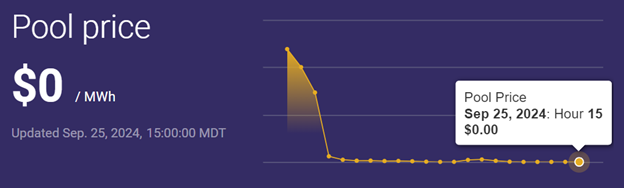
Weird things have been happening in Alberta’s electrical grid over the last week. Interties to BC and Montana are down due to maintenance. Many hours have seen zero dollars paid for power. Wind and solar have been in such surplus numerous facilities have shut down at times to clear the glut. The grid frequency has had numerous variances, including “due to sudden variability of renewables.” Is the Alberta grid pushing the limits of how much wind and solar it can take?
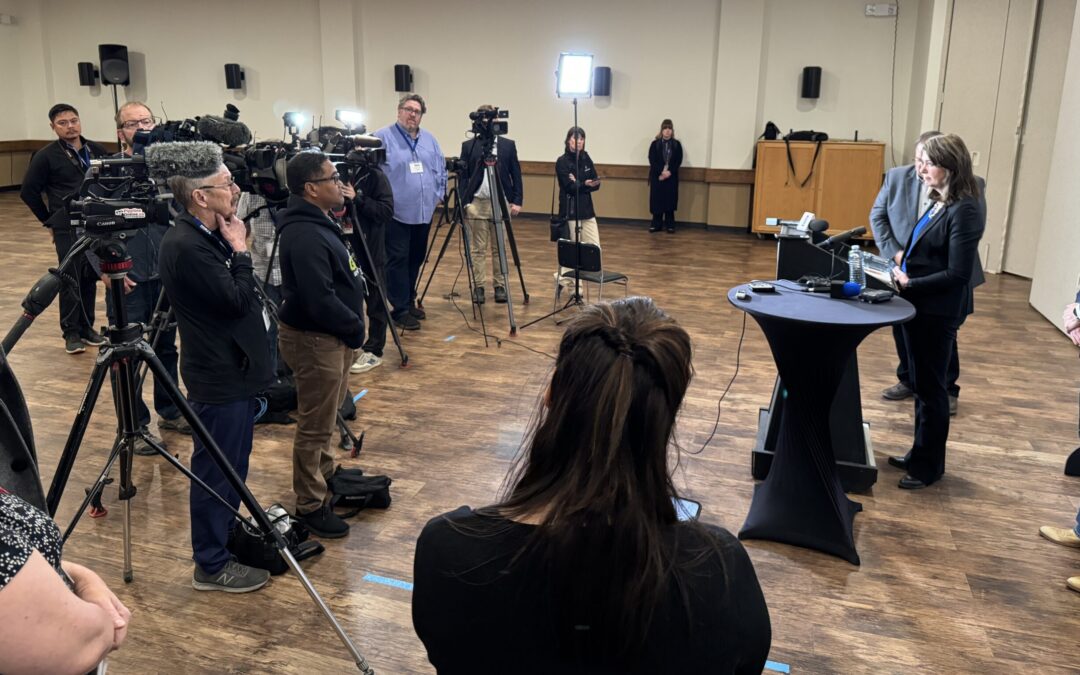
And, while at the Lloydminster Heavy Oil Show, some interesting things happened. Apparently the media came from Edmonton and Calgary to Lloydminster so they could ask the premier about Edmonton and Calgary.
My intention coming out of the Lloydminster Heavy Oil Show last week was to see if the multilateral well program, announced in last spring’s budget, was a success and making an impact. After all, it was the biggest change in the royalty structure in decades. Well, it was. Here’s my story on that.
Note: Goldboro was one the leading candidates for a Canadian East Coast liquefied natural gas export facility, the type German Chancellor Olaf Scholz basically begged Canada for. However, Prime Minister Justin Trudeau said there was “no business case,” for Canadian LNG in this context.
But apparently cutting trees to make “sustainable aviation fuel” is quite alright.
The Houthis have, on multiple occasions now, set explosives on a fully loaded oil supertanker in the Red Sea. Their initial attack had the crew abandon ship, and since then they’ve repeatedly boarded it, set explosives, blew it up, while they filmed the whole thing and posted it online! And the production quality is really good – drone footage, onboard. You’d think it was a professional production!
For reference, the Exxon Valdez spilled 240,000 barrels of crude. The Sounion is carrying a million barrels.
Irina Slav, Tammy Nemeth, and Stu Turley will be live talking about the most critical threat to our world, democracy, and our finances, “Climate Alarm.” or “Claptrapping”. Apparently if you question climate change, you’re no longer a denier, but producing climate claptrap.
Dr. Tammy Nemeth interviewed Dr. Brad Hayes, a sedimentary geologist, on energy literacy. I signed up for his course last year but simply didn’t have time to follow through on it. I will get to it one of these days.
It’s not often an oil company CEO sells his company to run for provincial politics, becoming the leader of an upstart party in the process. But that’s exactly what Jon Hromek has done. And as someone coming from industry, his thoughts on energy transition, CO2 and coal differ from a lot of the other politicians in Saskatchewan, or for that matter, Canada.
The last time, that didn’t work out so well for Saskatchewan oil and gas. The depths of the seven year oil downturn which devastated the Saskatchewan oil and gas industry included all four of the Trump years the last time around. While oil low prices benefited consumers and large portions of the economy, they also had a significant impact on Saskatchewan oil companies and particularly oilfield service companies. Activity levels, vendor rates, employment and employee remuneration were all deeply affected by the low energy price policies.
This is NOT an endorsement of Biden by any means, but simply a reflection on what did happen during the last Trump presidency.
And, as promised yesterday, more on those Clean Electricity Regulations that mean even MORE wind and solar, and no more coal or natural gas without carbon capture.
And maybe Wilkinson thinks aforementioned wind turbines will power all those electric heat pumps, when it’s cold, and when it’s hot. What am I saying? Of course he does.
“In Saskatchewan specifically, we are concerned that the tight timelines required to adhere to the CER will risk power shortages and grid instability.” – Cenovus
Ugg. The Canadian Press writes about oil and gas haters trying another way to financially choke the oil and gas industry Climate advocacy group calls out property insurers for fossil fuel support.
Oh, and that new grid-scale battery that SaskPower just went $10 million over the initial announced price on – Alberta has 10 (albeit a different manufacturer). Three haven’t lit a light bulb since March, and they were no shows on Monday.
But that’s okay, the Pembina Institute wrote a piece celebrating the end of coal, which they strongly advocated for over many years. They published it two days before the grid alert.
And it’s going to be hot two more days in Alberta. Anyone want to make a bet there will be more grid alerts?
Again, Alberta has more coal, oil and gas than God, because God gave all of his to Alberta. For that province to ever be running short of energy is a result of sheer incompetence at the top. And Saskatchewan is following that path – shutting down coal, building more wind, solar, and now batteries. SaskPower has had announcements for all three in recent weeks. Will I be writing about Saskatchewan grid alerts, because we failed to heed what is happening west of us?