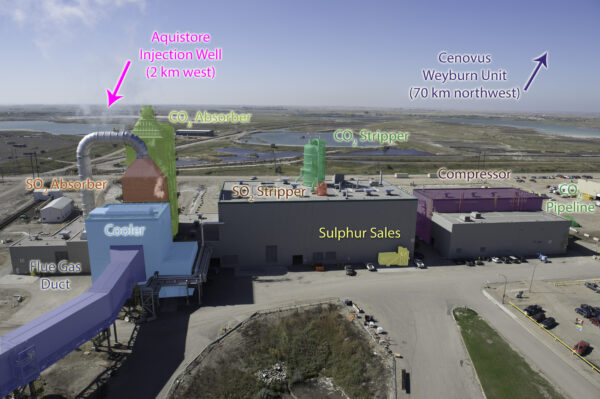
The new CEO of Cenovus, Canada’s second largest oil producer and Saskatchewan’s largest (after they bought Husky during the COVID pandemic), tells it like it is. There’s a healthy dose of reality in his comments, but Cenovus is also leading the charge for carbon capture in the oilsands. He also likes the idea of nuclear reactors usage in the oilsands.
The Saskatchewan Legislature ended its 2022-23 session on Thursday. The very first bill was about keeping the lights on, and the very last debate was also about keeping the lights on. This was the keeping the lights on session.
This past week the Saskatchewan government spent a lot of time on power generation and this “Net Zero by 2035” idea the federal government is trying to force upon the provinces.
This is the “energy transition” decision making in real time, folks. The impacts are enormous for this province, which is why I’ve been hammering these stories so hard.
The week summed up with Premier Scott Moe coming to Estevan to explain to local officials what the provincial government’s plans are for power production. For generations, Estevan has been home of the highest concentration of power generation in this province. However, the addition of multiple gas plants and wind facilities has largely diluted the percentage of power from Estevan. But as the province is clearly indicating a move towards nuclear, Moe all but said that Estevan will be home to some of the first small modular reactors. Pay attention to how he corrects himself from saying “nuclear” to “small modular reactors.” In this video, Moe addresses many of the concerns I’ve been raising over the last 17 months. As for adoption of nuclear – if future Saskatchewan governments follow Moe’s lead, this won’t be a small thing. Twenty years from now, as all our coal is retired and as older natural gas plants also reach retirement age, it looks like Saskatchewan will be moving to a largely nuclear grid for baseload power. And when Moe says baseload, he repeatedly refers to 80 per cent of the grid. That’s a lot more than four reactors down the road. That’s a sea change.
It turns out Steven Guilbeault has an answer for that: He said burning coal would be a violation of Canada’s Criminal Code. So will the feds be arresting the premier, SaskPower minister, SaskPower CEO, coal miners or power plant operators? All the above? And will they be arrested the same way Guilbeault was, when as a Greenpeace protestor, he scaled the CN Tower?
Saskatchewan will not meet Net Zero by 2035, but will aim for 2050. Here’s a lot more depth than you’ll find from any of the other Saskatchewan media. And there’s more to come regarding what this means for federalism. Follow up story is about how we’re going nuclear.
Interestingly enough, last year, when I asked Crown Investments (and SaskPower) Minister Don Morgan if we would be doing any more carbon capture on coal, he said it was “not an option.” So, in Canada, it’s not an option, but in the US, it looks like it may soon be mandatory.
Will Shand and/or Boundary Dam be converted from coal to gas-fired? No, but SaskPower is looking at it. If they do, that’ll be a whole lot of coal miners and coal processing staff out of work.
Net Zero by 2035? Not going to happen in Saskatchewan, according to Scott Moe. Natural gas, renewables, nuclear, and maybe even coal will be part of the mix. But Saskatoon is not going to freeze in the dark on Jan. 1, 2035.
This is a big deal, and a huge threat to Saskatchewan and Alberta. In this Twitter video, Environment Minister Steven Guilbeault first provides the justification for why the carbon tax was originally $50, noting the government calculated the cost to be $54/tonne. Now he says they are implementing a “social cost of carbon,” and says it’s $247 per tonne. “ He calls it a “new tool the federal government is going to use on the fight against climate change.”
Is this the next threshold for the carbon tax? Sure sounds like it. Also sounds like justification for the proposed Clean Electricity Standard, to rid Canada of all coal and natural gas power generation. That’s a driving factor behind the Saskatchewan First Act. It also sounds like after the nine federal initiatives listed in the Drawing the Line White Paper, Clean Electricity Standard being No. 10, this is likely No. 11.
One of the coal units we just can’t seem to shut down, even though we’re supposed to, according to the feds.
By federal regulation, one coal unit at Boundary Dam Power Station was supposed to shut down in 2021, another in 2024. Well, we’re not going to do that. Because we can’t. We still need them. Turns out all those wind turbines can’t be relied on, after all, can they? Like on April 4, when they put out less that 4% in Saskatchewan.
Ontario Power Generation recently signed up with the companies that are going to build its first small modular reactor. One of them is SNC-Lavalin.
And for those who don’t remember, SNC-Lavalin built the Boundary Dam 3 Carbon Capture Project. That didn’t work out as well as hoped. But we might not much choice in the matter.

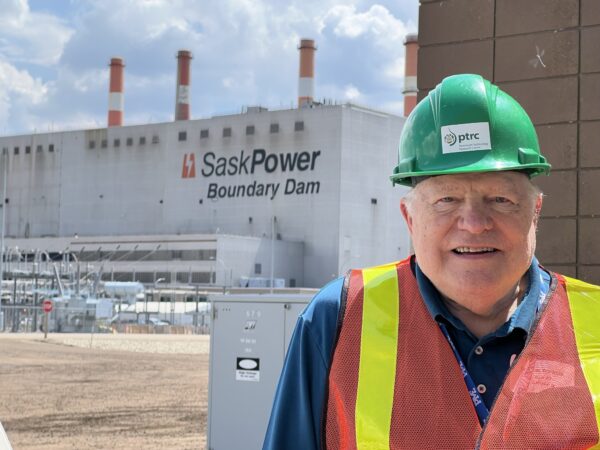
 Saskatchewan’s own