Category: Great Reset

Canada’s 2008?

Guess who’s buying all those new homes in Canada? Apparently, almost no one. The central question that the article fails to ask is this: whose balance sheets are taking the hit? In any case, retirees are never going to take up all the slack that investors are leaving behind.

There were just over 300 new homes sold across the entire Toronto region in April. A population of about 6.4 million people was mainly too scared to pull the trigger.

It was one of the worst months ever for sales, according to the Building Industry and Land Development Association. The market hasn’t improved much since.

“It’s a crazy market out there with condos,” she said, fully aware of the drop in sales and prices. June sales were just 510 units, 82 per cent below the 10-year average for the month, BILD said.

Fudge Those Numbers!

Whatever happens to the housing industry in this country, the damage will invariably be papered over by financial institutions marking assets to book value instead of market value. That’s what they’ve been doing since 2008 and most everyone seems okay with it. What could possibly go wrong?

“I think the last time I saw this was in 2008-2009 during the financial crisis,” she said. “And in 2020 during COVID-19.”

Calderwood has built a career specializing in selling luxury real estate from condos to waterfront properties, and she has recently noticed both a decline in sales and prices, as well as a rise in foreclosures.

“It really picked up last year, but this year, too,” she said. “A lot of foreclosures and then you just see the price dropping. Sometimes people are losing a couple of million.”

The Future Is Now

The concept of troops going to the battlefield in armored vehicles may well be a thing of the past, if this YouTube video is any indication.  In the Ukraine today, supplies going to the front have to be transported not by vehicle but by drone. It’s simply impossible to get supplies there by any other means, given the nearly impossible task of running a gauntlet of drone swarms. This ought to serve as a lesson to those in charge of determining defense spending priorities.

The Great Reset

The Telegraph;

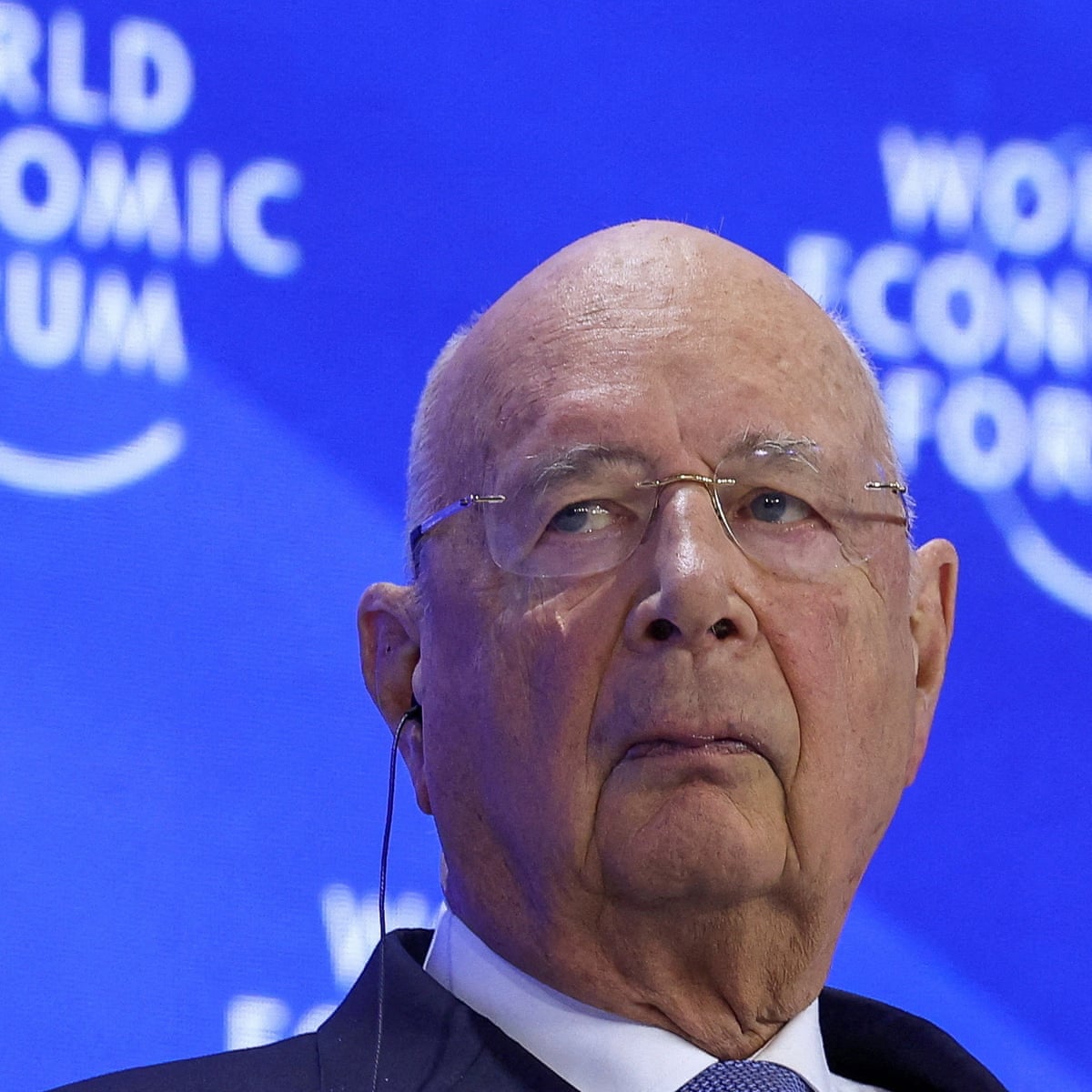
Klaus Schwab was the undisputed “King of Davos” for 55 years. But when his downfall came, it was swift.

The 87-year-old founder of the World Economic Forum (WEF), which holds the annual conference in the Swiss alpine ski resort, fought until the end.

But over two days in April, beset by allegations of misusing WEF funds, manipulating research and inappropriate behaviour with staff, he was forced out of his personal fiefdom.

One WEF insider told The Telegraph: “He had the chance to step back 10, seven, five years ago. But he hung on.”

On Sunday, the early findings of a second investigation into the WEF were leaked. They alleged that Mr Schwab had misspent WEF money and manipulated research for political reasons, including rigging data to make Brexit look like a failure.

Mr Schwab also allegedly put his crotch in front of a female staffer’s face, splurged $50m on a luxury villa and ran up £836,000 in expenses that were not sufficiently linked to WEF activities.

His credibility now lies in ruins and the future of Davos is openly questioned.

Bargains Galore

In an economy overloaded with exponentially growing debt, vendors actually have very little pricing power. If they try to raise prices the marginal consumer will just say no. What they can do, however, is lower their asking price, and that’s exactly what’s happening. It’s either that or fold the tent.

IKEA announced on Tuesday it’s cutting its restaurant prices in half for adults and children eat free from Monday to Friday.

Elbows Down, Suckers!

Now that the election is over the mainstream media water carriers can safely post bad news.

The largest drop was seen in the manufacturing sector, with a net loss of 31,000 jobs, a 1.6 per cent decline from March. Regionally, the deepest manufacturing impact was in Ontario, with 33,000 fewer jobs.

“Overall, we are seeing a job market that was weak heading into the trade war, now looking like it could soon buckle.”

A Long Row To Hoe

What’s the biggest hurdle facing Trump’s efforts to deport illegal immigrants? It’s not public protests or pushback from the courts, but the simple fact that there are now 18 million of them.

The Trump administration states that its planned large budget increases for hiring more ICE agents and private contractors, and expanding detention capability, will allow the administration to deport one million people per year. In other words, that’s still just four million deportations total and the best case scenario—from the administration’s perspective—under current goals.

That would only put the administration back to near where the Bush administration was more than a decade ago. Moreover, this is in the context of current immigration numbers, and the administration’s supporters tell us that there are currently more than 18 million illegal aliens in the United States as of early 2025. So, the administration’s best-case scenario would mean the administration has few hopes of deporting even a quarter of the existing population of illegal immigrants.

Circling The Drain

The marginal home buyer can’t muster much of a bid these days, and who could blame him? When is this going to start hitting the balance sheets of lenders?

Vancouver home sales activity fell again in May as buyers continued to sit on the sidelines, the city’s real estate board said Tuesday.

Residential sales in the region totalled 2,228 last month, an 18.5 per cent drop from the same month a year earlier, Greater Vancouver Realtors said. Sales levels are 30.5 per cent below the 10-year seasonal average.


The Road To Zero

In a fiat monetary system in which exponentially rising debt is a feature, not a bug, borrowers are always going to need relief in the form of lower interest rates. So much for “higher for longer”. Central banks are being a bit stubborn right now, but it won’t last.

That left the benchmark prime rate stuck at 4.95 per cent, more than a percentage point above its 20-year average of 3.87 per cent.

Since lower rates tend to inflate home prices, many bargain-hunting homebuyers were high-fiving the rate freeze. Most floating-rate borrowers and real estate stakeholders, however, were left groaning.

Turbo Bust?

With Canadian housing prices as high as they are, the last thing anyone needs is another round of “turbocharging”.

But then again, with the unemployment rate in Toronto sitting at 8.7%, it’s only matter of time until interest rates go back to zero so we can jump start an economy in which everyone just builds houses for everyone else.

The Bank of Canada needs to cut interest rates to get housing activity moving again or risk Canada’s economic growth, economists warn.

But two economists also think interest rates remain too high to turbocharge the sector, which is a major contributor to Canada’s economy and also highly sensitive to interest rates.


“Safe” Bets?

As Heresy Financial podcaster Joseph Brown explains, in order to understand the current stock market troubles you have to look beyond tariffs.

“…when markets start to crash, you don’t sell what you want, but what you can. And during this recent stock market crash hedge funds have been absolutely dumping stocks but it seems like it’s just not enough which is why they’ve been forced to get out of the basis trade and dumping their treasuries which has been driving yields much higher…”

Navigation