
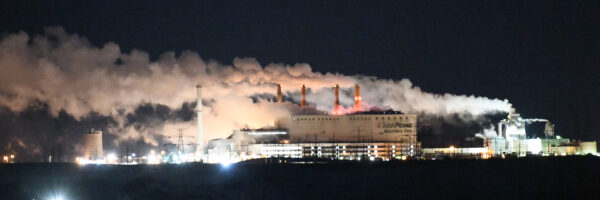
Natural gas and coal kept Saskatchewan’s lights on during frigid weather. As in, nearly every furnace in this province saw its fan running as a result of natural gas and coal, right when we needed it most.
Also: Bronwyn Eyre inaugural recipient of new award for Canadian champions of freedom. She happens to be cohost of the Pipeline Online Podcast and a regular columnist.
Brian Crossman: Artificial Intelligence, the oilpatch, and John Wick’s dog.
And under the file of “I’ll believe it when I see it”: If elected, the Parti Québécois would not necessarily oppose new gas or oil pipelines
Question Brian. When wind and solar are being credited for supplying our electricity do we have natural gas standing by ready to ramp up, or do we have to fire up the nat gas systems when the wind dies down at night?
Follow up question. If the nat gas has to be running to take over from renewable energy, do they add the CO2 to the renewable or does that get thrown in the garbage?
@Steve Firstly, Saskatchewans CURRENT grid-scale solar is miniscule – just 30 MW. So it has negligible impact currently, but that will soon change. Three 100 megawatt solar facilities are in the works.
Secondly, we do have 817 megawatts of nameplate capacity of wind. That will increased over the next three or four years to 1217 megawatts. Generally wind gets first priority, and natural gas and coal ramp up and down in response to fill in the gaps.
Thirdly, you have correctly identified that there is no such thing as just wind and/or solar. They must be paired with backup dispatchable power. That means you’re not building one power system, but two, and even three if you really think about it. And there’s no way that’s cheap, which is why you see anywhere wind and solar have been deployed in a large fashion, power prices are NOT going down.
Fourthly, turbines like to run at a stead state. Ramping up and down shortens their life. I just heard a podcast mentioning that yesterday, which I might post later in the week. So not only are you inefficiently using your thermal plants to make way for wind and solar, you’re wearing them out at a much quicker pace, too, which will not be cheap down the road.
Once again, wind power is useless when the temperatures are at extremes. Those turbines produced 4.9% of total nameplate capacity when is was -30°C. The coldest days happen under high-pressure atmospheric systems, and those systems produce little to no wind, so no electricity for heating. In the summer, the hottest days under the same high-pressure systems (“heat domes,” as the journalists call them, as if they’re something new) so no electricity then either, for air conditioning.
In high pressure weather the sky is clear, allowing much solar heating during the day. In the winter when the sun is much lower in the sky, we don’t get much heat and what little does accumulate is lost at night via radiation into space. An overcast will stop much of that.
I wish politicians would stop buying those wind turbines. History is not going to treat such decisions well at all.
Regarding the Quebecois. All I have to say is this.
They’re grifters and grifters are gonna grift.
Behold!
Common sense ffs.
A small remainder of Canada before whirled citizen leadership in my view.
Excellent recognition, an opportunity for gratitude, and reflection upon the course you currently are on.