Tag: wind

We’ll triple the price, that’ll make it more affordable

Brian Zinchuk: How will tripling maximum electrical pricing in Alberta help consumers?

Also:

Pamela Wallin and John Gormley discuss the Saskatchewan election results

Ottawa fires back at Alberta’s application for judicial review of carbon price

The loonie is trading at lows not seen in years. Here’s what it means for Canadians

Alberta Premier Smith says lower-than-forecast oil prices could mean budget deficit

Wow…. just… wow…

Election 2024: Saskatchewan Green Party wants to transition away from fossil fuels, but have fossil fuels pay for their green agenda

You can’t make this stuff up.

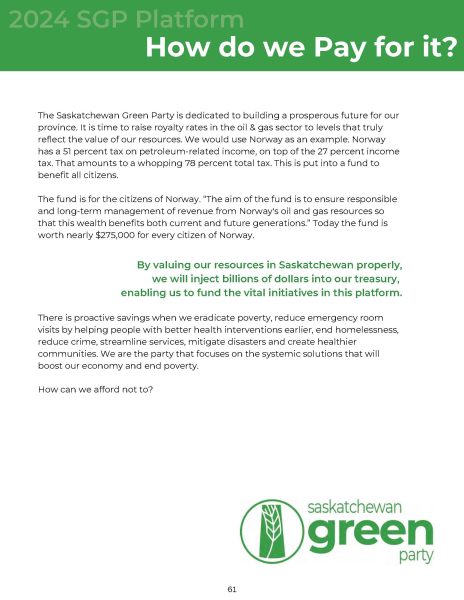
The Saskatchewan Green Party proposes to  “Make Green Jobs the future of Saskatchewan’s economy by transitioning away from fossil fuels,” while financing its extensive socialist policy platform by modelling Norway which applies “a whopping 78 percent total tax” on oil and gas revenues.

Notably, it includes five pages discussing the Greens opposition to small modular reactors. And the policy document closes by saying on the last page, “How do we pay for it? The Saskatchewan Green Party is dedicated to building a prosperous future for our province. It is time to raise royalty rates in the oil & gas sector to levels that truly reflect the value of our resources. We would use Norway as an example. Norway has a 51 percent tax on petroleum-related income, on top of the 27 percent income tax. That amounts to a whopping 78 percent total tax. This is put into a fund to benefit all citizens.”

That page does not list any other major revenue source, or indeed any revenue source at all, other than heavily taxing oil and gas, the same oil and gas earlier in the document the party promises to transition away from. If the party does succeed in “transitioning away from fossil fuels,” (Page 17) it offers no other source of revenue on the “How do we pay for it?” page (Page 61).


Saskatchewan election – NDP energy policy

Aleana Young

Election 2024: All-of-the-above energy strategy, no changes to royalties: New Democratic Party

This is the third in a series of in-depth interviews with the parties vying for the Saskatchewan election. In it, NDP Energy Critic Aleana Young speaks about the NDP’s all-of-the-above energy strategy.

The greatest threat to nuclear development is not technological or even financial – it’s change in government. This was evident with the Site C Dam in BC, where a new NDP government pumped the brakes, but then ultimately went ahead with it. The NDP in Saskatchewan continue to support nuclear power development, but “we have to get it right.”

As I’ve done with the other parties, I reproduced everything I could find in the party platform related to energy. Well, the terms “oil” “natural gas” “potash” “critical minerals”  “SMR” “nuclear” or “electricity” are not referenced within the document. But “healthcare” comes up 35 times.

Friday will be the Buffalo Party. So far, I have not heard from the Greens, PCs or Progressives. Wonder why? Is anyone else writing 3200 word stories on their energy policies?

On a side note, I attended a three hour long Estevan city council/mayor town hall this evening. It took 2 hours and 25 minutes before anyone made any serious comments about coal. That was right before I got my chance to ask about dealing with the impending eventual shut down of coal-fired power generation, but also preparing the city for nuclear power. Amazingly, about half of the 13 people on stage really had no substantive answer on that front, and several had no clue or hadn’t thought of it. You would think that would be the most important issue facing this city – much more important than sidewalks or boulevard flowers (which got more discussion up until that point than coal or nuclear). Especially since the nuclear built out will be the most costly infrastructure project in Saskatchewan history to date. (If I attend a forum like this, you can be damned sure I’m going to ask the toughest questions.)

Free power! Again! Thanks, Alberta!

When your neighbour offers free power, take it. SaskPower did. Thanks, Alberta!

When your neighbour offers free power, take it. SaskPower did. Thanks, Alberta!

SaskPower was “buying” enough power to light 146,000 homes for less than a price of a Timbit, because you have to pay at least something for a Timbit.

And it has a lot to do with excess wind power while interties are down.

Also:

First of the submissions to be published on Pipeline Online:

Oil & gas emissions cap Economic Impact Assessment Tribunal: Woodland Development Corp.

Brian Zinchuk: Did the mainstream media even know they were in Lloydminster?

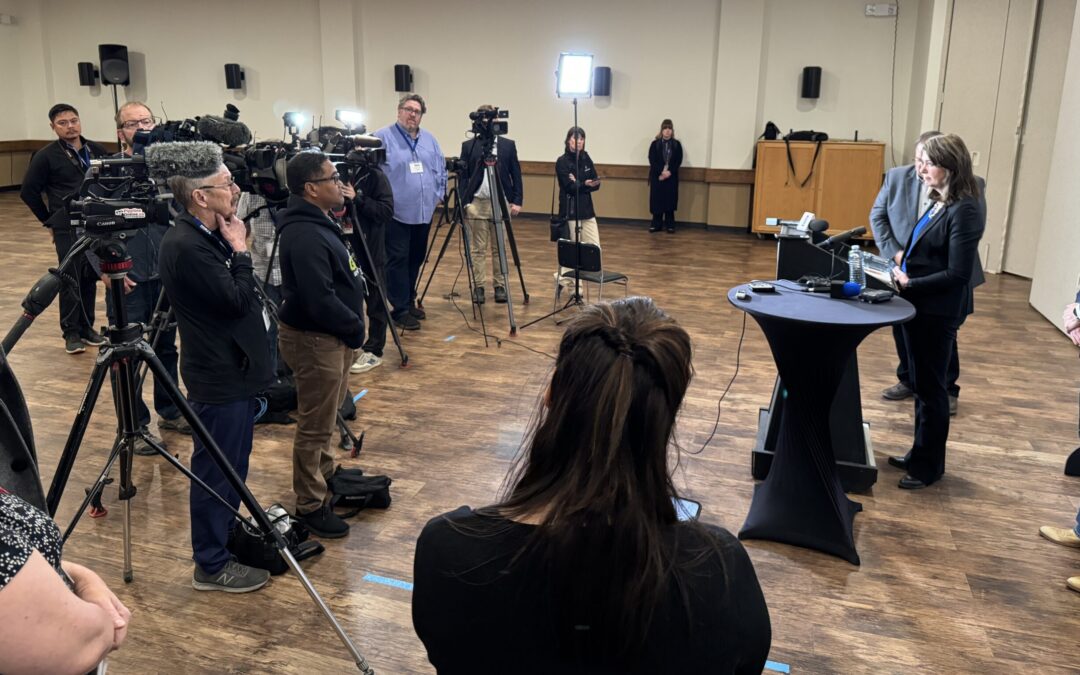
And, while at the Lloydminster Heavy Oil Show, some interesting things happened. Apparently the media came from Edmonton and Calgary to Lloydminster so they could ask the premier about Edmonton and Calgary.

Brian Zinchuk: Did the mainstream media even know they were in Lloydminster?

The problem with no one getting paid is no one is getting paid

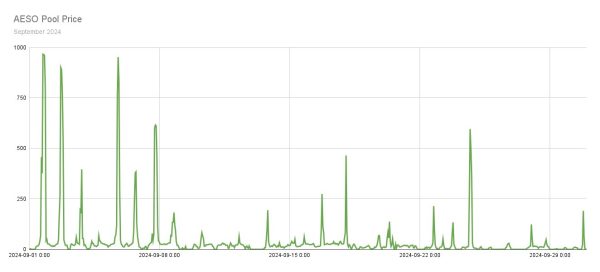
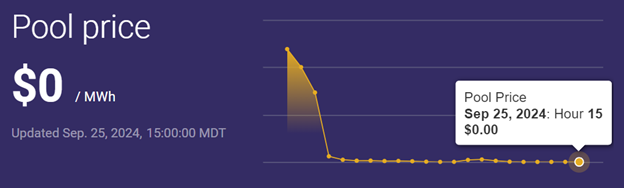
About a month ago I did some serious digging into Alberta’s electrical grid going into zero dollar hours for pricing. As in all the power on the grid, for the generators anyway, was free, for a few hours. I thought I had published it, but apparently not, as I was reminded by @ReliableAB. And funny thing is, it happened again this past weekend.

The problem with no one getting paid is no one is getting paid. No business model is sustainable like that. I don’t care about averaging things out. No one wants to give away product for free, especially if they are paying for inputs like natural gas for fuel and staffing.

Alberta had free power for more than a day in August, and seven hours last weekend – how does that happen?

And on the renewable thing:

Manitoba to encourage renewable energy while acknowledging fossil fuel use

Wind and hydro actually pair very well together, as hydro can ramp up and down very quickly. Building wind in Manitoba will allow them to build up their reservoirs and maintain more capacity overall, especially in low water conditions like the prairies have seen in recent years. So, believe it or not, I’m not wholly against that idea, for Manitoba, at least. I’m surprised they haven’t built more until now.

Also, this was from the Canadian Press. Take that for what you will.

Canada makes small emissions cut in 2023, but must ramp up to hit key targets: report


Misconceptions? Surely, you jest!

SaskPower’s blog speaks about “Misconceptions about wind and solar facilities”

Note:

Facing a groundswell of opposition to a proposed 200 megawatt wind project near Weyburn which would be built, operated and owned by Enbridge as an independent power producer, SaskPower posted the following on its corporate blog on Aug. 23.

That blog posting was then promoted via advertising on social media, including Facebook.

What the blog does not say is that Alberta’s fleet of now 47 wind farms, with a total capacity of 5,214 megawatts was producing 35 megawatts at 3:38 p.m. on Thursday, Aug. 22, according to X account @ReliableAB. That’s after the recent addition of a new 466 megawatt windfarm which is being brought online. And 35 megawatts was 0.7 per cent of capacity at that moment, while 5,214 megawatts is nearly the entire Saskatchewan grid if every single generating facility was running full our, which never happens.

The ads below are not part of the original blog, but part of every Pipeline Online story to pay the bills. This is that blog posting, verbatim.

Asleep at the switch

There’s a lot going on in Saskatchewan’s lithium sector these days. I’ll have several stories soon. This is a rather significant one:

Lithium in SK, Part 30: Hub City Lithium completes pilot, changes ownership structure, and is drilling near Stoughton

Apparently our federal government is asleep at the switch, because our economy is about to come crashing down on us and they’re in la-la land, allowing the entire rail sector to shut down in less than 24 hours.

Labour Disruption in Class 1 Railways of deep concern for Saskatchewan’s mining sector, says Saskatchewan Mining Assoc.

In Quebec, it’s not just hydro electricity these days.

Boralex announces the closing of a $95 million financing for the Témiscouata II wind farm in Quebec

CO2 is not a pollutant, it’s plant food, says Sask United Party leader

Sask United Party Leader Jon Hromek. Photo by Brian Zinchuk

CO2 is not a pollutant; we’re going to burn coal until we run out of coal: Sask United Leader Jon Hromek.

It’s not often an oil company CEO sells his company to run for provincial politics, becoming the leader of an upstart party in the process. But that’s exactly what Jon Hromek has done. And as someone coming from industry, his thoughts on energy transition, CO2 and coal differ from a lot of the other politicians in Saskatchewan, or for that matter, Canada.


Surprised no one brought out a pitchfork

Pitchforks not included. Not sure about torches.

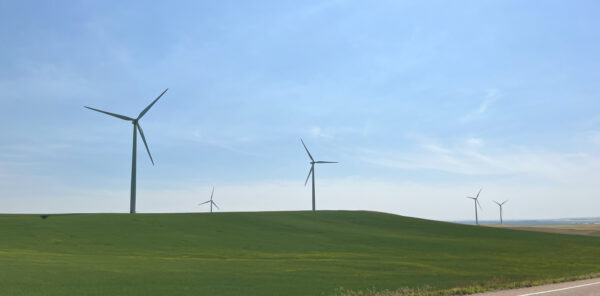
Pipeline company comes to oil town to build a wind project, and gets hostile response

You’d have thought they were proposing a pipeline in Nebraska.

This was a very hostile crowd. I’m surprised no one brought out a pitchfork or torch. I’m sure the Enbridge folks figured they were now working for TransCanada, running a Keystone XL open house in the States.

Meanwhile, in Alberta, on Sunday:

Fool me three times: Alberta’s 4748 megawatts of wind hits one, one and zero megawatts over three days

That followed this story on Friday which went viral:

Alberta’s wind power flatlines again this week, hitting 1 megawatt out of a capacity of 4748

And if you didn’t see this, it’s worth the hour.

Jordan Peterson Podcast: Danielle Smith on Bill C-59, freedom of speech, CO2, wind, solar and more

Facebook loved it so much, they immediately pulled down the post, claiming it “violated community standards” as spam.

Big fat zero from Alberta’s giant fans on Tuesday

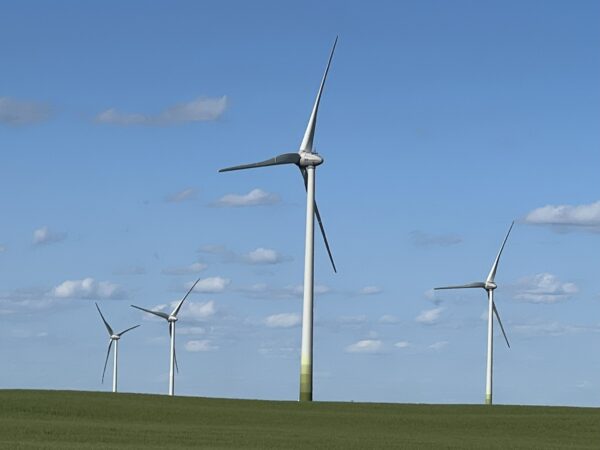
Alberta’s 1568 wind turbines didn’t power a single lightbulb Tuesday morning, producing a big fat zero megawatts

And, as promised yesterday, more on those Clean Electricity Regulations that mean even MORE wind and solar, and no more coal or natural gas without carbon capture.

Clean Electricity Regulations: Cenovus Energy (Detailed, with recommendations)

And maybe Wilkinson thinks aforementioned wind turbines will power all those electric heat pumps, when it’s cold, and when it’s hot. What am I saying? Of course he does.

Liberal energy minister promises ban on oil furnaces for new builds as soon as 2028

Also:

TC Energy’s US$15B Keystone XL claim thrown out by trade tribunal

Manitoba wind, Alberta taxes, Lloydminster heavy oil

It turns out developing more wind in Manitoba is a big deal for Manitoba Hydro – CEO sacking sorta big deal.

Alberta to relax rule on buying oil, gas wells if municipal taxes unpaid

The Lloydminster Heavy Oil Show is coming up in just under two months. I’ll be there if anyone would like to say hello. I’m identifiable by the fat guy with all the cameras sitting at the front.

And since everyone is talking about the Trump assimilation attempt, I have to say, Peter Zeihan’s video about it this morning is the worst I’ve ever seen from him – and I’m generally a huge fan of his work. His disappointment that it wasn’t successful shows through. Maybe it’s because he’s been saying Biden in a landslide – well, that’s not going to happen now.

Well, that was a smooth move

Alberta’s last coal plant shuts down, and days later, a grid alert is declared.

Oh, and that new grid-scale battery that SaskPower just went $10 million over the initial announced price on – Alberta has 10 (albeit a different manufacturer). Three haven’t lit a light bulb since March, and they were no shows on Monday.

But that’s okay, the Pembina Institute wrote a piece celebrating the end of coal, which they strongly advocated for over many years. They published it two days before the grid alert.

And it’s going to be hot two more days in Alberta. Anyone want to make a bet there will be more grid alerts?

Again, Alberta has more coal, oil and gas than God, because God gave all of his to Alberta. For that province to ever be running short of energy is a result of sheer incompetence at the top. And Saskatchewan is following that path – shutting down coal, building more wind, solar, and now batteries. SaskPower has had announcements for all three in recent weeks. Will I be writing about Saskatchewan grid alerts, because we failed to heed what is happening west of us?

Guilbeault’s letter to Saskatchewan on Clean Electricity Regulations

Steven Guilbeault

Read the Government of Canada’s submission, written by Guilbeault

The proposed Clean Electricity Regulations are among the most significant policy moves in recent Canadian history. The fundamental thrust is to all but eliminate fossil fuel combustion from the Canadian electrical grid. On any given day, up to 88 per cent of Saskatchewan’s power comes from natural gas and coal.

If implemented in their current form, they will utterly remake Canada, its economy and society. The Government of Saskatchewan, on June 25, rejected these regulations, based on a report by the Economic Impact Assessment Tribunal, convened under the Saskatchewan First Act. That act, in turn, was brought into law to counter numerous onerous federal climate change initiatives.

Within the tribunals report are all the submissions made by numerous companies and agencies, several of which Pipeline Online is publishing verbatim in the coming days and weeks. But perhaps the most significant was the Feb. 15 submission by Minister of Environment and Climate Change Steven Guilbeault, who, with Minister of Energy and Natural Resources Jonathan Wilkinson, is one of the leading figures from the federal government on this front. As such, his submission is the stance of the federal government. Notably, he does not explain how Saskatchewan is to replace all of its fossil fuel-based power in the 10 years, five months and 30 days remaining from today. Here it is, verbatim


First implementation of the Sask First Act – Saskatchewan won’t follow Clean Electricity Regulations

Jim Reiter, Bronwyn Eyre, Michael Milani. Photo by Brian Zinchuk

For a long time, Premier Scott Moe has been saying it’s impossible to comply with federal regulations regarding getting rid of our fossil-fueled power generation, in the timeline the federal Liberal government wants.

It’s coming to a head.

This is the first action of this type thus far under the Saskatchewan First Act. This is what it was meant for.

If implemented in their current form, the Clean Electricity Regulations mean to all but eliminate the burning of fossil fuels for power generation in 10 years, six months and three days from now. Saskatchewan relies on natural gas and coal to produce the vast majority of its power, up to 88 per cent on some days. And if implemented, these regulations will fundamentally alter Canada and its economy, and affect all of its people in one form or another. It’s one of the most important policy pieces in generations, seeking to remake Canada.

Saskatchewan won’t follow Clean Electricity Regulation, citing Economic Assessment Tribunal report.

Executive summary of the report

The government released all the submissions to the tribunal. I will be reprinting many of them over the coming days, maybe weeks. There’s a lot. And there’s a lot to be said.

Clean Electricity Regulations, part of the biggest story of our times

Boundary Dam Power Station

I’ve been saying for a while now, this whole “energy transition” is the biggest story of our times. And the biggest part of that is implementation of the Clean Electricity Regulations, which will affect every person, business and industry in this country. On Tuesday, Saskatchewan said it’s not going to follow them, because they’re impossible to follow.

I will have numerous stories on this over the coming days and weeks, deep dives into what this is all about. I just got off the phone with one cabinet minister and will be talking to another in a few minutes. Watch for that in a bit. In the meantime, this is the executive summary of the report prepared for the Saskatchewan government, a report whose purpose is to give backing to our saying “F off” to the feds. That’s basically what Saskatchewan is doing.


Capital gains, Weyburn wind and oilsands

Quick Dick McDick takes on Trudeau’s capital gains tax changes.

Saskatchewan government to back Indigenous investment into Weyburn wind project.

Finally:

Alberta regulator projects 17 per cent growth in oilsands production by 2033

Navigation