Tag: wind

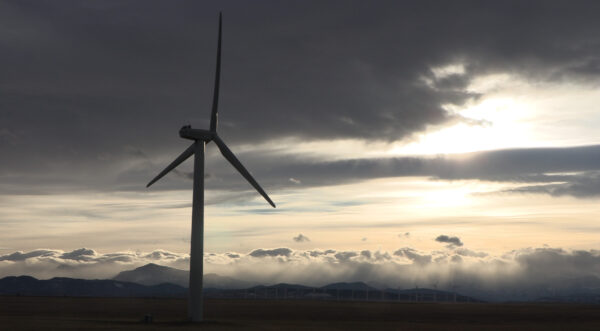
Seven days in a row, wind went to zero in Saskatchewan

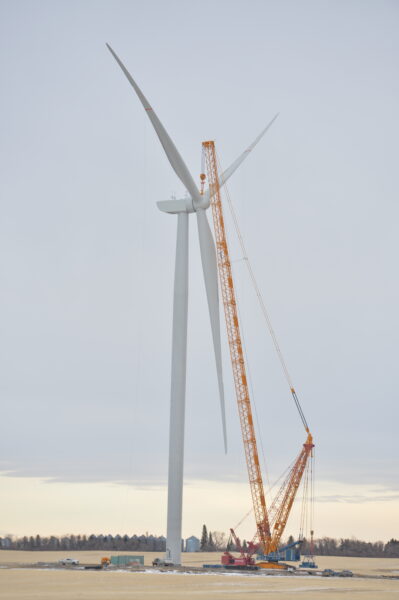
Assembly of a wind turbine near Assiniboia, SK, on Jan. 7, 2021. Photo by Brian Zinchuk

UPDATED: For seven days in a row, SaskPower saw wind generation hit zero for part of the day

The story originally said five days. SaskPower got back to me and noted the streak continued Jan. 7 and 8 as well. So that’s a whole week with wind flatlining. Total, complete flatline for part of the day, each day. How do you power the hospital my wife is an ER nurse at with zero power? Inquiring minds would like to know?

Also:

Weaker oil prices should bring some relief to consumers in 2024: Analysts

and

Quick Dick McDick: Saskatchewan Winterfront Regulation

Bonus points for Quick Dick’s instruction on how to use the box from a Pilsner 2-4 for a winterfront. Nothing says Saskatchewan like a Pil box on your pickup

Wind power zeros out on Jan. 2 in Saskatchewan. As in nothing. Zip. Nada.

Final assembly of a wind turbine near Assiniboia, Sask., on Jan. 7, 2021. Photo by Brian Zinchuk

Wind power flatlined in Saskatchewan on Jan. 2, after days of strong winds. Flatlined, as in zero power, at night, so no solar, either.

Zero reliability, this wind thing. And I had to start wearing my parka this week, too.

Put our trust in wind, and we’ll all freeze. In the dark.

Also, switching to third person:

Pipeline Online editor and owner Brian Zinchuk is back on the air with CJME/CKOM’s Evan Bray Show. He was on the air for a full hour on Wednesday, Jan. 3. Here’s the podcast of that appearance, including responses to several calls. One was on whether or not the Trans Mountain Expansion will ever be finished. (With the ads and news breaks removed, it’s only 35 minutes).

Clean Electricity Regulations and nuclear power: Moe

Scott Moe.

Saskatchewan’s Year in Energy: Premier Scott Moe, 2023: Part 3: Clean Electricity Regulations and Nuclear Power

Clean Electricity Regulations proposed by the federal government mean to totally change our nation and its economy. And nuclear power is really the only option Saskatchewan has for large-scale, baseload power that does not emit greenhouse gasses.

Part 3 discusses the Clean Electricity Regulations and their impact, and widespread adoption of nuclear power

Federal and Nova Scotia governments kill offshore petroleum project in name of ‘clean energy’

Sable Island gas project, now gone.

Federal and Nova Scotia governments kill offshore petroleum project in name of “clean energy”. No more gas development. Don’t even try. But wind? You betcha.

And here’s an analysis of why. It has a lot to do with the fact Nova Scotia can still pay for its hospitals with natural gas money, just natural gas produced in Alberta and Saskatchewan. And it has more to do with Guilbeault announcing a defacto production cap by banning venting and flaring.

Brian Zinchuk: Nova Scotia and federal government put final bullet in the head of still-twitching offshore gas play

And along the topic of the undead, the federal regulator still isn’t done with stretching out the Trans Mountain Expansion pipeline. What’s another $200 million per month delay?

As a side note, two years ago I ran into the consultant whose job it was to shut down, abandon and clean up this project. He was the company man looking after the drilling of the first lithium well in Canada, near Torquay, Saskatchewan. I never got around to writing a story about it, dammit. Not enough hours in the day.

And if anyone feels like asking CJME/CKOM why Zinchuk isn’t scheduled to do his regular energy spot the first Wednesday of the month, as he did with Gormley:

Text

1-877-332-8255


https://www.cjme.com/

https://www.ckom.com/

The failure of wind, then solar, and also batteries, in three stories

Alberta now has 44 wind farms, and Wednesday night they collectively produced next to no power (posted yesterday, but leads into the next two for context)

On Thursday, Alberta wind power had a hangover and the sun didn’t come out to play

What the Globe and Mail left out in its story on grid-scale batteries in Alberta

Key points:

The last day saw not only wind utterly collapse in Alberta, but solar AT THE SAME TIME, even at noon. And the narrative that we’ll simply build a lot of batteries for when that happens is disproven, as Alberta’s seven batteries only produced a 62 minutes of a wee bit of power all day on Thursday. And over the last 30 days, those seven batteries only produced 265 minutes out of over 300,000 minutes available to them. Yes, you read that right. And SaskPower is spending $26 million to buy one of these batteries. Seriously. It should be online any day.

So why, again, are we throwing away what we know works, natural gas and coal, for wind, solar and batteries? And it’s not even all that cold yet!

Bonus reading:

Steven Guilbeault cheers IEA report which says “no new long-lead-time conventional oil and gas projects are needed”


Build more wind, they say. Well Alberta did, and still got next to zip

Alberta now has 44 wind farms, and Wednesday night they collectively produced next to no power. Oh yeah, and the sun wasn’t shining, either. Imagine that.

And in case you missed it, Ottawa can take its journalism subsidies and shove them. Maybe that’s why I’m the only reporter I know of who’s not singing the praises of wind and solar? Will reporters whose salaries are 35% subsidized by the federal government do the same, and question the narrative?

Saskatchewan says following the Net Zero by 2035 Clean Electricity Regulations are not possible, unaffordable, unconstitutional and unobtainable

Dustin Duncan

In August, Steven Guilbeault released the draft Clean Electricity Regulations which mean to remake our entire country in just 11 years.

On Nov. 2, Saskatchewan told them where to go. Today, they said publicly how to get there.

Three stories:

It just isn’t possible’ – SaskPower Minister in-depth response to Clean Electricity Regulations.

SaskPower response to the Clean Electricity Regulations: ‘Not possible from technological, financial and logistical perspectives

Saskatchewan response to the Clean Electricity Regulations: Unaffordable, unconstitutional and unobtainable.

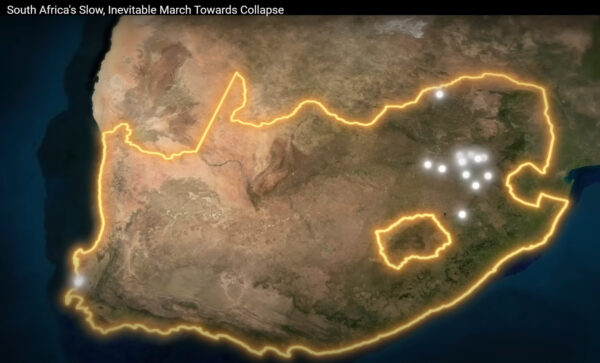
Unreliable power a leading factor in South Africa’s demise

If you haven’t been paying attention, South Africa is falling apart. The reasons are many and various. But a principal factor is an increasingly unreliable power grid leading to up to a third of the grid being in the dark at any one time.

This is why Pipeline Online has been covering the reliability of the Canadian electrical grid with such intensity. Politicians talk about “reliability, sustainability and affordability of the electrical grid.” As these videos outline in great detail, when reliability collapses, nothing else matters. South Africa has at times one third of its grid in rolling blackout. Everything from food preservation to industrial factories to medical operations ends up in peril.

The minute any grid operator, power generator, or government starts talking about “load shedding,” things are going to hell in a handbasket in a hurry.

And as a reminder, the Alberta grid had eight “grid alerts” in the last year, each time when wind and or solar power generation failed. Alberta is a jurisdiction that has more coal, oil, and gas than God, because God gave all of his to Alberta. The only way this could happen is sheer and utter incompetence. You might consider that getting rid of reliable and cheap coal-fired power generation in favour of more and more wind and solar power might be indicative of this. And in the last few days, Alberta brought on another 297 megawatt wind farm, bringing their total wind generation to 4,150 megawatts. Two years ago, it was closer to 2700 megawatts.

Here’s a couple recent videos on YouTube discussing the ever-worsening plight of South Africa.

Saskatchewan will use the Sask First Act to fight the feds on climate change initiatives

It was a full year ago when the Saskatchewan First Act was introduced and then brought into law. But now the provincial government is going to use it to fight the federal government’s climate change initiatives on Clean Electricity Regulations, Clean Fuel Standard, and an incoming emissions cap for oil and gas.

And here’s why:

Another day of near-flatline wind power production in Alberta on Wednesday. 13 of 38 wind farms produce 1 megawatt, or less (as in zero) for 24 hours. Several of those had capacities in the 100 to 200 megawatt range. And all the got was one, for a few minutes at a time.

And despite renewables clearly failing miserably, as noted above, Canada needs to move faster on renewable energy, Jonathan Wilkinson says.

There were some other energy issues raised in Wednesday’s Throne Speech.


High praise, indeed

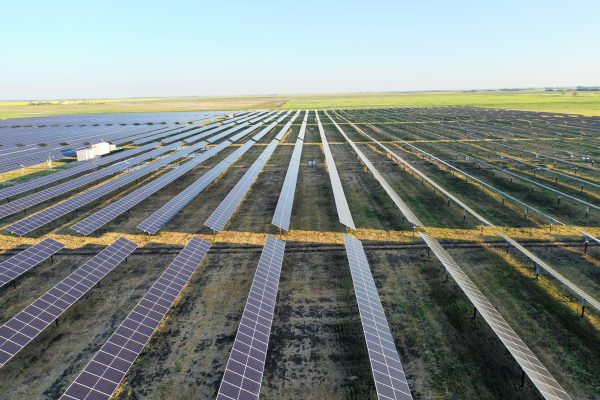
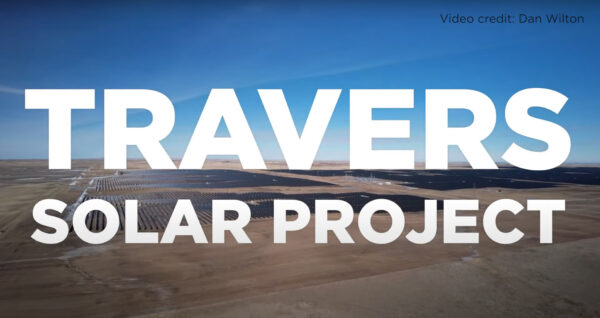
On Friday, Alberta Energy Minister Brian Jean praised the Travers Solar Project in a LinkedIn post. At noon on Sunday, when the sun was highest in the sky, it was producing 10.9 per cent of nameplate capacity.

And at the very same time, wind was producing less than 2 per cent capacity, and was around that level all afternoon long.

The Canadian Energy Regulator provided reasons for its TMX pipeline route change ruling.

In an unrelated note, if you’ve worked in the southeast Saskatchewan oilpatch, you probably know, or know of, Larry Day, who was awarded dispatcher of the year.

And while we’re tooting horns, Pipeline Online received an Estevan Business Excellence award for New Business Venture.

Eco zealots and going big into nuclear

All the hacking issues last week means there’s a lot to catch up on in the world of energy.

First, a column this morning from U of R professor Jim Warren: Guess what happens when eco-zealots are put in charge of making climate policy?

Here’s another verbatim press release from Steven Guilbeault about cutting oil and gas emissions by 75%.

If you didn’t catch it last week, Sask Polytechnic is getting a brand spanking new campus. Too bad it won’t be anywhere close to finished before my daughter finishes her journeyman heavy duty mechanic ticket. (She just started her 4 year apprenticeship, if that give you a hint.) Maybe my 16-year old son will get to attend the new site in his fourth year of apprenticeship?

Did you know Manitoba has an oilpatch? Often their own politicians don’t really clue in on it, including former Premier Brian Pallister. I can’t find it now, but when he flip-flopped on fighting the carbon tax, he made accusations against “oil producing provinces.” Manitoba produces around 38,000 barrels per day.  Anyhow, the largest oilfield in Manitoba is now 19 years old.

Oil prices look like they’re heading for $100/ barrel US.

Dams aren’t so green, after all.

And the big one for last week: my column on how Saskatchewan goes big into nuclear. Funny thing is I’ll be speaking to the SaskPower CEO on Monday. We’ll see if I’m on the mark or not.


9 times in 3 weeks: how many times Texans have been warned the lights might go out

Supper in Texas on Wednesday: for the 9th time in 3 weeks, the lights are in danger of going out due to high temperatures and low wind power generation.

Well, that’s what I initially wrote. Then the Texas grid literally went into “red alert,” as the frequency started to drop and reserves fell perilously low. If the frequency goes too low, generating plants would start to trip off in cascading failures, leading to massive blackouts. Thankfully, they got it under control.

Also: Pipeline Online editor Brian Zinchuk on John Gormley Live talking about oil prices, drilling activity, carbon capture, grid alerts, and dramatically more nuclear power generation possible in Saskatchewan.

And if you missed it, Enbridge snapped up three natural gas utilities in the US. Funny how they’re spending big money in the US, but not Canada…


The energy transition in real time: brownouts threaten at suppertime

With brownouts a possibility, Texas issues another electrical grid alert on Tuesday, its second in three days. Alberta issued one yesterday. These are the most energy-rich places on earth. What is going on?

UPDATE: 3:08 p.m. Aug. 29.

At 2:25 p.m, the Alberta Electric System Operator has not yet issued a grid alert on this date, but put out a tweet alluding to one, imploring Alberta citizens to reduce power consumption.

Saskatchewan sees 87% power from coal and natural gas as wind fails in SK, AB and Texas

Wind turbine. Photo by Brian Zinchuk

In Saskatchewan, Poplar River Power Station is now fully online again, which is good, because on Aug. 22, when wind generation fell to less than 1 per cent capacity, natural gas and coal made up 87 per cent of power generation. And of course, Alberta saw its wind production fall below 1 per cent, again.

Texas and Alberta have more oil, gas and coal than God, because God gave all his to Texas and Alberta. And yet “grid alerts” are becoming the norm in both, as they’ve both built out tremendous amounts of  wind power, and the wind doesn’t blow. On Sunday, Texas issued its form of grid alert.

But remember, the Canadian government says we must abandon coal and natural gas for wind and solar.

Navigation