Roger Andrews reviews the ins and outs of using the Hoover Dam and Lake Mead as a giant pumped hydro storage scheme aimed at fixing California’s man-made grid reliability problems.
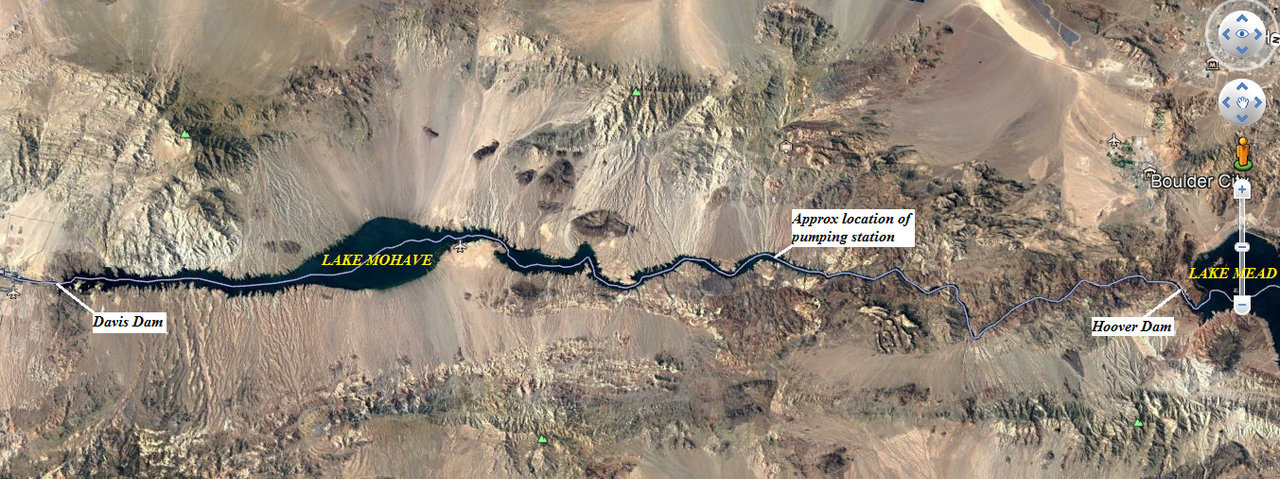

Roger Andrews reviews the ins and outs of using the Hoover Dam and Lake Mead as a giant pumped hydro storage scheme aimed at fixing California’s man-made grid reliability problems.
The potential energy contained in the waters of the Great Lakes amounts to approximately six thousand terawatt hours, enough to supply the US and Canada with electricity for an entire year were the lakes to be drained to sea level. This of course will never happen, but there may be potential for partial utilization of the resource. A pumped hydro system that uses Lakes Huron and Michigan as the upper reservoir and Lake Ontario as the lower could theoretically generate 10 terawatt-hours, or more, of seasonal energy storage without changing lake levels significantly. The most likely show-stopper is the increased likelihood of flooding in the lower St. Lawrence River during pumped hydro discharge cycles.
The pumped hydro storage potential of the Great Lakes

Niagara Falls run dry in 1969